 Back
Protostome Animals: Diversity, Body Plans, and Evolutionary Innovations
Study Guide - Smart Notes
 Tailored notes based on your materials, expanded with key definitions, examples, and context.
Protostome Animals: Overview and Diversity
Major Animal Lineages and Protostome Diversity
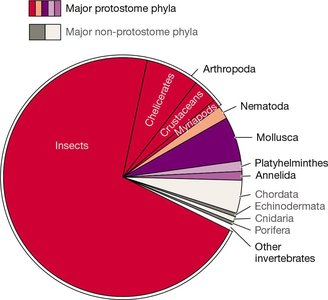
Protostomes represent one of the most diverse and ecologically significant groups in the animal kingdom. They include a wide range of phyla such as Arthropoda, Mollusca, Annelida, Nematoda, and Platyhelminthes. Protostomes fill various ecological roles and are found in nearly all aquatic and terrestrial habitats.
Protostomes are a monophyletic group, meaning all members share a common ancestor.
They are distinguished from deuterostomes by embryonic development: the mouth forms before the anus during gastrulation.
Protostomes include two major subgroups: Lophotrochozoa and Ecdysozoa.
They are a major source of food, ecosystem services, and include important model organisms such as Drosophila melanogaster and Caenorhabditis elegans.
Lophotrochozoans: Characteristics and Diversity
Defining Features and Embryonic Development
Lophotrochozoans are a monophyletic group within protostomes, including phyla such as rotifers, flatworms, annelids, and mollusks. They are defined by certain morphological and developmental traits.
Some possess a lophophore (feeding structure) or a trochophore (larval type).
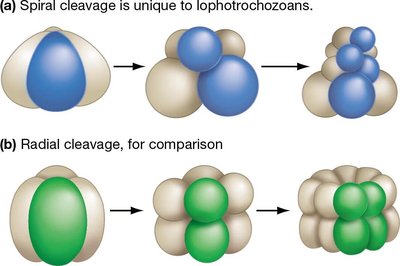
Spiral cleavage in embryos is a synapomorphy for this group, resulting in a spiraling pattern of cells in the blastula.
Not all lophotrochozoans have all three traits (lophophore, trochophore, spiral cleavage).
Flatworms (Platyhelminthes)
Flatworms are named for their broad, flattened bodies, which provide a large surface area for gas exchange.
They lack a coelom and specialized structures for gas exchange and circulation.
Flatworms must live in moist or aquatic environments.
Major lineages include Turbellaria (free-living), Cestoda (tapeworms), Trematoda (flukes), and Monogenea (ectoparasites).
Annelids: Segmented Worms
Annelids are characterized by a segmented body and a coelom. Segmentation allows for specialization and flexibility.
Traditional groups: Polychaeta, Oligochaeta, Hirudinea (leech).
Segmentation arose independently in annelids and arthropods (convergent evolution).
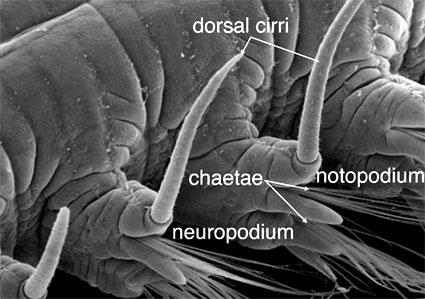
Key synapomorphy: bristle-like extensions called chaetae from lobe-like appendages called parapodia.
Mollusks: Body Plan and Diversity
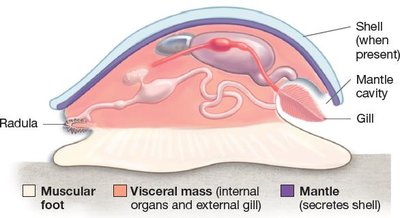
Mollusks are a highly diverse group with a characteristic body plan consisting of a foot, visceral mass, and mantle.
Foot: Large muscle used for movement; modified in different lineages (digging, tentacles).
Visceral mass: Contains internal organs and external gill.
Mantle: Outgrowth of body wall that covers visceral mass and secretes shell.
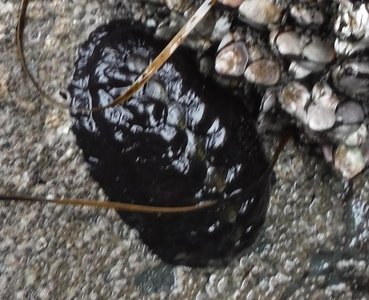
Major lineages: Chitons, Bivalves (clams, mussels), Gastropods (snails, slugs), Cephalopods (squid, octopus).
Radula and Mantle Functions
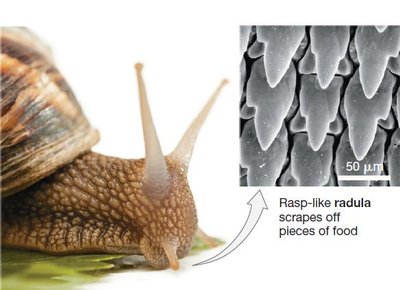
Radula: Unique feeding structure in mollusks, functions like a rasp or file to scrape food. Lost in bivalves, which are suspension feeders.
Mantle: Secretes shell (calcium carbonate), forms internal lung in terrestrial snails, siphons in bivalves and cephalopods.
Ecdysozoans: Molting and Body Plans
Defining Features and Growth
Ecdysozoans are a monophyletic group that includes nematodes, tardigrades, onychophorans, and arthropods.
They grow by molting (ecdysis): shedding the cuticle or exoskeleton.
Molting is regulated by the hormone ecdysone.
Cuticle/exoskeleton provides protection and muscle attachment.
Nematodes (Roundworms)
Nematodes are unsegmented worms with a pseudocoelom and a tube-within-a-tube body plan.
Elastic cuticle is molted during growth.
Lack specialized systems for gas exchange and nutrient circulation.
Feed on bacteria, fungi, plant roots, protists, detritus; some are parasitic.
Arthropods: Body Plan and Diversity
Arthropods are the most diverse animal phylum, defined by three key features:
Segmented body organized into tagmata (head, thorax, abdomen).
Exoskeleton made of chitin, strengthened by calcium carbonate in crustaceans.
Jointed appendages for rapid and precise movement.
Evolutionary Flexibility and Hox Genes
Small changes in gene expression (e.g., Hox genes) can lead to morphological innovation.
Functional specialization among segments allows for evolutionary diversification.
Arthropod Lineages and Phylogeny
Four major lineages: Myriapods, Insects, Crustaceans, Chelicerates.
Recent phylogenetic studies place insects within the crustacean lineage.
Metamorphosis
Insects can undergo incomplete or complete metamorphosis, leading to dramatic changes in form and function.
Summary Table: Major Protostome Phyla and Their Features
Phylum | Body Plan | Key Features | Ecological Role |
|---|---|---|---|
Arthropoda | Segmented, exoskeleton, jointed appendages | Tagmata, chitin exoskeleton | Diverse, abundant, many roles |
Mollusca | Foot, visceral mass, mantle | Radula, shell, siphons | Herbivores, carnivores, filter feeders |
Annelida | Segmented, coelom | Chaetae, parapodia | Detritivores, predators |
Nematoda | Unsegmented, pseudocoelom | Elastic cuticle, molting | Free-living, parasitic |
Platyhelminthes | Flat, no coelom | Broad body, diffusion | Predators, parasites |
Additional info: Some details about segmentation, Hox genes, and evolutionary innovations were inferred from standard biology knowledge to provide context for the notes.
