 Back
Regulation of Eukaryotic Gene Expression part 2
Study Guide - Smart Notes
 Tailored notes based on your materials, expanded with key definitions, examples, and context.
Regulation of Eukaryotic Gene Expression
Overview of Gene Expression Regulation
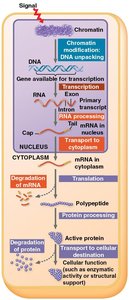
Gene expression in eukaryotes is regulated at multiple stages, from chromatin modification to protein processing. This regulation ensures that genes are expressed only when and where they are needed, allowing cells to respond to internal and external signals and to specialize for different functions.
Differential gene expression allows cells with identical genomes to perform distinct functions.
Abnormal gene expression can lead to diseases such as cancer.
Regulation can occur at the level of chromatin structure, transcription, RNA processing, mRNA stability, translation, and protein modification.
Chromatin Structure and Gene Expression
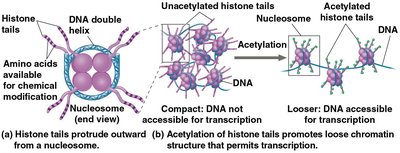
Chromatin structure plays a critical role in regulating gene accessibility and transcription. DNA is packaged with histone proteins into nucleosomes, which can be modified to alter gene expression.
Heterochromatin: Highly packed chromatin, generally transcriptionally inactive.
Euchromatin: Loosely packed chromatin, more accessible for transcription.
The position of nucleosomes and attachment to the chromosomal scaffold influence promoter accessibility.
Chemical Modifications of Histones
Histone proteins can be chemically modified, affecting chromatin structure and gene expression. These modifications are catalyzed by specific enzymes.
Histone acetylation: Addition of acetyl groups (–COCH3) to histone tails loosens chromatin, promoting transcription.
Histone methylation: Addition of methyl groups (–CH3) usually condenses chromatin, repressing transcription.
Phosphorylation: Addition of phosphate groups can also affect chromatin structure and gene expression.
DNA Methylation
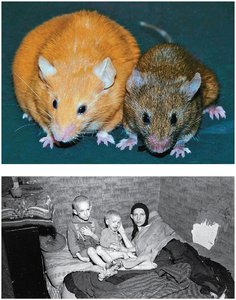
DNA methylation involves the addition of methyl groups to cytosine bases in DNA, often leading to long-term gene silencing. This process is important for cellular differentiation and can be inherited through cell divisions.
DNA methylation is a stable modification that can silence genes permanently in certain cell types.
It is a key mechanism in epigenetic inheritance, where traits are passed on without changes to the DNA sequence.
Organization of a Typical Eukaryotic Gene
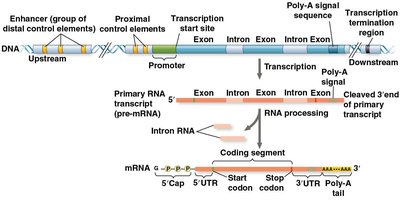
Eukaryotic genes are organized with multiple regulatory elements that control transcription. These include promoters, enhancers, and control elements.
Promoter: The DNA sequence where RNA polymerase and general transcription factors bind to initiate transcription.
Control elements: Noncoding DNA segments that serve as binding sites for transcription factors.
Enhancers: Distal control elements that can be located far from the gene and greatly increase transcription efficiency.
Genes are transcribed into primary RNA transcripts (pre-mRNA), which are processed to form mature mRNA.
Regulation of Transcription Initiation
Transcription initiation is a major control point for gene expression. It involves the assembly of a complex of proteins at the promoter region.
General transcription factors are required for the transcription of all protein-coding genes.
Specific transcription factors bind to control elements and regulate transcription of particular genes.
RNA polymerase II requires these factors to recognize the promoter and initiate transcription.
Protein-protein interactions among transcription factors and RNA polymerase II stabilize the transcription initiation complex.
Enhancers and Specific Transcription Factors
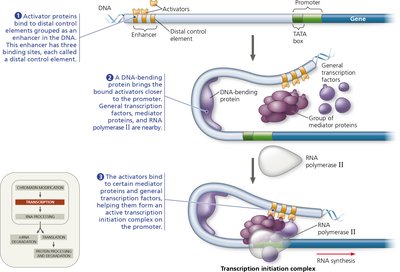
Enhancers are DNA elements that can greatly increase the transcription of associated genes. They function by binding activator proteins, which interact with the transcription machinery at the promoter.
Proximal control elements: Located near the promoter, help fine-tune transcription.
Distal control elements (enhancers): Can be located far from the gene, increase transcription efficiency.
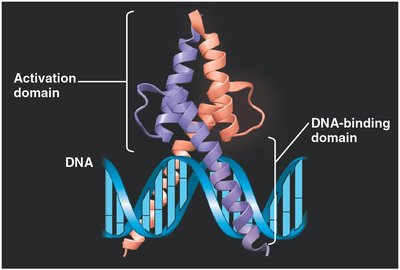
Activator proteins have a DNA-binding domain and an activation domain, and promote transcription by facilitating the assembly of the transcription initiation complex.
Mediator proteins bridge activators and the transcription machinery, ensuring efficient transcription initiation.
Role of Repressors
Repressors are transcription factors that inhibit gene expression. They can act by blocking activator binding, interfering with activator function, or modifying chromatin structure to make DNA less accessible.
Direct binding to control elements prevents activators from binding.
Indirect effects include altering activator shape or modifying chromatin structure.
Combinatorial Control of Gene Activation
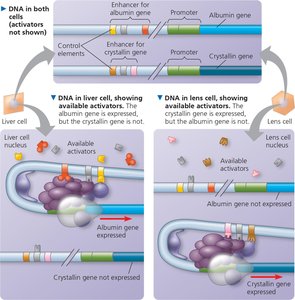
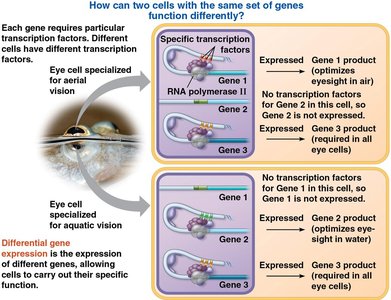
Gene expression is often regulated by the combination of multiple control elements and transcription factors. This allows for precise and cell-type-specific gene expression.
Different cell types express different sets of activators, leading to cell-specific gene expression.
Combinatorial control enables a small number of control elements to generate a large diversity of gene expression patterns.
Epigenetic Inheritance
Epigenetic inheritance refers to the transmission of traits by mechanisms not involving changes in the DNA sequence, such as chromatin modifications and DNA methylation. These modifications can be stable and passed to daughter cells during cell division.
Explains why identical twins can have different disease susceptibilities.
Important for cellular differentiation and development.
Sample Exam Questions
Histone acetylases activate transcription by opening chromatin (correct answer: a).
DNA methylation represses gene expression (correct answer: c).
Histone acetylation reduces histone-DNA interaction, allowing transcription (correct answer: a).
Cells loosen histone-DNA interaction by adding acetyl groups to histones (correct answer: c).
DNA bending proteins help bring activators closer to the promoter (correct answer: c).
Different specific transcription factors in each cell determine which genes are expressed (correct answer: a).
Pancreas cells express an activator protein that binds the insulin enhancer (correct answer: d).
Muscle cells differ from nerve cells mainly because they express different genes (correct answer: a).
Enhancers are an example of transcriptional control of gene expression (correct answer: b).
Proximal control elements are not located far from the gene (correct answer: b, False).
Activator inhibits gene expression (correct answer: b, False).
