 Back
BackRegulation of Gene Expression and Applications of Genetic Biotechnology
Study Guide - Smart Notes
 Tailored notes based on your materials, expanded with key definitions, examples, and context.
Regulation of Gene Expression
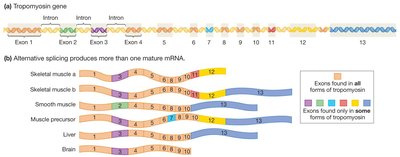
Post-Transcriptional Regulation: Alternative Splicing
Alternative splicing is a critical mechanism in eukaryotic cells that allows a single gene to produce multiple polypeptides. This process is regulated by proteins that interact with spliceosomes, enabling the selective removal of introns and joining of exons in various combinations.
Definition: Alternative splicing refers to the process by which different combinations of exons are joined together to produce multiple mature mRNA variants from a single primary transcript.
Significance: Over 90% of human genes undergo alternative splicing, greatly increasing protein diversity.
Gene Definition: A gene is now defined as a nucleotide sequence that allows production of one or more polypeptides.
Example: The tropomyosin gene produces different mRNAs in various tissues through alternative splicing.
RNA Interference (RNAi)
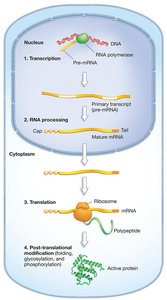
RNA interference is a post-transcriptional regulatory mechanism that controls the expression and lifespan of mRNAs. It involves small RNA molecules that bind to complementary mRNA sequences, leading to their degradation or inhibition of translation.
Mechanism: Single-stranded RNA, such as microRNA (miRNA), is held by a protein complex (RISC) and binds to target mRNA.
Types:
miRNA: Regulates expression of most genes; processed and incorporated into RISC, which then targets mRNA for cleavage or translational repression.
siRNA: Short interfering RNAs protect against viruses and transposable elements.
piRNA: PIWI-interacting RNAs also silence gene expression, especially in germ cells.
Applications: Researchers use RNAi to decrease expression of specific genes to study their effects.
Post-Translational Control
Post-translational regulation allows cells to respond rapidly to environmental changes by modifying proteins after translation. This process is less efficient but provides quick adaptation.
Mechanisms:
Enzymatic addition of carbohydrate groups or cleavage of amino acids
Phosphorylation by protein kinases
Targeting proteins for destruction
Example: Proteins can be kept inactive and quickly activated when needed.
Genetic Biotechnology and Transgenic Organisms
Genetically Modified Organisms (GMOs)
Genetic biotechnologies are used to modify organisms for practical purposes, such as improving crop traits or producing therapeutic proteins.
Definition: A genetically modified organism (GMO) is any organism whose genetic material has been altered using genetic engineering techniques.
Transgenic Organisms: These are GMOs that contain genes from another species.
Example: Arctic Apples are engineered to silence the gene for polyphenol oxidase, reducing browning.

Transgenic Animals and Plants
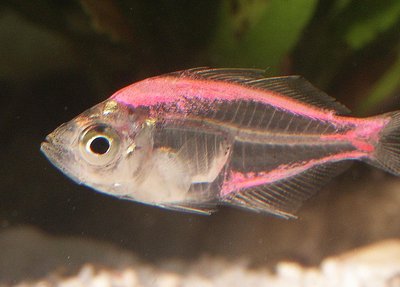
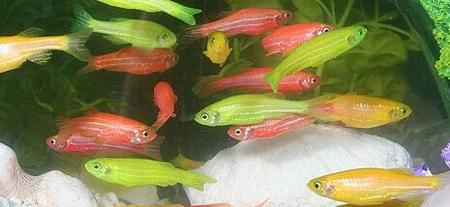
Transgenic organisms are created by introducing foreign genes to confer new traits, such as fluorescence or disease resistance.
Example: GloFish are transgenic fish expressing fluorescent protein genes derived from marine organisms.
Application: Transgenic plants can be engineered to express fluorescent proteins or other desirable traits.
Transgenic Microbial Factories
Microorganisms are engineered to produce human proteins for medical use, such as insulin and growth hormone.
Example: Bacteria expressing the human insulin gene are used to produce insulin for diabetes treatment.
Transgenic Mammals for Therapeutic Protein Production
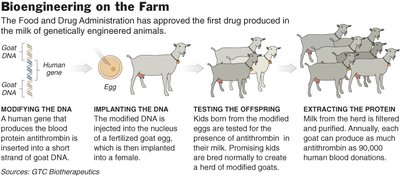
Large mammals can be genetically engineered to produce human proteins in their milk, providing a scalable source for therapeutic use.
Antithrombin Production: The human antithrombin gene is inserted into goats, allowing the protein to be expressed in the mammary gland and collected from milk.
Gene Structure:
Regulatory sequence: Controls timing, location, and amount of expression.
Coding sequence: Determines amino acid sequence of the protein.
Hybrid Gene: Created by combining the goat beta casein regulatory sequence with the human antithrombin coding sequence.

Medical Applications: Antithrombin Treatment
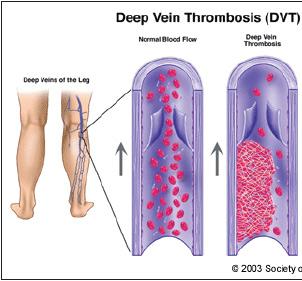
Antithrombin is a protein that inactivates enzymes promoting blood clotting. Deficiency can lead to thrombosis, a dangerous condition where blood clots restrict flow.
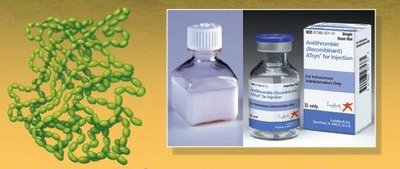
Treatment: Antithrombin is administered during high-risk periods, such as surgery.
Production Challenge: Traditional methods require many blood donors; transgenic goats provide a more efficient source.
Summary Table: Types of Gene Regulation
Regulation Level | Mechanism | Example |
|---|---|---|
Post-Transcriptional | Alternative splicing, RNA interference | miRNA targeting mRNA |
Post-Translational | Protein modification, phosphorylation | Activation of kinases |
Transgenic Biotechnology | Gene insertion, hybrid gene creation | Antithrombin in goat milk |
Key Terms and Concepts
Alternative Splicing: Process by which different mRNA variants are produced from a single gene.
RNA Interference (RNAi): Mechanism for silencing gene expression using small RNAs.
Transgenic Organism: Organism containing genes from another species.
Regulatory Sequence: DNA segment controlling gene expression.
Coding Sequence: DNA segment determining protein structure.
Equations and Formulas
Central Dogma of Molecular Biology:
Gene Expression Regulation:
Additional info:
RNA interference is a powerful tool for gene silencing and is widely used in research and biotechnology.
Transgenic animals and plants are essential for producing pharmaceuticals and improving agricultural traits.
