 Back
Regulation of Gene Expression and Biotechnology
Study Guide - Smart Notes
 Tailored notes based on your materials, expanded with key definitions, examples, and context.
Regulation of Gene Expression
Introduction to Gene Regulation
Gene expression is the process by which information from a gene is used to synthesize functional gene products, such as proteins. Cells regulate gene expression to respond to environmental changes and to conserve energy by producing proteins only when needed.
Gene regulation allows cells to turn genes on or off in response to internal and external signals.
Regulation is essential for cellular differentiation and adaptation.
Gene Regulation in Prokaryotes: Operons
In prokaryotic cells, genes are often organized into operons, which are clusters of genes under the control of a single promoter and regulatory region. This allows coordinated regulation of genes with related functions.
Operon: A unit of DNA containing a cluster of genes under the control of a single promoter and operator.
Two main types: repressible operons (e.g., trp operon) and inducible operons (e.g., lac operon).
Repressible Operon: The trp Operon
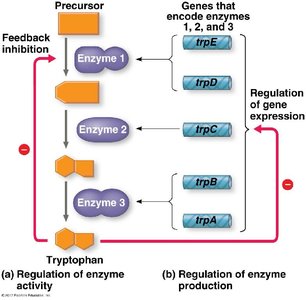
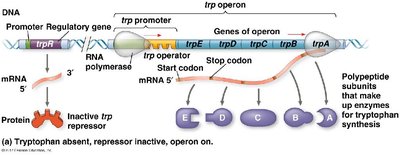
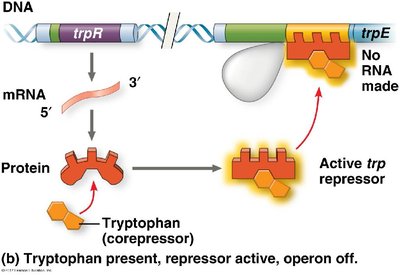
The trp operon is a classic example of a repressible operon, which is usually on but can be turned off when a specific molecule is present.
Regulates genes involved in tryptophan biosynthesis.
When tryptophan is abundant, it acts as a corepressor, activating the repressor protein to bind the operator and block transcription.
When tryptophan is absent, the repressor is inactive, and the operon is transcribed.
Inducible Operon: The lac Operon
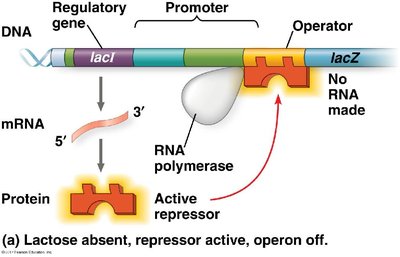
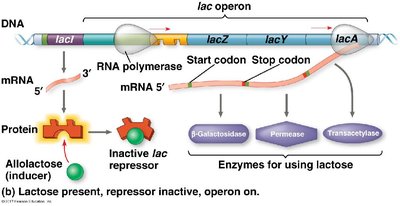
The lac operon is an example of an inducible operon, which is usually off but can be turned on in the presence of an inducer.
Regulates genes required for lactose metabolism.
When lactose is absent, the repressor binds the operator, preventing transcription.
When lactose is present, it acts as an inducer (allolactose), inactivating the repressor and allowing transcription.
Gene Regulation in Eukaryotes
Eukaryotic gene regulation is more complex, involving multiple levels of control from chromatin structure to post-translational modifications.
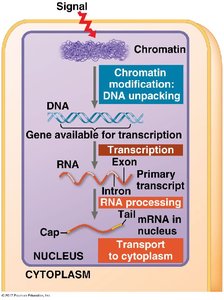
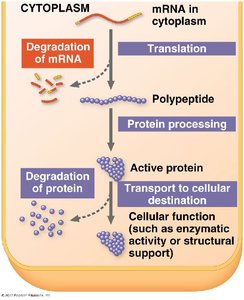
Regulation can occur at the level of chromatin modification, transcription, RNA processing, mRNA stability, translation, and protein modification.
Transcriptional Regulation
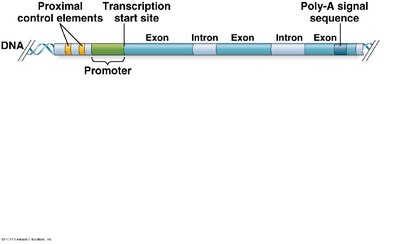
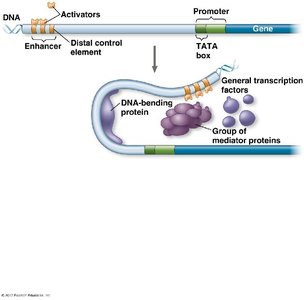
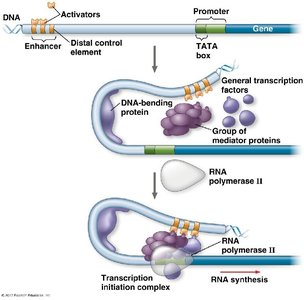
Involves control elements such as promoters, enhancers, and transcription factors.
Transcription factors bind to specific DNA sequences to increase or decrease transcription.
Differential Splicing
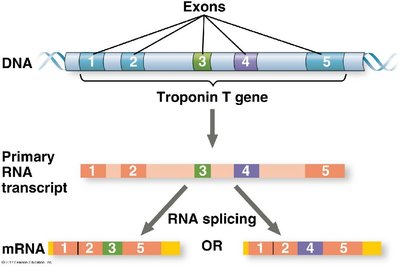
Alternative splicing allows a single gene to code for multiple proteins by including or excluding certain exons during mRNA processing.
Epigenetics: DNA Methylation
DNA methylation is the addition of methyl groups to DNA, typically suppressing gene expression.
Epigenetic changes can be influenced by environmental factors and can be heritable.
Examples include altered methylation patterns due to drug exposure or early-life stress, which can affect gene expression and disease risk.
Biotechnology Applications
Genetic Engineering and Recombinant DNA
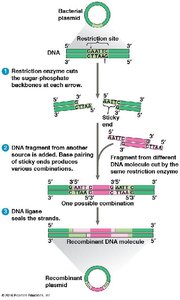
Recombinant DNA technology allows scientists to manipulate genes by combining DNA from different sources.
Restriction enzymes cut DNA at specific sequences, and DNA ligase joins fragments to create recombinant molecules.
Gene Cloning and Applications
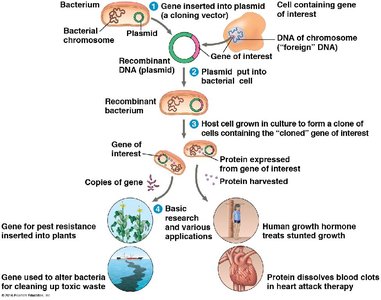
Gene cloning involves inserting a gene of interest into a plasmid vector and introducing it into bacteria for replication and expression.
Applications include basic research, production of hormones, and environmental or medical uses.
Transgenic Organisms
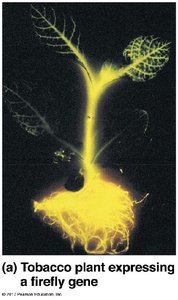
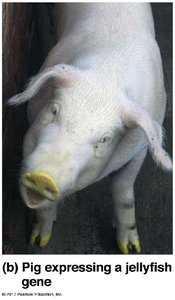
Transgenic organisms contain genes from other species, allowing for new traits or functions.
Examples include plants expressing firefly genes for bioluminescence and animals expressing fluorescent proteins from jellyfish.
Genetically Modified Organs for Transplantation
Recent advances include the transplantation of genetically modified pig hearts into humans.
Genetic modifications can reduce immune rejection by knocking down specific pig genes and inserting human genes.
Such procedures represent significant progress but also raise ethical and medical questions.
Modification | Purpose |
|---|---|
Knockdown of 3 immune-rejection genes | Reduce risk of organ rejection |
Insertion of 6 human genes + 1 growth gene | Improve compatibility and function |
Outcome | Patient survived two months |
Discussion: Is this a positive or negative advancement? Consider ethical, medical, and societal implications.
Additional info: The use of genetically modified organs for transplantation is an emerging field known as xenotransplantation, which may help address organ shortages but requires careful consideration of long-term risks and benefits.
