 Back
BackRegulation of Gene Expression in Prokaryotes and Eukaryotes
Study Guide - Smart Notes
 Tailored notes based on your materials, expanded with key definitions, examples, and context.
Q1. What are the three main points at which gene expression can be regulated in prokaryotes?
Background
Topic: Gene Expression Regulation
This question tests your understanding of the stages at which gene expression can be controlled in prokaryotic cells: transcriptional, translational, and post-translational regulation.
Key Terms:
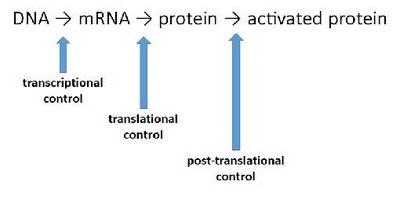
Transcriptional control: Regulation of whether a gene is transcribed into mRNA.
Translational control: Regulation of whether mRNA is translated into protein.
Post-translational control: Regulation of protein activity after translation.
Step-by-Step Guidance
Review the central dogma of molecular biology: DNA → mRNA → protein → activated protein.
Identify where regulation can occur: before transcription (transcriptional), after mRNA is made (translational), and after protein is made (post-translational).
Consider the consequences of each regulation point: speed of response and energy efficiency.
Think about which stage allows for the fastest response and which conserves the most resources.
Try solving on your own before revealing the answer!
Final Answer:
The most rapid appearance of activated protein is achieved by post-translational regulation. The mechanism that wastes the least energy and raw materials is transcriptional regulation.
Post-translational regulation acts on proteins already present, while transcriptional regulation prevents unnecessary synthesis.
Q2. What is an operon in prokaryotic cells?
Background
Topic: Operons in Prokaryotes
This question tests your knowledge of operon structure and function in prokaryotic gene regulation.
Key Terms:
Operon: A cluster of genes transcribed together as a single mRNA.
Regulatory regions: DNA sequences that control gene expression.
Step-by-Step Guidance
Recall that prokaryotic genes are often organized in operons.
Think about how multiple genes can be regulated together and transcribed as one mRNA.
Consider the function of operons in metabolic pathways.
Try solving on your own before revealing the answer!
Final Answer:
An operon is a region of DNA that codes for a set of genes transcribed together as a single mRNA.
This allows coordinated regulation of genes involved in related functions.
Q3. How is the activity of phosphofructokinase (PFK) regulated during cellular respiration?
Background
Topic: Post-Translational Regulation
This question examines how enzyme activity can be regulated after translation, specifically through feedback inhibition.
Key Terms:
Post-translational regulation: Control of protein activity after synthesis.
Feedback inhibition: End product inhibits enzyme activity.
Step-by-Step Guidance
Recall that PFK is an enzyme in glycolysis.
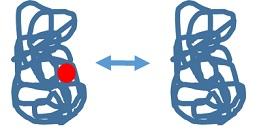
Understand that ATP can bind to PFK and reduce its activity.
Recognize that this regulation occurs after the protein is made, affecting its function directly.
Try solving on your own before revealing the answer!
Final Answer:
The gene coding for PFK is under post-translational regulation because ATP binds to the enzyme and alters its activity.
This is a classic example of feedback inhibition.
Q4. How does high lactose in E. coli increase expression of the lac operon?
Background
Topic: Regulation of the lac Operon
This question tests your understanding of negative control and the role of the lac repressor in gene expression.
Key Terms:
Lac operon: A set of genes for lactose metabolism.
Repressor: Protein that blocks transcription by binding to the operator.
Operator: DNA region where the repressor binds.
Step-by-Step Guidance
Recall that the lac operon is regulated by a repressor protein.
Understand that lactose binds to the repressor, causing it to detach from the operator.
With the repressor removed, RNA polymerase can transcribe the operon.
Try solving on your own before revealing the answer!
Final Answer:
Lactose binds to the repressor, causing it to detach from the operator. This allows RNA polymerase to transcribe the operon.
This is an example of negative control.
Q5. What happens to expression of the lac operon when glucose levels are low?
Background
Topic: Catabolite Repression and Positive Regulation
This question tests your understanding of how cAMP and regulatory proteins affect lac operon expression.
Key Terms:
cAMP: Cyclic AMP, a signaling molecule.
CAP: Catabolite Activator Protein, binds to DNA when activated by cAMP.
Step-by-Step Guidance
Recall that low glucose increases cAMP levels.
cAMP activates CAP, which binds to a regulatory region near the lac operon.
This increases expression of the lac operon, allowing lactose breakdown.
Try solving on your own before revealing the answer!
Final Answer:
When glucose is low, CAP is activated by cAMP and binds to the regulatory region, increasing expression of the lac operon and promoting lactose breakdown.
Q6. What effect would a permanently active trp repressor have on tryptophan synthesis in E. coli?
Background
Topic: Negative Regulation of the trp Operon
This question tests your understanding of how repressors and corepressors regulate amino acid synthesis.
Key Terms:
trp operon: Genes for tryptophan synthesis.
Repressor: Protein that blocks transcription when bound to tryptophan.
Step-by-Step Guidance
Recall that tryptophan binds to the trp repressor, activating it.
If the repressor is always active, it will always bind to the operator.
This blocks transcription of the trp operon, preventing tryptophan synthesis.
Try solving on your own before revealing the answer!
Final Answer:
Tryptophan synthesis would not occur because the repressor would always be bound to the operator and block transcription.
Q7. What type of regulation is described when an amino acid binds to a regulatory protein that blocks transcription?
Background
Topic: Negative Regulation of Transcription
This question tests your understanding of negative versus positive regulation in operons.
Key Terms:
Negative regulation: Regulatory protein blocks transcription.
Positive regulation: Regulatory protein promotes transcription.
Step-by-Step Guidance
Identify the role of the regulatory protein: does it block or promote transcription?
Recognize that binding of the protein to the operator stops transcription.
Understand that this is negative regulation.
Try solving on your own before revealing the answer!
Final Answer:
This is negative regulation of transcription because the regulatory protein blocks transcription when bound.
Q8. What is global gene regulation and how does the ToxR regulon in Vibrio cholera work?
Background
Topic: Global Gene Regulation and Regulons
This question tests your understanding of how bacteria coordinate expression of multiple genes in response to environmental changes.
Key Terms:
Regulon: A set of genes or operons controlled by a single regulatory protein.
Activator protein: Stimulates transcription by binding to regulatory DNA sequences.
Step-by-Step Guidance
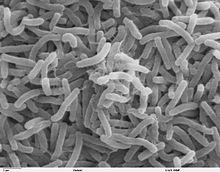
Understand that the ToxR regulon is activated in the human gut.
The activator protein binds to DNA, turning on toxin genes.
Consider how a drug could prevent severe diarrhea by interfering with this process.
Try solving on your own before revealing the answer!
Final Answer:
A drug that binds to the activator protein and prevents it from binding to DNA would be most effective at preventing severe diarrhea caused by cholera infection.
Q12. What could happen to mRNA as a result of alternate splicing?
Background
Topic: Alternative Splicing in Eukaryotes
This question tests your understanding of how different mRNA molecules can be produced from the same gene by including or excluding different exons.
Key Terms:
Exon: Coding region of a gene.
Intron: Non-coding region removed during splicing.
Alternative splicing: Process by which different combinations of exons are joined to form different mRNAs.

Step-by-Step Guidance
Review the structure of a gene: exons and introns.
Understand that splicing removes introns and joins exons.
Recognize that alternative splicing can produce mRNAs with different sets of exons.
Try solving on your own before revealing the answer!
Final Answer:
The mRNA could contain different sets of exons, such as A-C-E-G-K or A-E-G-K, as a result of alternate splicing.
This allows for production of different proteins from the same gene.
