 Back
Regulation of Gene Expression: Mechanisms and Implications
Study Guide - Smart Notes
 Tailored notes based on your materials, expanded with key definitions, examples, and context.
Regulation of Gene Expression
Introduction to Gene Expression Regulation
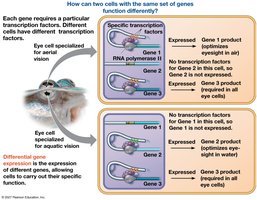
Gene expression regulation is a fundamental process that allows cells with identical genomes to perform different functions. This regulation occurs at multiple stages and is essential for cellular differentiation, development, and adaptation. Abnormalities in gene expression can lead to diseases such as cancer.
Differential gene expression: The expression of different genes by cells with the same genome, resulting in cell specialization.
Transcription factors: Proteins that control which genes are expressed in a cell.
Operons: The Basic Concept
In prokaryotes, genes are often organized in clusters called operons, which are coordinately controlled by a single regulatory element.
Operator: A DNA segment acting as an "on-off" switch, located within or near the promoter.
Operon: The stretch of DNA including the operator, promoter, and the genes they control.
Repressible and Inducible Operons
Operons can be classified based on their regulatory mechanisms:
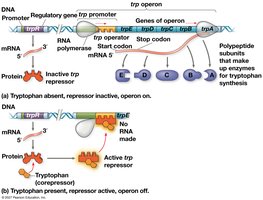
Repressible operon: Usually active; can be turned off by a repressor (e.g., trp operon).
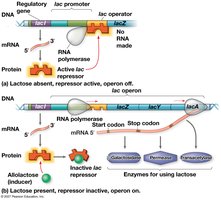
Inducible operon: Usually inactive; can be turned on by an inducer (e.g., lac operon).
Positive and Negative Control of Operons
Negative control: Repressor proteins inhibit transcription.
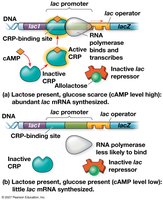
Positive control: Activator proteins (e.g., CRP) enhance transcription when bound to DNA.
Stages of Gene Expression Regulation in Eukaryotes
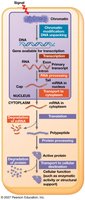
Gene expression in eukaryotes is regulated at multiple levels, including chromatin modification, transcription, RNA processing, translation, and protein processing/degradation.
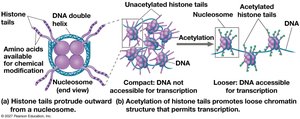
Chromatin modification: Changes to DNA and histone proteins affect accessibility for transcription.
Transcriptional regulation: Control of gene activation and RNA synthesis.
Post-transcriptional regulation: Includes RNA splicing, transport, and stability.
Translational regulation: Control of protein synthesis from mRNA.
Post-translational regulation: Protein processing and degradation.
Chromatin Structure and Epigenetic Regulation
Histone Modifications
Histone acetylation: Addition of acetyl groups to histone tails loosens chromatin, making DNA accessible for transcription.
DNA methylation: Addition of methyl groups to DNA bases reduces transcription and can cause long-term gene inactivation.
Epigenetic Inheritance
Epigenetic modifications do not change DNA sequence but can be inherited by daughter cells.
Epigenetic inheritance may explain why identical twins can differ in disease susceptibility.
Transcriptional Regulation in Eukaryotes
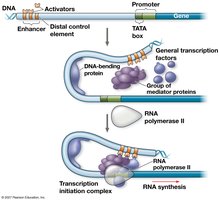
Enhancers: Distal DNA elements that bind activators to increase transcription.
Transcription activators: Proteins that bind enhancers and facilitate assembly of the transcription initiation complex.
Cell Type–Specific Transcription
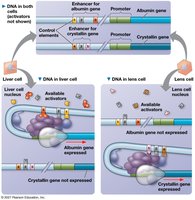
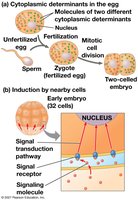
Different cell types express different sets of genes due to the presence of specific activators and repressors.
RNA Processing and Alternative Splicing
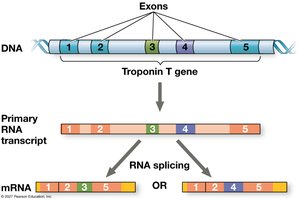
Alternative RNA splicing: A single gene can produce multiple mRNA variants by including or excluding certain exons, increasing protein diversity.
Protein Processing and Degradation
Proteins undergo modifications after translation, such as cleavage and chemical changes.
Proteins are selectively degraded by tagging with ubiquitin, which directs them to proteasomes for destruction.
Regulation by Noncoding RNAs
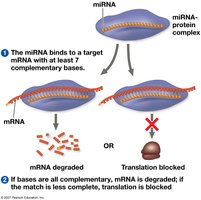
microRNAs (miRNAs): Small RNA molecules that bind to complementary mRNA sequences, leading to mRNA degradation or inhibition of translation.
Gene Regulation in Development and Disease
Genetic Program for Embryonic Development
Development involves cell division, differentiation, and morphogenesis.
Cell differentiation: Cells become specialized in structure and function.
Morphogenesis: Physical processes that shape the organism.
Determination and Differentiation of Muscle Cells
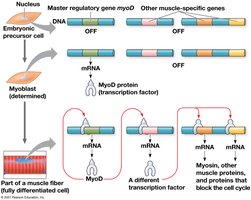
Master regulatory genes (e.g., myoD) initiate muscle cell differentiation.
Transcription factors activate muscle-specific genes, leading to specialized cell function.
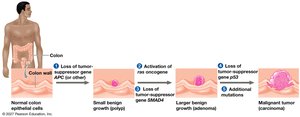
Gene Regulation and Cancer
Oncogenes: Mutated proto-oncogenes that promote excessive cell growth and division.
Tumor-suppressor genes: Normally inhibit cell division, repair DNA, and control cell adhesion; mutations can lead to cancer.
Multistep Model of Cancer Development
Cancer arises from multiple genetic changes, including activation of oncogenes and loss of tumor-suppressor genes.
Summary of Eukaryotic Gene Expression Regulation
Eukaryotic gene expression is regulated at many stages, from chromatin modification to protein degradation. Each stage offers opportunities for control and fine-tuning of cellular function. 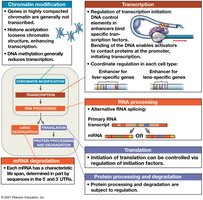
Key Terms and Concepts
Operator, operon, repressor, inducer, activator, enhancer, transcription factor, epigenetic inheritance, alternative splicing, miRNA, ubiquitin, proteasome, oncogene, tumor-suppressor gene
Example Table: Comparison of Repressible and Inducible Operons
Type | Default State | Regulatory Molecule | Example |
|---|---|---|---|
Repressible Operon | On | Repressor (activated by corepressor) | trp operon |
Inducible Operon | Off | Repressor (inactivated by inducer) | lac operon |
Equations and Formulas
Gene expression regulation can be modeled mathematically, for example:
Protein degradation rate:
Additional info:
Epigenetic modifications are reversible and can be influenced by environmental factors.
Alternative splicing is a major source of proteomic diversity in multicellular organisms.
----------------------------------------
