 Back
Regulation of Gene Expression: Mechanisms and Implications
Study Guide - Smart Notes
 Tailored notes based on your materials, expanded with key definitions, examples, and context.
Regulation of Gene Expression
Introduction to Gene Expression Regulation
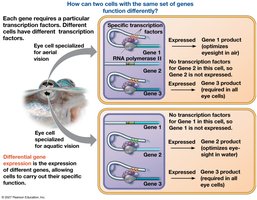
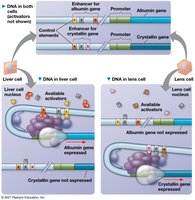
Gene expression regulation is a fundamental process that allows cells with identical genetic material to perform specialized functions. This regulation ensures that genes are expressed only when and where their products are needed, contributing to cellular differentiation, adaptation, and organismal development.
Differential gene expression: The process by which cells express different sets of genes, leading to distinct cell types and functions.
Regulation occurs at multiple stages, but is often focused on transcriptional control.
Gene Regulation in Prokaryotes: The Operon Model
Feedback Inhibition and Gene Regulation
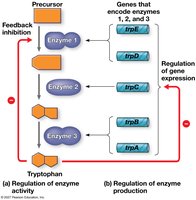
Prokaryotic cells, such as bacteria, regulate enzyme production through feedback inhibition and gene regulation. These mechanisms ensure efficient use of resources and energy.
Feedback inhibition: The end product of a metabolic pathway inhibits an enzyme involved earlier in the pathway, preventing overproduction.
Gene regulation: Cells control the transcription of genes encoding enzymes, adjusting enzyme levels as needed.
The Operon Concept
An operon is a cluster of functionally related genes regulated together by a single "on-off switch" called the operator. The operon includes the operator, promoter, and the genes they control.
The repressor protein can bind to the operator, blocking RNA polymerase and preventing transcription.
The repressor is encoded by a separate regulatory gene and can be activated or inactivated by other molecules (e.g., corepressors or inducers).
Repressible and Inducible Operons
Operons can be classified based on their regulatory mechanisms:
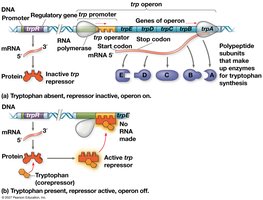
Repressible operon: Usually on; can be turned off by a repressor (e.g., trp operon).
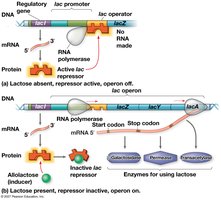
Inducible operon: Usually off; can be turned on by an inducer (e.g., lac operon).
The trp Operon (Repressible)
The trp operon in E. coli controls the synthesis of tryptophan. When tryptophan is abundant, it acts as a corepressor, activating the repressor protein to shut off the operon.
The lac Operon (Inducible)
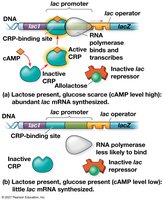
The lac operon controls the metabolism of lactose. In the absence of lactose, the repressor is active and the operon is off. When lactose (specifically allolactose) is present, it inactivates the repressor, allowing transcription.
Negative and Positive Gene Regulation
Negative control: Operons are switched off by the active form of the repressor.
Positive control: Some operons are also regulated by activator proteins, such as the cAMP receptor protein (CRP), which enhances transcription when glucose is scarce.
Gene Regulation in Eukaryotes
Chromatin Structure and Epigenetic Regulation
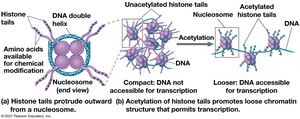
The organization of chromatin in eukaryotic cells influences gene expression. Modifications to histones and DNA can either promote or inhibit transcription.
Histone acetylation: Addition of acetyl groups to histone tails loosens chromatin, making DNA accessible for transcription.
DNA methylation: Addition of methyl groups to DNA bases reduces transcription and can lead to long-term gene silencing.
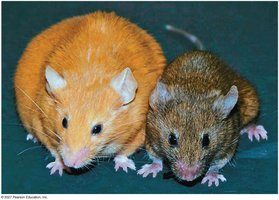
Epigenetic inheritance: Heritable changes in gene expression that do not involve changes to the DNA sequence.
Transcriptional Control in Eukaryotes
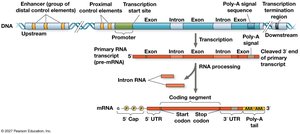
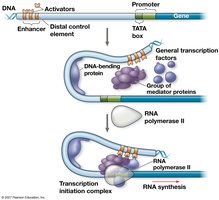
Gene expression in eukaryotes is regulated by control elements and transcription factors.
Control elements: Noncoding DNA sequences that serve as binding sites for transcription factors.
General transcription factors: Required for the transcription of all protein-coding genes.
Specific transcription factors: Bind to proximal or distal control elements (enhancers) to regulate particular genes.
Post-Transcriptional Regulation
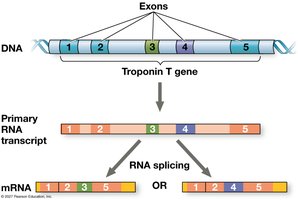
Gene expression can also be regulated after transcription through mechanisms such as alternative RNA splicing and protein modification.
Alternative RNA splicing: Different mRNA molecules are produced from the same primary transcript, increasing protein diversity.
Protein processing and degradation: Proteins may be chemically modified, cleaved, or marked for degradation by ubiquitin and destroyed by proteasomes.
Gene Expression and Development
Cell Differentiation and Morphogenesis
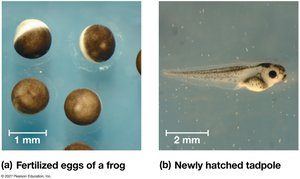
During development, gene expression guides the transformation from a single fertilized egg to a complex multicellular organism. This involves cell division, differentiation, and morphogenesis.
Cell differentiation: The process by which cells become specialized in structure and function.
Morphogenesis: The physical processes that give an organism its shape.
Determination and Differentiation of Muscle Cells
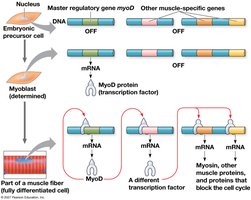
Determination commits a cell to a specific fate, while differentiation is the process by which the cell achieves its specialized form and function. The MyoD gene is a master regulatory gene for muscle cell differentiation.
Gene Regulation and Cancer
Oncogenes and Tumor-Suppressor Genes
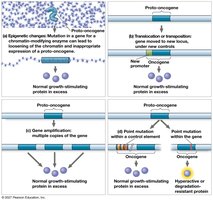
Cancer can result from mutations that disrupt normal gene regulation. Genes involved include proto-oncogenes (which can become oncogenes) and tumor-suppressor genes.
Oncogenes: Mutated genes that promote uncontrolled cell division.
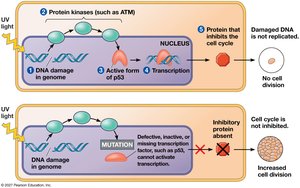
Tumor-suppressor genes: Genes that normally inhibit cell division or repair DNA; mutations can lead to cancer.
Key Mutations in Cancer
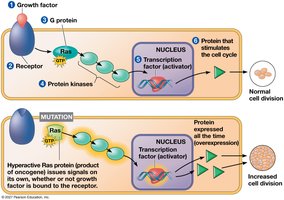
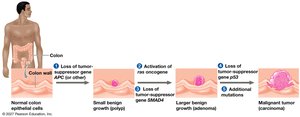
Mutations in the ras proto-oncogene and p53 tumor-suppressor gene are common in human cancers. The Ras protein is involved in cell signaling, while p53 is crucial for DNA repair and apoptosis.
Multistep Model of Cancer Development
Cancer typically arises after multiple genetic changes accumulate, including activation of oncogenes and loss of tumor-suppressor genes. Inherited mutations can predispose individuals to certain cancers.
Summary Table: Comparison of Repressible and Inducible Operons
Feature | Repressible Operon (e.g., trp) | Inducible Operon (e.g., lac) |
|---|---|---|
Default State | On | Off |
Regulation Mechanism | Turned off by repressor + corepressor | Turned on by inducer inactivating repressor |
Pathway Type | Anabolic (biosynthetic) | Catabolic (degradative) |
Example | trp operon (tryptophan synthesis) | lac operon (lactose metabolism) |
