 Back
Regulation of Gene Expression: Mechanisms and Implications
Study Guide - Smart Notes
 Tailored notes based on your materials, expanded with key definitions, examples, and context.
Regulation of Gene Expression
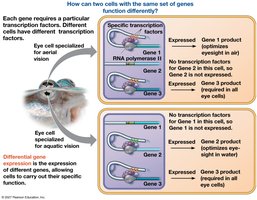
Differential Gene Expression
Differential gene expression is the process by which cells with identical genomes express different sets of genes, resulting in distinct cell types and functions. This regulation is fundamental to development, cellular specialization, and health.
Key Point 1: Most cells contain the same DNA, but express different genes due to specific transcription factors.
Key Point 2: Abnormal gene expression can lead to diseases, including cancer.
Example: Eye cells specialized for aerial vision versus aquatic vision express different genes for their function.
Operons: The Basic Concept
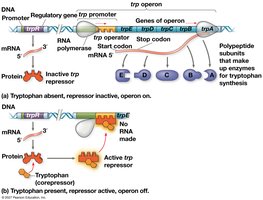
Operons are clusters of functionally related genes in prokaryotes that are coordinately controlled by a single regulatory element called an operator. The operon includes the operator, promoter, and the genes they control.
Key Point 1: The operator acts as an "on-off" switch for gene expression.
Key Point 2: The operon structure allows efficient regulation of multiple genes involved in a common pathway.
Example: The trp operon in E. coli regulates genes for tryptophan synthesis.
Repressible and Inducible Operons: Negative Gene Regulation
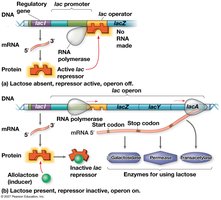
Operons can be classified as repressible or inducible based on their regulatory mechanisms. Repressible operons are usually active but can be turned off, while inducible operons are usually inactive but can be turned on.
Key Point 1: Repressible operon: Typically on; repressor binding shuts off transcription (e.g., trp operon).
Key Point 2: Inducible operon: Typically off; inducer inactivates repressor, allowing transcription (e.g., lac operon).
Positive Control of the lac Operon
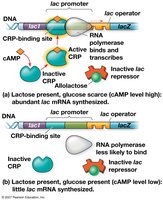
Gene expression can also be regulated by positive control mechanisms, such as the cAMP receptor protein (CRP) in the lac operon. CRP enhances transcription when glucose is scarce, allowing cells to utilize alternative energy sources.
Key Point 1: CRP binds to DNA and stimulates transcription when cAMP levels are high (low glucose).
Key Point 2: When glucose is present, cAMP levels drop, CRP is inactive, and transcription is reduced.
Stages of Gene Expression Regulation in Eukaryotes
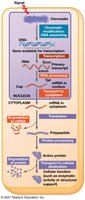
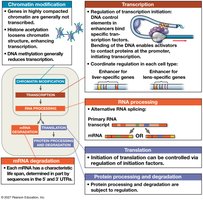
Gene expression in eukaryotic cells is regulated at multiple stages, including chromatin modification, transcription, RNA processing, translation, and protein processing/degradation.
Key Point 1: Regulation can occur before, during, or after transcription and translation.
Key Point 2: Each stage offers opportunities for fine-tuned control of gene activity.
Chromatin Modification: Histone Acetylation and DNA Methylation
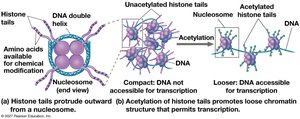
Chromatin structure affects gene accessibility. Histone acetylation loosens chromatin, promoting transcription, while DNA methylation generally represses gene expression.
Key Point 1: Histone acetylation: Addition of acetyl groups to histone tails opens chromatin, allowing transcription.
Key Point 2: DNA methylation: Addition of methyl groups to DNA bases reduces transcription and can cause long-term gene silencing.
Example: Genomic imprinting involves methylation to regulate expression of maternal or paternal alleles.
Epigenetic Inheritance
Epigenetic inheritance refers to the transmission of traits via mechanisms other than changes in DNA sequence, such as chromatin modifications. These changes can be passed to future generations of cells.
Key Point 1: Epigenetic modifications can explain differences in disease susceptibility among identical twins.
Key Point 2: Chromatin modifications are reversible and responsive to environmental factors.
Transcriptional Regulation: Enhancers and Activators
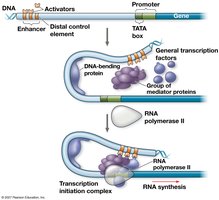
Enhancers are DNA elements that increase transcription by binding activator proteins. These proteins interact with transcription factors and RNA polymerase to initiate gene expression.
Key Point 1: Enhancers can be located far from the gene they regulate.
Key Point 2: Activators and mediator proteins form a transcription initiation complex.
Cell Type–Specific Transcription
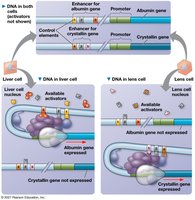
Different cell types express unique sets of genes due to the presence of specific activators and enhancers. This specificity is crucial for cellular differentiation and function.
Key Point 1: Liver and lens cells express different genes based on available activators.
Key Point 2: Control elements and enhancers determine which genes are expressed in each cell type.
Alternative RNA Splicing
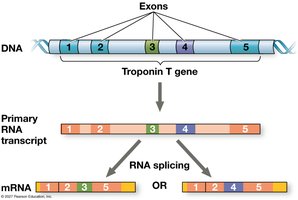
Alternative RNA splicing allows a single gene to produce multiple protein variants by including or excluding different exons during mRNA processing.
Key Point 1: Splicing increases protein diversity without increasing gene number.
Key Point 2: Splicing patterns are regulated by cellular signals and splicing factors.
Example: The troponin T gene produces different mRNAs via alternative splicing.
Protein Processing and Degradation
After translation, proteins undergo modifications and are selectively degraded to regulate their activity and lifespan. Ubiquitin tags proteins for degradation by proteasomes.
Key Point 1: Protein processing includes cleavage and chemical modifications.
Key Point 2: Ubiquitin-mediated degradation controls protein levels and function.
Regulation by microRNAs (miRNAs)
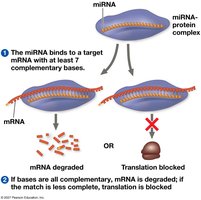
MicroRNAs (miRNAs) are small RNA molecules that regulate gene expression by binding to complementary mRNA sequences, leading to mRNA degradation or inhibition of translation.
Key Point 1: miRNAs can block translation or cause mRNA degradation.
Key Point 2: miRNAs play roles in development, cell differentiation, and disease.
Genetic Program for Embryonic Development
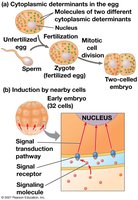
Embryonic development involves cell division, differentiation, and morphogenesis. Cell differentiation is the process by which cells become specialized, while morphogenesis shapes the organism.
Key Point 1: Developmental information comes from cytoplasmic determinants and cell signaling.
Key Point 2: Signal transduction pathways guide cell fate and differentiation.
Determination and Differentiation of Muscle Cells
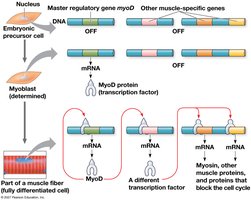
Muscle cell differentiation is controlled by regulatory genes and transcription factors. The master regulatory gene myoD initiates muscle-specific gene expression.
Key Point 1: Determination commits a cell to a specific fate.
Key Point 2: Differentiation involves expression of tissue-specific genes.
Genes Associated with Cancer
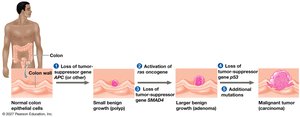
Cancer arises from mutations that disrupt normal cell growth and division. Oncogenes and tumor-suppressor genes are key players in cancer development.
Key Point 1: Oncogenes: Mutated proto-oncogenes that promote excessive cell division.
Key Point 2: Tumor-suppressor genes: Normally inhibit cell division; mutations can lead to cancer.
Example: Mutations in genes like APC, ras, and p53 contribute to colorectal cancer.
Summary of Eukaryotic Gene Expression Regulation
Gene expression in eukaryotes is regulated at multiple levels, including chromatin modification, transcription, RNA processing, translation, and protein degradation. Each stage offers opportunities for precise control of cellular function.
Key Point 1: Chromatin modifications, transcription factors, and enhancers regulate gene accessibility and expression.
Key Point 2: RNA processing, miRNA-mediated degradation, and protein modifications further refine gene expression.
Additional info:
Gene regulation is essential for development, cellular specialization, and adaptation to environmental changes.
Epigenetic mechanisms provide reversible and heritable changes in gene expression without altering DNA sequence.
Mutations in regulatory genes can have profound effects on health and disease.
