 Back
BackRegulation of Gene Expression: Prokaryotic and Eukaryotic Mechanisms
Study Guide - Smart Notes
 Tailored notes based on your materials, expanded with key definitions, examples, and context.
Regulation of Gene Expression
Overview
Gene expression is the process by which information from a gene is used to synthesize functional gene products, such as proteins. Regulation of gene expression allows cells to respond to environmental changes and maintain homeostasis. In both prokaryotes and eukaryotes, gene expression is tightly controlled at multiple levels, from DNA to protein.
Prokaryotic Gene Regulation
Feedback Inhibition and Operons
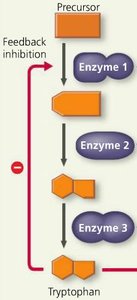
Prokaryotes, such as bacteria, regulate gene expression to conserve resources and respond efficiently to environmental changes. One mechanism is feedback inhibition, where the end product of a metabolic pathway inhibits an early enzyme in the pathway, providing a rapid, short-term regulatory solution.
Feedback inhibition: The final product (e.g., tryptophan) inhibits the activity of the first enzyme in the pathway, preventing overproduction.
Operon Model
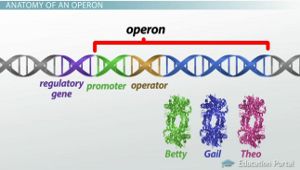
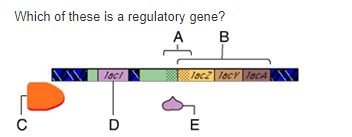
The operon is a unit of genetic function found in bacteria, consisting of a cluster of genes under the control of a single promoter and operator. Operons allow coordinated regulation of genes involved in a common pathway.
Promoter: DNA sequence where RNA polymerase binds to initiate transcription.
Operator: DNA segment where a repressor protein can bind, blocking RNA polymerase.
Regulatory gene: Encodes a repressor protein that can inhibit transcription.
The trp Operon (Repressible Operon)
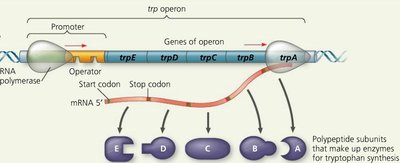
The trp operon controls the synthesis of tryptophan. It is a repressible operon, meaning it is usually active but can be turned off when tryptophan is abundant.
Contains five genes (trpE, trpD, trpC, trpB, trpA) encoding enzymes for tryptophan synthesis.
Regulated by a repressor protein that is inactive unless bound by tryptophan (the corepressor).
When tryptophan is present, it binds to the repressor, activating it to bind the operator and block transcription.
The lac Operon (Inducible Operon)
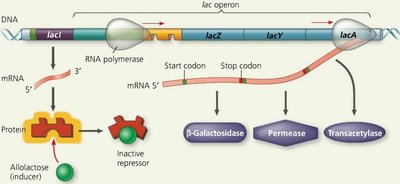
The lac operon controls the breakdown of lactose. It is an inducible operon, usually off but can be turned on in the presence of lactose.
Contains genes for β-galactosidase, permease, and transacetylase.
The repressor is active by default, binding the operator and blocking transcription.
When lactose is present, allolactose (the inducer) binds the repressor, inactivating it and allowing transcription.
Negative and Positive Gene Control
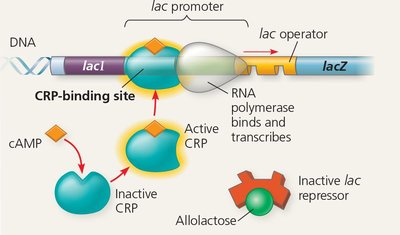
Both the trp and lac operons are examples of negative gene control, where repressors inhibit transcription. The lac operon also exhibits positive control via the cAMP-CRP complex, which enhances transcription when glucose is scarce.
Negative control: Repressor proteins block transcription.
Positive control: Activator proteins (e.g., CRP-cAMP) increase transcription when glucose is low.
Eukaryotic Gene Regulation
Differential Gene Expression
In multicellular eukaryotes, different cell types express different sets of genes, despite having the same DNA. This process, called differential gene expression, is essential for cell specialization and development.
Only a subset of genes is expressed in each cell type.
Gene expression is regulated at multiple levels: chromatin structure, transcription, RNA processing, translation, and post-translational modification.
Regulation of Chromatin Structure
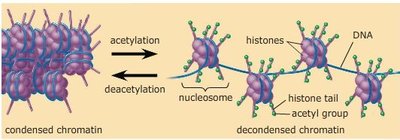
Chromatin structure affects gene accessibility. Chemical modifications to histones and DNA can either promote or inhibit transcription.
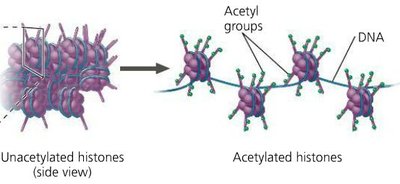
Histone acetylation: Addition of acetyl groups to histone tails loosens chromatin, increasing transcription.
Histone methylation: Addition of methyl groups condenses chromatin, reducing transcription.
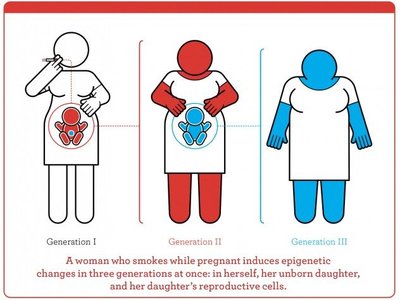
DNA methylation: Addition of methyl groups to cytosine bases silences gene expression and can be inherited (epigenetic inheritance).
Epigenetic Inheritance
Epigenetic inheritance refers to the transmission of gene expression patterns without changes to the DNA sequence. Most epigenetic marks are erased during gamete formation, but some can persist and influence development.
Examples: X-chromosome inactivation, genomic imprinting.
Regulation of Transcription
Transcription in eukaryotes is regulated by control elements (enhancers and promoters) and transcription factors.
Control elements: Noncoding DNA sequences that serve as binding sites for transcription factors.
General transcription factors: Required for the transcription of all genes; result in low levels of transcription.
Specific transcription factors: Bind to enhancers and increase transcription of particular genes.

Post-Transcriptional Regulation
Gene expression can also be regulated after transcription through alternative RNA splicing, mRNA degradation, and translational control.
Alternative splicing: Allows a single gene to code for multiple proteins.
mRNA degradation: The stability of mRNA affects how much protein is produced.
Translational control: Regulatory proteins can block translation by binding to mRNA.
Post-Translational Regulation
After translation, proteins may be modified, transported, or degraded to regulate their activity and abundance.
Examples: Protein cleavage, addition of chemical groups, ubiquitin-mediated degradation.
Noncoding RNAs in Gene Regulation
microRNAs (miRNAs) and Small Interfering RNAs (siRNAs)
Noncoding RNAs play crucial roles in regulating gene expression at the post-transcriptional level.
microRNAs (miRNAs): Endogenous, small RNAs (~22 nucleotides) that bind to complementary mRNA sequences, leading to mRNA degradation or inhibition of translation.
Small interfering RNAs (siRNAs): Often exogenous, used in research and therapeutics to silence specific genes via RNA interference (RNAi).
Gene Regulation and Cancer
Genetic Changes Leading to Cancer
Cancer is caused by mutations in genes that regulate cell growth and division. Two main classes of genes are involved: proto-oncogenes and tumor suppressor genes.
Proto-oncogenes: Normal genes that promote cell growth; mutations can convert them into oncogenes, leading to uncontrolled cell division.
Tumor suppressor genes: Inhibit cell division and prevent tumor formation; loss-of-function mutations can lead to cancer.
Cancer development is a multistep process involving multiple genetic changes.
Gene Type | Normal Function | Cancerous Change |
|---|---|---|
Proto-oncogene | Promote cell growth/division | Gain-of-function mutation (oncogene) |
Tumor suppressor | Inhibit cell division | Loss-of-function mutation |
Examples of mutations:
DNA amplification
Point mutations in control elements or coding regions
Chromosomal translocations
Key point: Both activation of oncogenes and inactivation of tumor suppressor genes are required for cancer development.
Summary Table: Prokaryotic vs. Eukaryotic Gene Regulation
Feature | Prokaryotes | Eukaryotes |
|---|---|---|
Gene Organization | Operons (coordinated genes) | Individual genes, no operons |
Regulation Levels | Mainly transcriptional | Multiple (chromatin, transcription, post-transcriptional, translational, post-translational) |
Regulatory Elements | Operator, promoter | Promoter, enhancers, silencers |
Regulatory Proteins | Repressors, activators | Transcription factors, coactivators, repressors |
RNA Processing | Rare | Common (splicing, capping, polyadenylation) |
