 Back
Regulation of Gene Expression: Prokaryotic and Eukaryotic Mechanisms
Study Guide - Smart Notes
 Tailored notes based on your materials, expanded with key definitions, examples, and context.
Regulation of Gene Expression
Overview
Gene expression regulation is essential for cellular efficiency and adaptation. Both prokaryotic and eukaryotic cells use complex mechanisms to control when and how genes are expressed, ensuring that proteins are produced only when needed.
Prokaryotic Gene Regulation
Feedback Inhibition and Operons
Prokaryotes often regulate gene expression through operons and feedback inhibition, allowing them to conserve resources and respond rapidly to environmental changes.
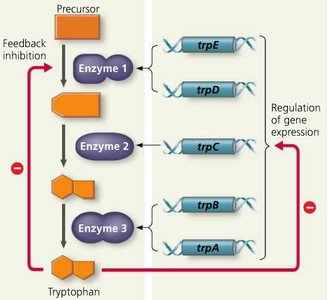
Feedback inhibition: The end product of a metabolic pathway inhibits an early enzyme in the pathway, providing a short-term regulatory mechanism.
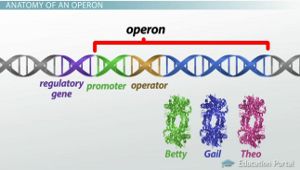
Operon: A cluster of functionally related genes controlled by a single promoter and operator, allowing coordinated regulation.
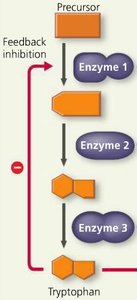
The trp Operon: Repressible System
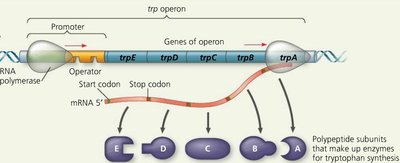
The trp operon is a classic example of a repressible operon, which is usually active but can be turned off when the end product (tryptophan) is abundant.
Structure: Contains five genes (trpE, trpD, trpC, trpB, trpA) encoding enzymes for tryptophan synthesis, regulated by a single promoter and operator.
Regulation: When tryptophan is present, it acts as a corepressor, activating the repressor protein, which binds to the operator and blocks transcription.
Negative gene control: The repressor protein prevents RNA polymerase from transcribing the operon.
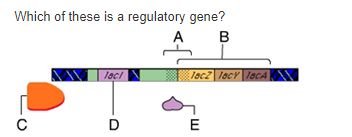
The lac Operon: Inducible System
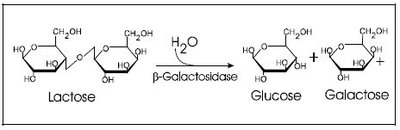
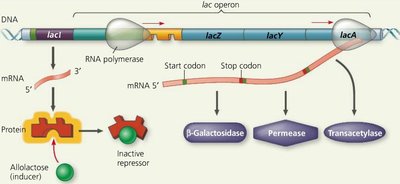
The lac operon is an inducible operon, typically off but activated in the presence of lactose.
Structure: Includes genes for β-galactosidase, permease, and transacetylase, regulated by a promoter, operator, and regulatory gene (lacI).
Inducer: Allolactose (a lactose isomer) binds to the repressor, inactivating it and allowing transcription.
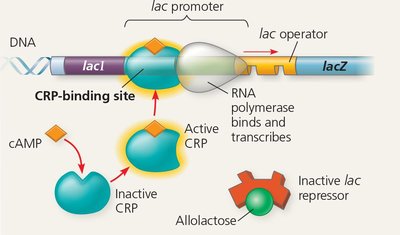
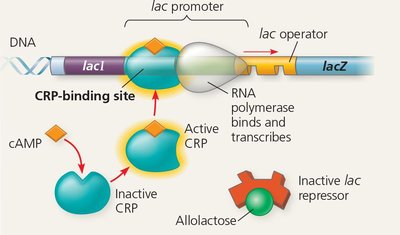
Catabolite repression: Glucose presence inhibits lac operon activation; low glucose increases cAMP, which activates CRP (cAMP receptor protein), enhancing transcription.
Comparison of trp and lac Operons
Feature | trp Operon | lac Operon |
|---|---|---|
Type | Repressible | Inducible |
Default State | On | Off |
Regulation | Corepressor (tryptophan) | Inducer (allolactose) |
Pathway | Anabolic (biosynthesis) | Catabolic (breakdown) |
Eukaryotic Gene Regulation
Differential Gene Expression
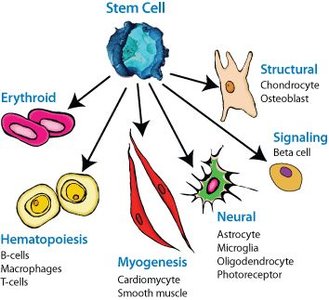
Eukaryotic cells regulate gene expression at multiple levels, allowing for cell differentiation and specialization.
Differentiation: Cells become specialized by expressing only a subset of their genes.
Regulation levels: Chromatin structure, transcription, RNA processing, translation, and post-translational modifications.
Regulation of Chromatin Structure
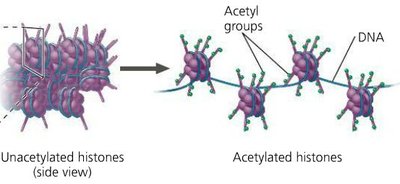
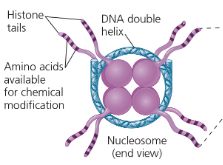
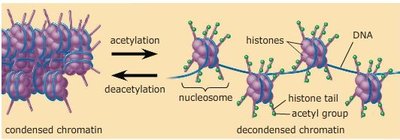
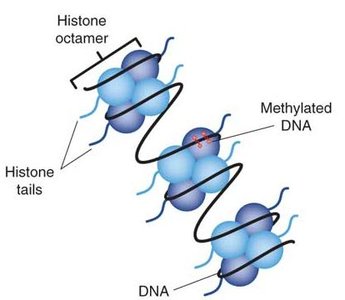
Chromatin modifications influence gene accessibility and transcription.
Histone acetylation: Addition of acetyl groups to histone tails loosens chromatin, increasing transcription.
Histone methylation: Addition of methyl groups condenses chromatin, reducing transcription.
DNA methylation: Methylation of cytosine bases silences genes and is involved in cell differentiation and genomic imprinting.
Epigenetic Inheritance
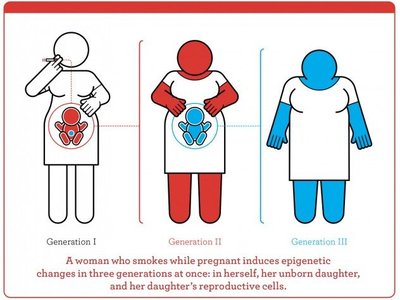
Epigenetic modifications can be inherited without changes to the DNA sequence, affecting gene expression in offspring.
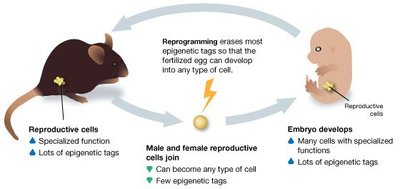
Epigenetic tags: Chemical modifications such as methylation can be passed to daughter cells.
Reprogramming: Most epigenetic marks are erased in gametes, but some can persist across generations.
Regulation of Transcription
Transcription in eukaryotes is regulated by control elements and transcription factors.
Control elements: Noncoding DNA sequences that serve as binding sites for transcription factors.
General transcription factors: Required for the basic transcription machinery; result in low-level transcription.
Specific transcription factors: Bind to enhancers (distal elements) or proximal elements to increase or decrease transcription rates.

Post-Transcriptional Regulation
Gene expression can be regulated after transcription through alternative splicing, mRNA degradation, and translation control.
Alternative RNA splicing: Allows a single gene to code for multiple proteins by varying exon inclusion.
mRNA degradation: The stability of mRNA affects how long it is available for translation.
Translational control: Regulatory proteins can block ribosome binding to mRNA.
Post-Translational Regulation
Protein activity can be regulated by modifications, cleavage, or targeted degradation.
Protein modifications: Addition of sugars, phosphates, or other groups can alter protein function or localization.
Protein degradation: Proteins marked with ubiquitin are targeted for destruction by proteasomes.
Noncoding RNAs in Gene Regulation
Types and Functions
Noncoding RNAs (ncRNAs) play crucial roles in regulating gene expression at the transcriptional and post-transcriptional levels.
microRNAs (miRNAs): Small endogenous RNAs (~22 nucleotides) that bind to complementary mRNA sequences, leading to mRNA degradation or inhibition of translation.
Small interfering RNAs (siRNAs): Often exogenous, used in research and therapeutics to silence specific genes via RNA interference (RNAi).
Gene Regulation and Cancer
Genetic Changes Leading to Cancer
Cancer can result from mutations that disrupt normal gene regulation, leading to uncontrolled cell growth.
Proto-oncogenes: Normal genes that promote cell growth and division; mutations can convert them into oncogenes, causing excessive activity.
Tumor suppressor genes: Inhibit cell division and prevent tumor formation; loss-of-function mutations can remove these restraints.
Multistep process: Cancer development typically requires multiple genetic changes, including activation of oncogenes and inactivation of tumor suppressors.
Mechanisms of Proto-oncogene Activation
DNA translocation or movement within the genome
Gene amplification (multiple copies of the gene)
Point mutations in control elements or coding sequence
Summary Table: Oncogenes vs. Tumor Suppressors
Gene Type | Normal Function | Cancer Effect |
|---|---|---|
Proto-oncogene | Promote cell growth/division | Gain-of-function mutation → Oncogene (overactive) |
Tumor suppressor | Inhibit cell division | Loss-of-function mutation → Uncontrolled growth |
Key Equations and Concepts
Gene expression regulation:
Operon model:
