 Back
Regulation of Gene Expression: The lac Operon in Prokaryotes
Study Guide - Smart Notes
 Tailored notes based on your materials, expanded with key definitions, examples, and context.
Regulation of Gene Expression
Introduction to Gene Expression
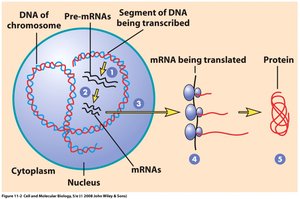
Gene expression is the process by which the information encoded in a gene is used to direct the synthesis of a gene product, typically a protein. This process is fundamental to cellular function and adaptation, allowing cells to respond to environmental changes and maintain specialized roles.
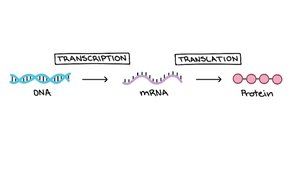
Gene expression involves transcription (DNA to mRNA) and translation (mRNA to protein).
Regulation of gene expression ensures that genes are expressed only when needed.
Control of Gene Expression in Prokaryotes
General Principles
Both prokaryotic and eukaryotic cells regulate gene expression, but prokaryotes often do so in response to environmental changes, while eukaryotes regulate gene expression to maintain different cell types and developmental stages.
Most regulation in prokaryotes occurs at the transcriptional level.
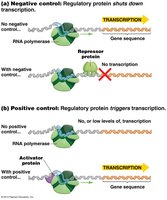
Regulation can be negative (repression) or positive (activation).
The lac Operon: Structure and Function
Overview of the lac Operon
The lac operon is a classic example of gene regulation in Escherichia coli. It contains genes required for the metabolism of lactose and is regulated so that these genes are expressed only when lactose is available and glucose is not.
The operon includes structural genes (lacZ, lacY, lacA), a promoter, an operator, and regulatory genes.
All genes in the operon are transcribed together as a single mRNA.

Key Vocabulary
Promoter: DNA sequence where RNA polymerase binds to initiate transcription.
Operator: DNA segment where a repressor protein can bind to block transcription.
Repressor: Protein that binds to the operator to prevent transcription.
Inducer: Molecule (e.g., lactose) that binds to the repressor, causing it to release from the operator and allowing transcription.
Operon: A group of genes regulated together and transcribed as a single mRNA.
Lactose Metabolism in E. coli
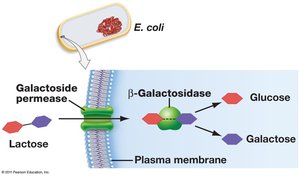
When lactose is present, E. coli must transport it into the cell and break it down into glucose and galactose. The enzymes required for this process are encoded by the lac operon.
Galactoside permease transports lactose into the cell.
β-galactosidase cleaves lactose into glucose and galactose.
Mechanisms of lac Operon Regulation
Negative Control
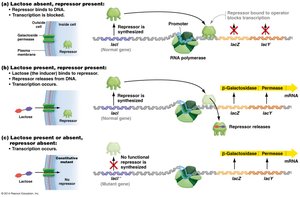
Negative control of the lac operon is mediated by the lac repressor protein, which is encoded by the lacI gene. In the absence of lactose, the repressor binds to the operator, blocking RNA polymerase and preventing transcription.
When lactose is present, it acts as an inducer by binding to the repressor, causing a conformational change that releases the repressor from the operator.
This allows RNA polymerase to transcribe the operon genes.
Positive Control
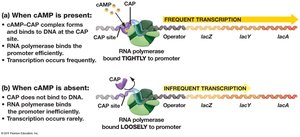
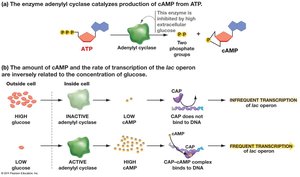
Positive control involves the catabolite activator protein (CAP, also called CRP) and cyclic AMP (cAMP). When glucose is scarce, cAMP levels rise, and the cAMP-CAP complex binds to the promoter, enhancing RNA polymerase binding and increasing transcription.
When glucose is abundant, cAMP levels are low, CAP does not bind, and transcription is reduced.
Summary Table: Regulation of the lac Operon
Condition | Lactose | Glucose | Repressor | CAP-cAMP | Transcription |
|---|---|---|---|---|---|
Low lactose, high glucose | Absent | Present | Bound to operator | Inactive | Very low |
High lactose, high glucose | Present | Present | Released | Inactive | Low |
High lactose, low glucose | Present | Absent | Released | Active | High |
Experimental Analysis: Identifying lac Operon Mutants
Lab Overview
In laboratory experiments, different strains of E. coli can be used to study the function of the lac operon. Common strains include wild type, lacZ mutants (cannot produce β-galactosidase), and lacI mutants (cannot produce a functional repressor).
Wild type: Produces β-galactosidase when lactose is present.
lacZ mutant: Cannot produce β-galactosidase, even if lactose is present.
lacI mutant: Cannot produce a functional repressor; operon is always on.
β-galactosidase activity can be measured using a colorimetric assay (ONPG test), where a yellow color indicates enzyme activity.
Experimental Conditions and Predictions
Growth media: Distilled water, 5% lactose, 5% sucrose (E. coli cannot metabolize sucrose).
Color change (yellow) indicates β-galactosidase activity.
Activity is quantified using a spectrophotometer and reported in Miller units.
Key Points and Summary
The lac operon is a model for understanding gene regulation in prokaryotes.
It is regulated by both negative (lac repressor) and positive (CAP-cAMP) mechanisms.
Expression occurs only when lactose is present and glucose is absent.
Mutations in the operon or regulatory genes can be identified by changes in β-galactosidase activity.
