 Back
Reproduction and Continuity of Life: A Mini-Textbook Study Guide
Study Guide - Smart Notes
 Tailored notes based on your materials, expanded with key definitions, examples, and context.
Reproduction and Continuity of Life
Continuity of Life and Genetic Information
Reproduction is essential for the continuity of life, ensuring that genetic information (DNA) is passed from one generation to the next. This process allows species to survive and adapt over time.
Cell Theory: All cells arise from pre-existing cells via cell division.
Hereditary Continuity: DNA carries genetic information from parent to offspring.
Common Ancestry: All living organisms share a common ancestor, with evidence of life on Earth dating back at least 3.5 billion years.
Mechanisms Maintaining Continuity
DNA Replication: DNA copies itself to pass genetic information to new cells or offspring.
Cell Division: Mitosis produces genetically similar cells for growth and repair; Meiosis produces haploid cells for sexual reproduction.
Reproduction: Can be asexual (one parent, genetically identical offspring) or sexual (fusion of gametes, genetically varied offspring).
Sexual vs Asexual Reproduction
Asexual Reproduction
Asexual reproduction involves a single parent and does not require gamete fusion. Offspring are usually clones of the parent, making this method fast and energy-efficient.
Common in bacteria, protists, fungi, plants, and some animals.
Advantageous in stable environments but offers little genetic variation.
Disadvantage: Vulnerability to disease or environmental changes due to lack of variation.
Sexual Reproduction
Sexual reproduction involves the fusion of gametes, usually from two parents, resulting in offspring with new genetic combinations.
Gametes are haploid (contain half the chromosome number).
Fertilisation restores diploid chromosome number and creates genetic variation.
Requires more time and energy but increases adaptability.
Genetic Variation in Sexual Reproduction
Crossing Over: Homologous chromosomes exchange DNA during meiosis.
Independent Assortment: Chromosome pairs separate into different combinations.
Random Fertilisation: Different sperm and eggs combine, increasing variation.
Alternation of Generations
Some organisms alternate between sexual and asexual reproductive stages during their life cycle, known as alternation of generations.
Asexual Reproduction in Plants: Vegetative Propagation
Vegetative Propagation
Vegetative propagation is a form of asexual reproduction in plants where new plants grow from stems, roots, or leaves without fertilisation. Offspring are usually genetically identical to the parent.
Allows rapid growth and spread without seeds.
Maintains desirable traits in new plants.
Common in agriculture and horticulture.
Types of Vegetative Propagation
Runners/Stolons: Horizontal stems that produce new shoots and roots at nodes. Example: Strawberries.
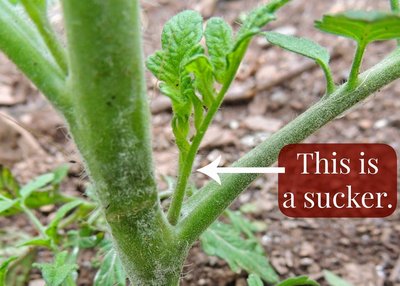
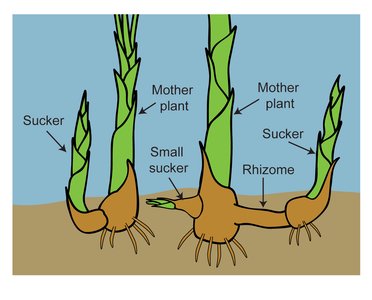
Suckers: New shoots develop from roots or plant base, eventually becoming independent plants. Example: Wattles, blackberries.
Rhizomes: Underground stems that produce roots and shoots. Example: Ginger, grasses, ferns.
Cuttings/Fragmentation: Plant parts are cut or break off and grow into new individuals. Example: Dragon fruit, willows.
Apomixis: Seeds form without fertilisation; offspring are often clones.
Asexual and Sexual Reproduction in Fungi
Fungal Structure and Nutrition
Fungi are eukaryotic organisms that can be unicellular (yeast) or multicellular (moulds, mushrooms). They lack chloroplasts and are heterotrophs, feeding on organic material.
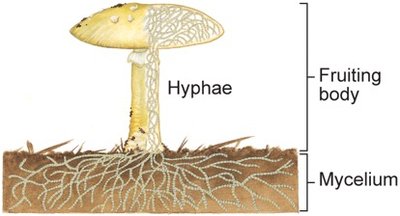
Hyphae: Microscopic threads forming a network called mycelium.
Mycelium: Absorbs nutrients and spreads through the substrate.
Asexual Reproduction: Spores
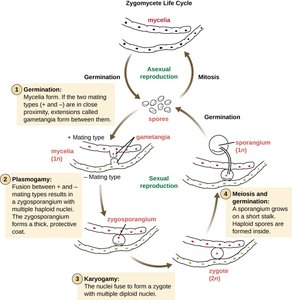
Many fungi reproduce asexually by producing spores in specialised structures (e.g., sporangia). Spores are dispersed and germinate under suitable conditions.
Spores are reproductive units that develop into new organisms without gamete fusion.
Asexual spores are produced by mitosis and are genetically similar to the parent.
Advantages: Rapid reproduction, no mate required, efficient dispersal.
Sexual Reproduction in Fungi
Sexual reproduction involves the fusion of compatible hyphae, followed by nuclear fusion and meiosis, producing genetically varied spores.
Asexual Reproduction: Budding
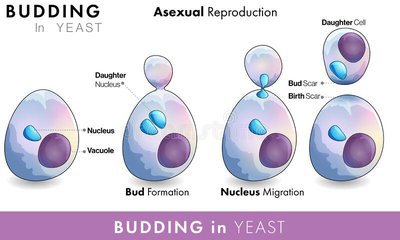
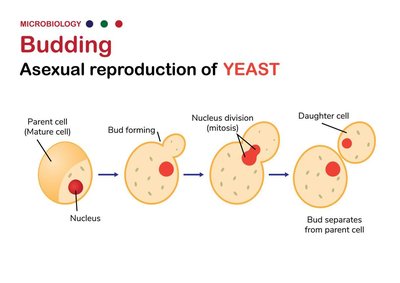
Budding occurs in unicellular fungi like yeast. A bud forms on the parent cell, receives a nucleus, grows, and separates as a new cell.
Offspring are usually genetically identical to the parent.
Budding is also seen in some animals, e.g., hydra.
Asexual Reproduction in Bacteria and Protists: Binary Fission
Binary Fission
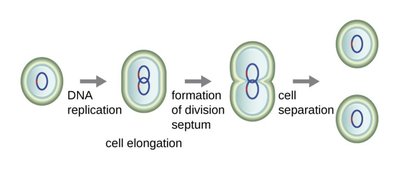
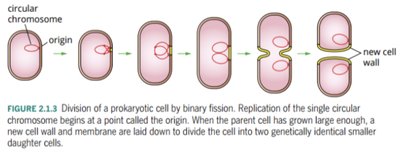
Binary fission is a type of asexual reproduction where one cell divides into two genetically identical daughter cells. It occurs in bacteria and many protists.
Bacteria (prokaryotes) do not undergo mitosis; they reproduce by binary fission.
Protists (eukaryotes) often use mitosis followed by cytokinesis.
Sexual Reproduction in Flowering Plants
Flower Structure and Function
Flowers are the reproductive structures of angiosperms. The carpel (female) and stamen (male) are the main reproductive organs.
Carpel: Stigma (receives pollen), style (connects stigma to ovary), ovary (contains ovules), ovule (contains egg cell).
Stamen: Anther (produces pollen), filament (supports anther).
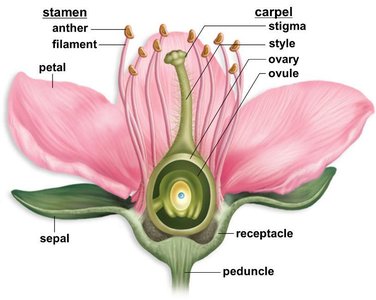
Pollination
Pollination is the transfer of pollen from anther to stigma. It is not fertilisation but allows fertilisation to occur.
Cross-pollination: Between flowers of different plants; increases genetic variation.
Self-pollination: Within the same flower or plant; less variation.
Agents: Biotic (animals) and abiotic (wind, water).
Adaptations for Pollination
Animal-pollinated flowers: Bright colours, scent, nectar, specialised shapes.
Wind-pollinated flowers: Small, dull, large quantities of lightweight pollen, feathery stigmas.
Comparison Table: Wind, Bird, and Insect Pollinated Flowers
Feature | Wind-Pollinated Flowers | Bird-Pollinated Flowers | Insect-Pollinated Flowers |
|---|---|---|---|
Petals | Small, dull | Large, colourful | Large, colourful |
Scent | Absent | Rare | Often present |
Nectar | Absent | Large amount | Small amount |
Anthers | Exposed | Commonly above stigma | Enclosed within flower |
Stigma | Exposed, feathery | Higher than anthers | Enclosed within flower |
Pollen | Small, light, large amount | Sticky/powdery, small amount | Large, sticky, small amount |
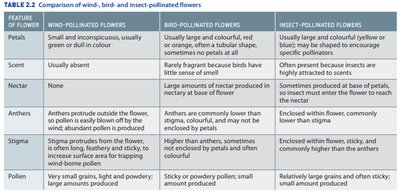
Fertilisation in Flowering Plants
Fertilisation is the fusion of male and female gametes to form a diploid zygote. The pollen tube grows from stigma to ovule, delivering sperm cells for fertilisation.
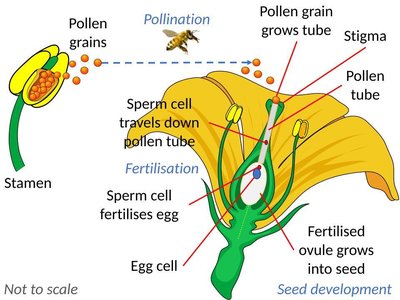
Haploid vs Diploid
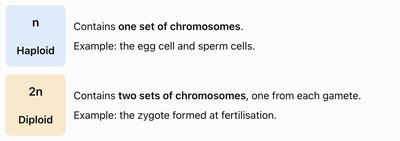
Haploid (n): One set of chromosomes (egg and sperm cells).
Diploid (2n): Two sets of chromosomes (zygote formed at fertilisation).
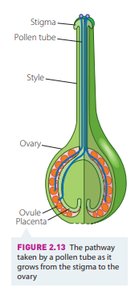
Seed and Fruit Formation
After fertilisation, the ovule becomes a seed and the ovary becomes a fruit. The seed contains the embryo, seed coat, and food supply.
Seed Dispersal and Germination
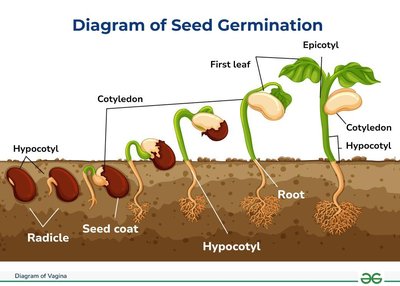
Seed dispersal moves seeds away from the parent plant, reducing competition and increasing survival. Germination is the growth of a dormant seed embryo under suitable conditions.
Methods: Wind, animals (ingestion/attachment), explosive, water.
Conditions for germination: Water, oxygen, suitable temperature.
Stages: Water absorption, radicle emergence, plumule development, photosynthesis.
Sexual Reproduction in Mammals: Female Reproductive Cycles
Overview of Sexual Reproduction in Mammals
Sexual reproduction in mammals involves internal fertilisation, implantation, pregnancy, and parental care. Adaptations maximise reproductive success and offspring survival.
Internal fertilisation increases likelihood of success.
Implantation allows embryo to receive nutrients.
Pregnancy protects and nourishes the embryo.
Parental care improves survival.
The Endocrine System and Hormonal Control
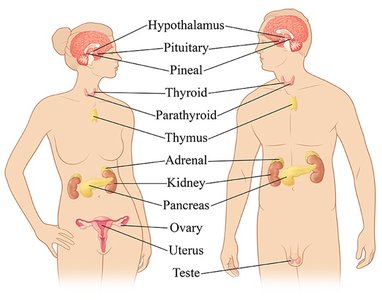
The endocrine system consists of glands that secrete hormones regulating reproductive processes.
Pituitary gland: Releases hormones regulating reproduction.
Ovaries: Produce ova, oestrogen, and progesterone.
Testes: Produce sperm and testosterone.
Adrenal cortex: Produces hormone precursors.
Key Reproductive Hormones
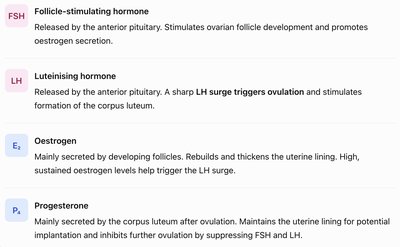
FSH: Stimulates follicle development.
LH: Triggers ovulation.
Oestrogen: Repairs and thickens endometrium.
Progesterone: Maintains endometrium.
Female Reproductive Cycles
Mammalian reproductive cycles are controlled by hormones and prepare the female for fertilisation and pregnancy. There are seasonal and continuous breeders.
Oestrus cycle: Sexual receptivity in non-primate mammals.
Menstrual cycle: Uterine lining is shed if pregnancy does not occur (humans, primates).
Human Ovarian and Menstrual Cycle
The menstrual cycle averages 28 days and consists of four stages: menstruation, follicular phase, ovulation, and luteal phase.
Menstruation: Shedding of uterine lining.
Follicular phase: Follicle develops, oestrogen rebuilds lining.
Ovulation: LH surge releases oocyte.
Luteal phase: Corpus luteum secretes progesterone.
Oogenesis: Formation of Female Gametes
Oogenesis is the process of developing female gametes (ova). Females are born with a finite supply of immature oocytes, which mature during reproductive cycles.
Meiosis produces haploid gametes.
Ovulation releases a secondary oocyte; meiosis II completes after fertilisation.
Fertilisation, Implantation, and Early Embryonic Development
Fertilisation
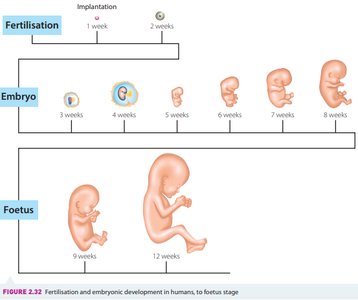
Fertilisation is the fusion of two haploid gametes (sperm and egg) to form a diploid zygote. In humans, it occurs in the fallopian tube.
Sperm undergoes capacitation before fertilising the egg.
Stages: Contact, attachment, acrosome reaction, membrane fusion, prevention of polyspermy, zygote formation.
Implantation
Implantation is the process where the blastocyst attaches to and embeds in the endometrium. The blastocyst contains an inner cell mass (embryo) and trophoblast (placenta).
Hormonal Control of Pregnancy and Birth
Hormonal Control of Pregnancy
Early pregnancy: hCG from trophoblast maintains corpus luteum and progesterone production.
Later pregnancy: Placenta produces progesterone and oestrogen.
Hormonal Control of Birth
Progesterone decreases, oestrogen increases uterine sensitivity to oxytocin.
Oxytocin stimulates uterine contractions via positive feedback.
Prostaglandins strengthen contractions.
Manipulation of Reproduction in Agriculture
Artificial Insemination (AI)
AI involves introducing collected sperm into the female reproductive tract to achieve fertilisation without natural mating. It allows desirable traits to be passed to many offspring.
Artificial Pollination (AP)
AP involves manually transferring pollen to control fertilisation and produce hybrids with desirable traits.
Selective Breeding
Selective breeding is the deliberate selection and breeding of organisms with desirable characteristics to improve productivity and quality.
Evaluation of Reproductive Manipulation
Positive impacts: Increased yield, improved traits, efficiency.
Negative impacts: Reduced genetic diversity, vulnerability, cost, welfare concerns.
Study Tip: Focus on cause-and-effect relationships in hormonal regulation and reproductive processes for exam success.
