 Back
Reproduction and Development in Animals
Study Guide - Smart Notes
 Tailored notes based on your materials, expanded with key definitions, examples, and context.
Reproduction and Development in Animals
Asexual vs. Sexual Reproduction
Reproduction in animals can occur through asexual or sexual means, each with distinct biological implications and evolutionary consequences.
Sexual Reproduction: Involves the fusion of sperm and egg to form a diploid zygote. This process increases genetic diversity by mixing chromosomes from two parents, but requires finding a mate.
Asexual Reproduction: Offspring are produced without the fusion of gametes. This method does not require a mate and is common in stable environments, but limits adaptability due to lack of genetic variation.
Types of Asexual Reproduction
Budding: Outgrowths from the parent form new individuals.
Fission: The parent splits into two individuals of approximately equal size, both smaller than the original.
Fragmentation and Regeneration: A part of the organism breaks off and regenerates into a new individual; sizes may be uneven.
Parthenogenesis: Development of an individual from an unfertilized egg, resulting in offspring genetically identical to the mother. Common in insects.
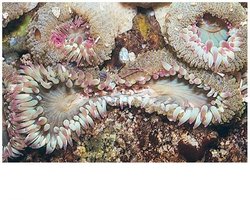
Sexual Reproduction: Evolutionary Significance
Despite producing fewer offspring per female, sexual reproduction is nearly universal among eukaryotes due to the advantages of genetic recombination. Increased genetic variation enhances the ability of populations to adapt to changing environments.
Variation in Sexual Patterns
Hermaphroditism: Individuals produce both sperm and eggs, allowing any two individuals to mate, and in some cases, self-fertilize.
Sex Reversal: Some species can change sex during their lifetime, often in response to environmental or social cues.
External vs. Internal Fertilization
Fertilization strategies differ among animal groups, influencing reproductive success and offspring survival.
External Fertilization: Eggs are released into the environment and fertilized outside the body. This strategy involves producing many low-quality gametes and is common in aquatic animals such as fish and amphibians.
Internal Fertilization: Fertilization occurs within the body, typically resulting in fewer but higher-quality gametes. This is common in mammals, reptiles, birds, and mobile invertebrates.
Gametogenesis
Gametes (sperm and eggs) are produced via meiosis in animals, with distinct processes for each type.
Oogenesis: The prolonged development of eggs, often involving pauses at specific stages.
Spermatogenesis: The rapid and continuous production of sperm, typically prolific and ongoing throughout the reproductive lifespan.
Fertilization and Prevention of Polyspermy
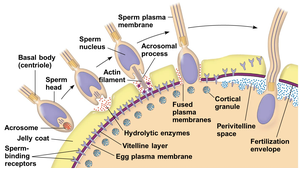
Fertilization involves the penetration of the egg's protective layers by sperm. Mechanisms exist to prevent polyspermy (fertilization by multiple sperm):
Fast Block: Rapid depolarization of the egg membrane within 2 seconds of sperm entry.
Slow Block (Cortical Reaction): Occurs within 50 seconds, involving the release of cortical granules that modify the egg's outer layers to prevent further sperm entry.
Embryonic Development
Formation of Germ Layers
During early embryonic development, three primary germ layers are established:
Endoderm: Innermost layer; forms the lining of the gut and associated organs.
Ectoderm: Outermost layer; forms the external covering and nervous system.
Mesoderm: Middle layer; forms muscles, body wall, and most structures between the gut and external covering.
Gastrulation and Germ Layer Formation (Sea Urchin Example)
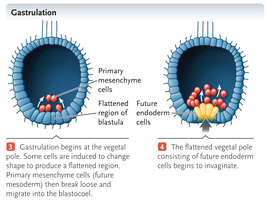
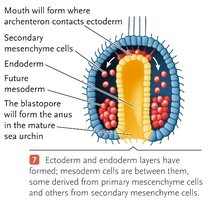
Gastrulation is a critical process in which the single-layered blastula reorganizes into a multilayered structure, establishing the germ layers.
Primary mesenchyme cells migrate into the blastocoel.
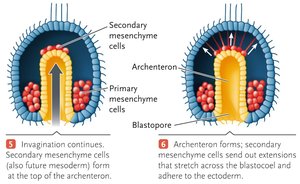
Future endoderm cells invaginate to form the archenteron (primitive gut).
Secondary mesenchyme cells form at the tip of the archenteron and help elongate it.
The blastopore becomes the anus in deuterostomes (e.g., sea urchins).
Protostomes vs. Deuterostomes
Animals are classified based on the fate of the blastopore during development:
Protostomes | Deuterostomes | |
|---|---|---|
Blastopore Fate | Mouth forms first | Anus forms first |
Examples | Arthropods, Mollusks | Echinoderms, Chordates |

Embryo Development in Birds
Bird embryos undergo gastrulation through the formation of a primitive streak, where cells migrate to form the three germ layers. The mesoderm splits to form the coelom (body cavity).


Neurulation
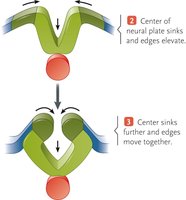
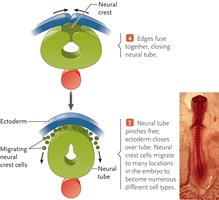
Neurulation is the process by which the neural tube forms, giving rise to the central nervous system.
The neural plate forms and sinks, with edges elevating and moving together.
Edges fuse to form the neural tube, which pinches free from the ectoderm.
Neural crest cells migrate to various locations, differentiating into diverse cell types.
Mesoderm in Vertebrates
In vertebrates, the mesoderm splits into somites, which are segmented blocks of tissue that give rise to the vertebral column, muscles, ribs, and limbs.
