 Back
Reptiles: Evolution, Adaptations, and Diversity
Study Guide - Smart Notes
 Tailored notes based on your materials, expanded with key definitions, examples, and context.
Reptiles: Evolution, Adaptations, and Diversity
Introduction to Reptiles
Reptiles are a diverse group of amniotes that were the first true vertebrates to become fully adapted to life on land. Their evolutionary innovations, such as waterproof skin and eggs, allowed them to colonize a wide range of terrestrial environments.
Evolutionary Origins of Reptiles
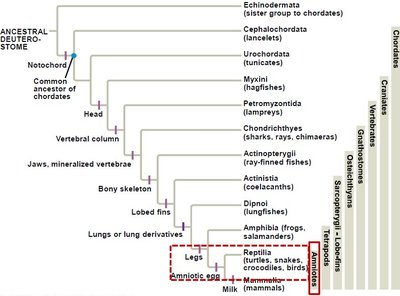
Amniotes are vertebrates that lay eggs with specialized membranes, allowing development away from water.
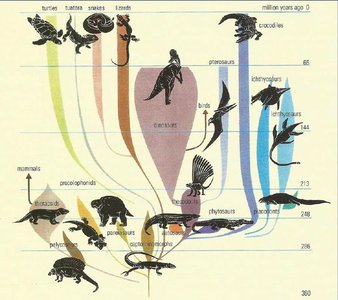
Reptiles first appeared approximately 320–310 million years ago during the late Carboniferous period.
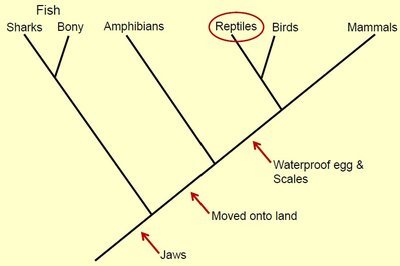
They are characterized by adaptations such as waterproof skin (keratinized scales) and amniotic eggs.
Major reptilian clades include Lepidosaurs (lizards, snakes, tuataras) and Archosaurs (crocodiles, dinosaurs, birds).
Key Evolutionary Adaptations
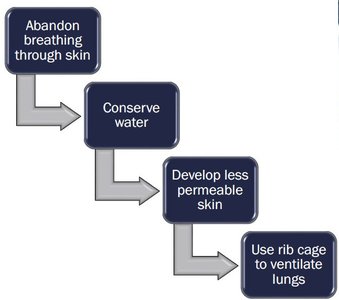
Waterproof Skin: Reptilian skin contains keratin, making it less permeable and reducing water loss.
Amniotic Egg: The amniotic egg contains membranes (amnion, chorion, allantois, yolk sac) that protect and nourish the embryo, allowing development on land.
Efficient Lungs: Reptiles rely on lungs for gas exchange, abandoning cutaneous respiration.
Internal Fertilization: Fertilization occurs inside the female, increasing reproductive success on land.
Three-Chambered Heart: Most reptiles have a heart with two atria and a partially divided ventricle, improving circulation efficiency.

Reptilian Skin and Scales
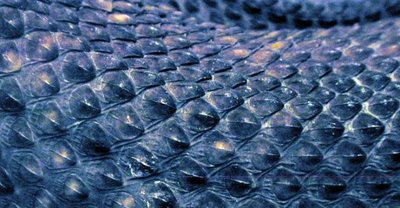
Reptilian skin is covered with scales or scutes made of keratin, providing protection against desiccation and abrasion. This adaptation is crucial for survival in terrestrial habitats.
Amniotic Egg Structure and Function
Amnion: Encloses the embryo in a fluid-filled cavity, cushioning and protecting it.
Chorion: Facilitates gas exchange between the embryo and the external environment.
Allantois: Stores metabolic waste and also aids in respiration.
Yolk Sac: Provides nutrients to the developing embryo.
Shell: Offers mechanical protection and limits water loss while allowing gas exchange.
Reproductive Strategies in Reptiles
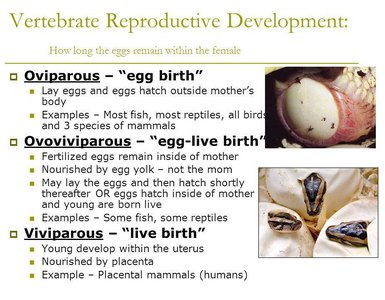
Oviparous: Most reptiles lay eggs that develop and hatch outside the mother's body.
Ovoviviparous: Some reptiles retain eggs inside the body until they hatch, giving the appearance of live birth.
Viviparous: A few reptiles give birth to live young, with embryos developing inside the mother and receiving nourishment directly from her.
Major Groups of Reptiles
Testudines (Turtles, Tortoises, Terrapins): Characterized by a bony shell and beak-like jaws; temperature-dependent sex determination in some species.
Rhynchocephalia (Tuataras): Ancient lineage with only two living species, found in New Zealand.
Squamata (Lizards and Snakes): Most diverse group; lizards may have limbs or be limbless, snakes are entirely limbless with highly kinetic skulls.
Crocodilia (Crocodiles, Alligators, Gavials): Large, aquatic predators with temperature-dependent sex determination.
Evolutionary Radiation and Skull Types
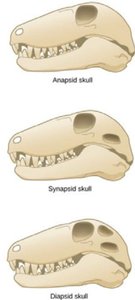
Anapsid Skull: No temporal openings (e.g., turtles).
Synapsid Skull: One temporal opening (e.g., mammals).
Diapsid Skull: Two temporal openings (e.g., lizards, snakes, birds).
These skull types are important for classifying amniotes and understanding their evolutionary relationships.
Reptilian Diversity and Adaptations
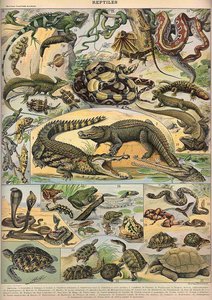
Reptiles exhibit a wide range of body sizes, feeding behaviors, and habitats.
Some lizards have reduced or lost limbs, and snakes are entirely limbless.
Defense mechanisms include camouflage, tail autotomy, playing dead, and specialized behaviors like blood-squirting or gliding.
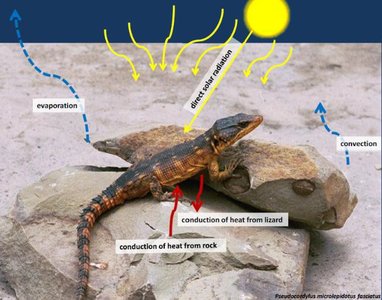
Thermoregulation in Reptiles
Poikilothermic (Ectothermic): Reptiles rely on external heat sources to regulate body temperature.
They are limited to warmer climates and are less active in cold environments or at night.
Basking behavior is common for absorbing heat, but it increases vulnerability to predators.
Ecological and Economic Importance of Reptiles
Reptiles play key roles as predators and prey in ecosystems, controlling populations of insects, rodents, and other animals.
They have economic value for their skins (leather), as food, and in medical research (e.g., snake venom for drug development).
Some reptiles are kept as pets, contributing to the pet trade industry.
Summary Table: Major Reptilian Groups and Characteristics
Order | Common Names | Key Features | Reproduction |
|---|---|---|---|
Testudines | Turtles, Tortoises, Terrapins | Bony shell, beak, no teeth | Oviparous, temperature-dependent sex |
Rhynchocephalia | Tuataras | Primitive, two living species | Oviparous, slow reproduction |
Squamata | Lizards, Snakes | Kinetic skull, limb reduction/loss | Oviparous, ovoviviparous, viviparous |
Crocodilia | Crocodiles, Alligators, Gavials | Robust skull, aquatic | Oviparous, temperature-dependent sex |
Conclusion
Reptiles represent a major evolutionary step in vertebrate history, with adaptations that enabled them to thrive in terrestrial environments. Their diversity, ecological roles, and evolutionary history make them a central topic in the study of vertebrate biology.
