 Back
Reptiles: Evolution, Adaptations, and Diversity
Study Guide - Smart Notes
 Tailored notes based on your materials, expanded with key definitions, examples, and context.
Reptiles: Evolution, Adaptations, and Diversity
Introduction to Reptiles and Amniotes
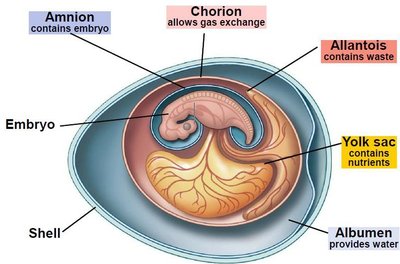
Reptiles are a diverse group of amniotes that were the first vertebrates to become fully adapted to life on land. Their evolutionary innovations, such as waterproof skin and eggs, allowed them to colonize a wide range of terrestrial environments. Amniotes include reptiles, birds, and mammals, all of which possess an amniotic egg that protects the embryo from desiccation.
Amniotic Egg: Contains specialized membranes (amnion, chorion, allantois, yolk sac) that support embryonic development on land.
Waterproof Skin: Composed of keratin, reducing water loss and providing protection.
Internal Fertilization: Ensures successful reproduction away from water.
Evolutionary Origins and Radiation of Reptiles
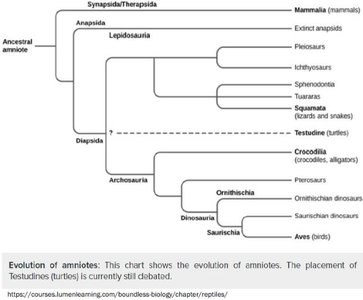
Reptiles first appeared during the late Carboniferous period (about 320-310 million years ago). They evolved from early amniotes and diversified into several major lineages, including parareptiles, diapsids, lepidosaurs, and archosaurs. The development of the amniotic egg and waterproof skin were key adaptations that enabled their success on land.
Parareptiles: Early, large, herbivorous reptiles that became extinct by the end of the Triassic.
Diapsids: Gave rise to lepidosaurs (lizards, snakes, tuataras) and archosaurs (crocodiles, pterosaurs, dinosaurs, and birds).
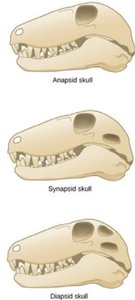
Temporal Fenestrae: Openings in the skull behind the eyes, used to classify amniotes (anapsid, synapsid, diapsid).
Major Adaptations of Reptiles
Reptiles possess several adaptations that distinguish them from amphibians and allow them to thrive in terrestrial habitats.
Amniotic Egg: Provides a self-contained aquatic environment for the embryo.
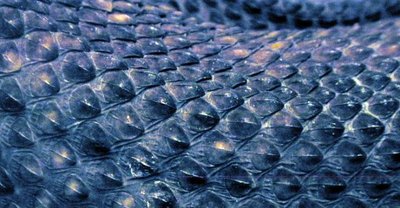
Waterproof Skin: Covered in scales or scutes made of keratin, minimizing water loss and protecting against abrasion.
Efficient Lungs: Reptiles rely on lungs for gas exchange, with rib cage ventilation.
Three-Chambered Heart: Most reptiles have two atria and a partially divided ventricle, improving separation of oxygenated and deoxygenated blood.
Ecdysis: Periodic shedding of the outer skin layer.
Reproductive Strategies in Reptiles
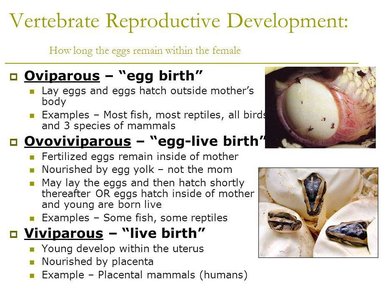
Reptiles exhibit a variety of reproductive modes, including oviparity (egg-laying), ovoviviparity (eggs hatch inside the mother), and viviparity (live birth). Most reptiles are oviparous, but some species show parental care, such as guarding eggs or incubating them until hatching.
Oviparous: Eggs are laid and hatch outside the mother's body.
Ovoviviparous: Eggs develop inside the mother and hatch internally or immediately after laying.
Viviparous: Young develop within the uterus and are nourished by the mother.
Classification and Diversity of Reptiles
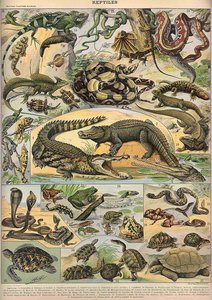
Reptiles are classified into several major orders, each with unique characteristics and evolutionary histories.
Order Testudines (Chelonia): Turtles, tortoises, and terrapins; characterized by a bony shell and beak-like jaws.
Order Rhynchocephalia (Sphenodontia): Tuataras; ancient lineage with only two living species found in New Zealand.
Order Squamata: Lizards and snakes; highly diverse, with kinetic skulls for prey capture.
Order Crocodilia: Crocodiles, alligators, and gavials; large, aquatic predators with temperature-dependent sex determination.
Key Features of Reptilian Physiology
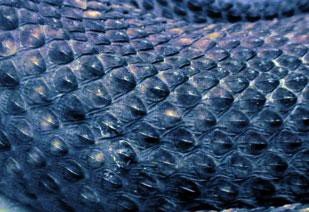
Reptiles are ectothermic (poikilothermic), meaning their body temperature fluctuates with the environment. They rely on behavioral adaptations such as basking to regulate temperature. Their skin is covered in scales or scutes, providing protection and reducing water loss.
Thermoregulation: Behavioral adaptations like basking in the sun or seeking shade.
Dietary Diversity: Carnivorous (snakes), herbivorous (tortoises), omnivorous (turtles), and insectivorous (many lizards).
Defense Mechanisms: Camouflage, tail autotomy, playing dead, and specialized behaviors (e.g., blood-squirting in horned lizards).
Evolutionary Relationships and Phylogeny
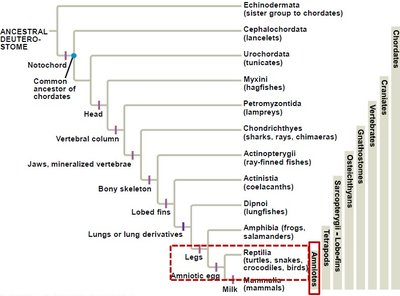
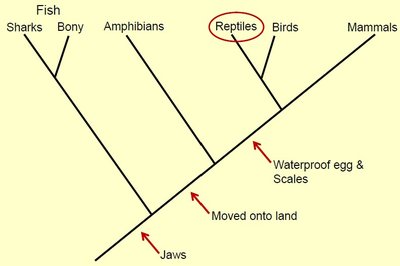
Reptiles are part of the amniote clade, sharing a common ancestor with birds and mammals. Phylogenetic trees illustrate the evolutionary relationships among major vertebrate groups, highlighting key innovations such as the amniotic egg and waterproof skin.
Amniotes: Include reptiles, birds, and mammals.
Phylogenetic Trees: Show evolutionary divergence and shared characteristics.
Ecological and Economic Importance of Reptiles
Reptiles play significant roles in ecosystems as predators and prey, helping control populations of insects, rodents, and other animals. They also have economic value for their skins, as food, and in medical research (e.g., snake venom for drug development).
Ecological Role: Natural pest control, maintaining ecological balance.
Economic Uses: Leather goods, delicacies, and biomedical research.
Recreational Value: Kept as pets and studied for their unique adaptations.
Summary Table: Major Orders of Reptiles
Order | Common Names | Key Features | Reproduction |
|---|---|---|---|
Testudines | Turtles, Tortoises, Terrapins | Bony shell, beak-like jaws, no teeth | Oviparous, temperature-dependent sex determination |
Rhynchocephalia | Tuataras | Primitive diapsid skull, slow reproduction | Oviparous, long lifespan |
Squamata | Lizards, Snakes | Kinetic skull, limb reduction in some | Oviparous, ovoviviparous, or viviparous |
Crocodilia | Crocodiles, Alligators, Gavials | Robust skull, aquatic, temperature-dependent sex determination | Oviparous, parental care |
Conclusion
Reptiles represent a pivotal group in vertebrate evolution, showcasing key adaptations for terrestrial life. Their diversity, ecological roles, and evolutionary history make them essential subjects in the study of biology.
