 Back
Resource Acquisition and Transport in Vascular Plants
Study Guide - Smart Notes
 Tailored notes based on your materials, expanded with key definitions, examples, and context.
Resource Acquisition and Transport in Vascular Plants
Overview of Plant Resource Acquisition
Vascular plants have evolved specialized structures and physiological mechanisms to acquire, transport, and distribute water, minerals, and photosynthetic products. These processes are essential for plant growth, survival, and reproduction in diverse environments.
Roots absorb water and minerals from the soil.
Shoots capture light and exchange gases necessary for photosynthesis.
Transport systems move substances throughout the plant body.
Water and Mineral Uptake
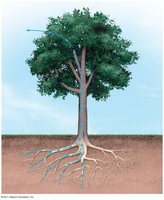
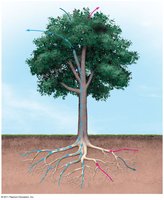
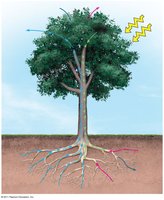
Water and minerals are absorbed primarily by the roots and transported upward through the xylem. Oxygen and carbon dioxide are exchanged through leaves for respiration and photosynthesis, respectively.
Water and minerals enter the plant via root hairs and move through the root cortex to the xylem.
Oxygen is required for root respiration, while carbon dioxide is needed for photosynthesis in leaves.
Adaptations for Resource Acquisition
Shoot Adaptations for Light Capture
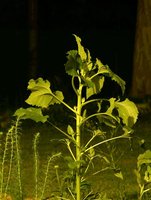
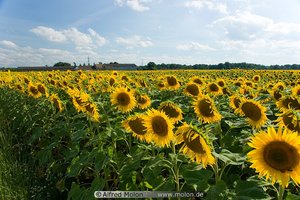
Plant shoots are adapted to maximize light capture while minimizing water loss. Leaf size, arrangement, and orientation are key factors in these adaptations.
Large leaves are common in tropical forests to maximize light capture.
Small leaves are found in dry environments to reduce water loss.
Phyllotaxy (leaf arrangement) affects light interception:
Alternate phyllotaxy reduces leaf overlap in low light.
Opposite phyllotaxy may be advantageous in high light.
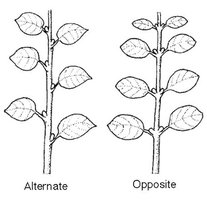
Leaf orientation can also optimize light absorption, as seen in plants that track the sun or adjust leaf angles.
Root Adaptations for Absorption and Anchorage
Roots are specialized for efficient absorption of water and minerals and for anchoring the plant. Root system architecture varies with environmental conditions.
Taproot systems anchor tall plants and access deep water sources.
Root branching increases in areas with abundant resources.
Roots may branch less when near roots of the same plant (self-inhibition).
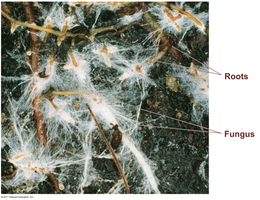
Mycorrhizae (symbiotic associations with fungi) enhance nutrient and water uptake.
Transport Pathways in Plants
Apoplast and Symplast Pathways
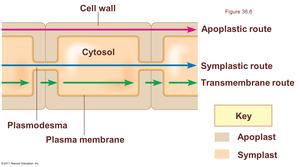
Substances move through plant tissues via two main pathways: the apoplast and the symplast.
Apoplast: The continuum of cell walls and extracellular spaces through which water and solutes move without crossing membranes.
Symplast: The continuum of cytosol connected by plasmodesmata, allowing movement of substances from cell to cell.
Some substances also use a transmembrane route, crossing cell membranes repeatedly.
Transport Across Cell Membranes
Transport proteins in cell membranes regulate the movement of ions and molecules. Proton pumps play a central role in establishing gradients used for co-transport.
Proton pumps create a chemiosmotic gradient by moving H+ ions out of the cell.
This gradient drives the co-transport of other solutes (e.g., sucrose, nitrate).
Ion channels open in response to chemical, mechanical, or electrical signals, allowing specific ions to move across membranes.

Water Potential and Osmosis
Water Potential
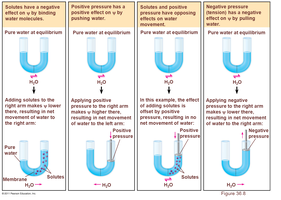
Water movement in plants is governed by water potential (ψ), which combines the effects of solute concentration and physical pressure. Water moves from regions of higher to lower water potential.
Water potential is measured in megapascals (MPa).
Equation:
Solute potential (ψs) decreases water potential; pressure potential (ψp) increases it.
Turgor Pressure and Wilting
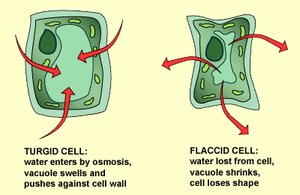
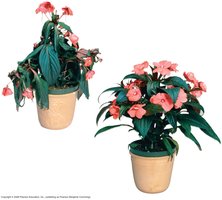
Turgor pressure is the pressure of the cell contents against the cell wall, essential for maintaining plant rigidity. Loss of turgor leads to wilting, which can be reversed by rehydration.
Turgid cells are firm due to water uptake by osmosis.
Flaccid cells lose water and become limp.
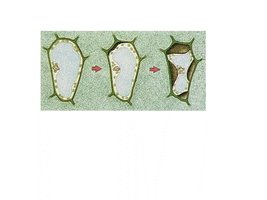
Plasmolysis occurs when the plasma membrane pulls away from the cell wall due to water loss.
Bulk Flow and Long-Distance Transport
Bulk Flow in Xylem
For long-distance transport, plants rely on bulk flow, the movement of liquid in response to a pressure gradient. This process is independent of solute concentration and is essential for moving water and minerals from roots to shoots.
Xylem consists of dead, hollow cells (tracheids and vessel elements) specialized for water transport.
Bulk flow is driven primarily by transpiration (evaporation of water from leaves).
Root pressure can contribute to upward movement but is generally small compared to transpiration pull.
Cohesion-Tension Hypothesis
The cohesion-tension hypothesis explains how transpiration creates a negative pressure (tension) that pulls water upward through the xylem. Cohesion between water molecules and adhesion to xylem walls facilitate this process.
Cohesion: Attraction between water molecules.
Adhesion: Attraction between water molecules and xylem walls.
Transpirational pull extends from the leaf surface, through the plant, to the soil.
Stomatal Regulation and Water Loss
Stomata and Transpiration
Stomata are pores on the leaf surface that regulate gas exchange and water loss. Most water loss (about 95%) occurs through stomata during transpiration.
Stomatal density is influenced by genetics and environmental factors.
Desert plants typically have fewer stomata than plants in moist environments.
Stomatal density has decreased in response to rising atmospheric CO2 levels.
Control of Stomatal Opening and Closing
Stomatal aperture is controlled by the turgor of guard cells. Opening is triggered by K+ uptake and water influx; closing occurs when this process is reversed.
Stomata generally open during the day and close at night.
Triggers for opening include blue-light receptors, CO2 depletion, and circadian rhythms.
Stomata close in response to stress (e.g., drought, high temperature, abscisic acid production).
Evolutionary Adaptations in Xerophytes
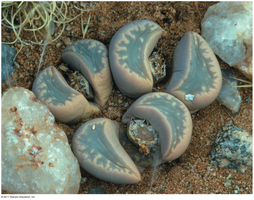
Xerophytes are plants adapted to arid environments. They exhibit specialized features such as reduced leaf area, thick cuticles, and CAM photosynthesis to minimize water loss.
Phloem Transport: Translocation of Sugars
Phloem Structure and Function
Phloem transports photosynthetic products (mainly sugars) from sources (e.g., leaves) to sinks (e.g., roots, fruits). Phloem sap also contains amino acids, hormones, and minerals.
Phloem cells are partially alive at maturity.
Companion cells support sieve tube elements in transport functions.
Sugar loading into phloem often requires active transport.
Phloem sap movement is driven by positive pressure (pressure-flow hypothesis).
Summary Table: Xylem vs. Phloem
Feature | Xylem | Phloem |
|---|---|---|
Main Transported Substance | Water & minerals | Sugars & organic molecules |
Direction of Flow | Root to shoot (upward) | Source to sink (varies) |
Cell Type | Dead at maturity | Alive at maturity (with companion cells) |
Driving Force | Negative pressure (tension) | Positive pressure (pressure-flow) |
Example: Aphids are used in research to study phloem sap composition, as they feed directly from sieve tubes.
Additional info: This summary integrates and expands upon the provided lecture content, ensuring a comprehensive overview suitable for college-level biology students.
