 Back
Restriction Enzymes and Recombinant DNA Technology
Study Guide - Smart Notes
 Tailored notes based on your materials, expanded with key definitions, examples, and context.
Restriction Enzymes and DNA Manipulation
Introduction to Restriction Enzymes
Restriction enzymes, also known as restriction endonucleases, are essential tools in molecular biology for cutting DNA at specific sequences. These enzymes are naturally found in bacteria, where they serve as a defense mechanism against invading viral DNA. In biotechnology, restriction enzymes are used to manipulate DNA for cloning, mapping, and analysis.
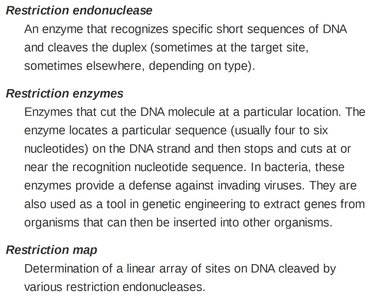
Restriction Endonuclease: An enzyme that recognizes specific short sequences of DNA and cleaves the duplex, either at the target site or nearby, depending on the enzyme type.
Restriction Enzymes: Enzymes that cut DNA at particular locations, usually recognizing sequences of four to six nucleotides. They are used in genetic engineering to extract and insert genes.
Restriction Map: A linear array of sites on DNA cleaved by various restriction endonucleases, used to determine the order and distance between restriction sites.
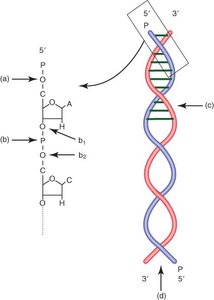
Types of Nucleases and Their Functions
Nucleases are enzymes that hydrolyze the phosphodiester bonds within nucleic acids. They are classified based on their site of action:
Endonucleases: Cleave phosphoester bonds within a nucleic acid chain. They may be specific for RNA or for single- or double-stranded DNA.
Exonucleases: Remove nucleotides one at a time from the end of a polynucleotide chain, acting on either the 5′ or 3′ end of DNA or RNA.
Phosphatases: Hydrolyze the ester bond in a phosphomonoester bond, removing phosphate groups from nucleotides.
Recognition Sites and Cleavage Patterns
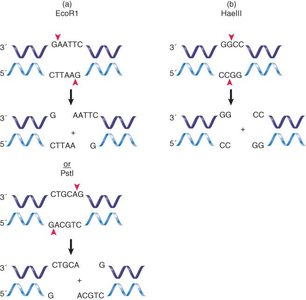
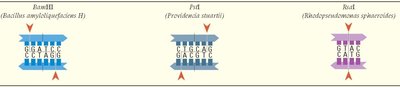
Restriction enzymes recognize specific DNA sequences, often palindromic, and cleave the DNA to produce fragments with either 'sticky' or 'blunt' ends. The specificity and type of ends generated are crucial for downstream applications such as cloning.
Sticky Ends: Overhanging single-stranded ends that can base pair with complementary sequences.
Blunt Ends: Straight cuts with no overhangs.
Palindromic Sites: Sequences that read the same forward and backward on complementary strands, commonly recognized by Type IIP restriction enzymes.
Restriction Mapping
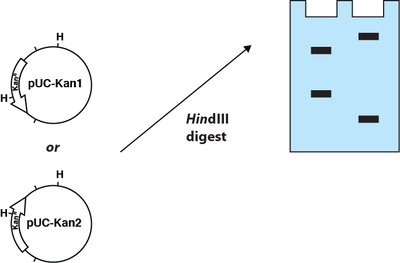
Restriction mapping involves using multiple restriction enzymes to cut DNA at specific sites, generating fragments of defined sizes. By analyzing the pattern of fragments, scientists can deduce the arrangement of restriction sites along the DNA molecule.
Restriction maps are essential for characterizing plasmids and other DNA molecules.
Agarose gel electrophoresis is used to separate DNA fragments by size, allowing visualization of the restriction digest pattern.
Recombinant DNA Technology
Creating Recombinant DNA
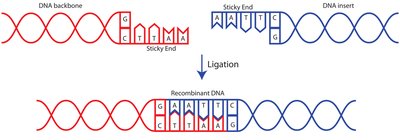
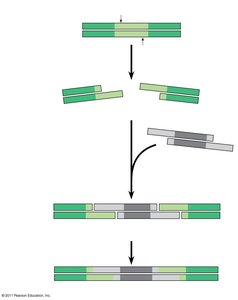
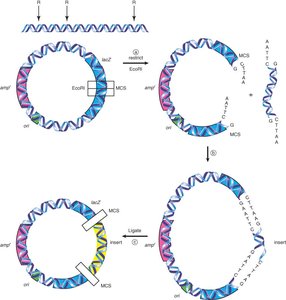
Recombinant DNA technology involves joining DNA fragments from different sources. This is achieved by cutting both the vector (e.g., plasmid) and the DNA insert with the same restriction enzyme to produce compatible ends, which are then joined by DNA ligase.
Sticky End Ligation: The process of joining two DNA fragments with complementary overhangs produced by restriction enzymes.
DNA Ligase: An enzyme that seals the sugar-phosphate backbone, forming a stable recombinant DNA molecule.
Plasmids and Cloning Vectors
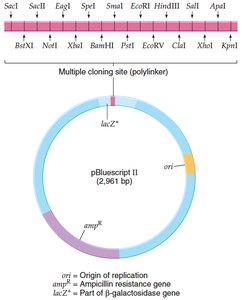
Plasmids are circular DNA molecules used as vectors to carry foreign DNA into host cells. Engineered plasmids contain features such as multiple cloning sites (MCS), antibiotic resistance genes, and origins of replication to facilitate cloning and selection.
Multiple Cloning Site (MCS): A region containing several unique restriction sites for inserting foreign DNA.
Selectable Marker: A gene (e.g., antibiotic resistance) that allows identification of cells containing the plasmid.
Origin of Replication (ori): Sequence required for plasmid replication in the host cell.
Cloning with Plasmids
The process of cloning involves inserting a DNA fragment into a plasmid vector, transforming the recombinant plasmid into a host cell, and selecting for cells that have taken up the plasmid. This allows for amplification and analysis of the inserted gene.
Restriction enzymes are used to cut both the plasmid and the DNA insert at compatible sites.
DNA ligase joins the insert and vector, forming recombinant DNA.
Transformed cells are selected using antibiotic resistance or other markers.
Summary Table: Types of Restriction Enzymes and Their Recognition Sites
Enzyme | Recognition Sequence | Type of Cut | Example Organism |
|---|---|---|---|
EcoRI | GAATTC | Sticky End | Escherichia coli |
HaeIII | GGCC | Blunt End | Haemophilus aegyptius |
PstI | CTGCAG | Sticky End | Providencia stuartii |
BamHI | GGATCC | Sticky End | Bacillus amyloliquefaciens |
Key Equations
Probability of a Specific Sequence: For a restriction enzyme recognizing a sequence of n bases, the probability of occurrence is: Example: For a 6-base recognition site,
Applications and Importance
Restriction enzymes are fundamental tools in genetic engineering, gene cloning, and molecular diagnostics.
They enable the construction of recombinant DNA molecules, which are used in research, medicine, and biotechnology.
Restriction mapping and cloning are essential for genome analysis, gene therapy, and the production of genetically modified organisms (GMOs).
