 Back
BackScience & Sustainability: Foundations of Environmental Biology
Study Guide - Smart Notes
 Tailored notes based on your materials, expanded with key definitions, examples, and context.
Science & Sustainability
Introduction to Environmental Science
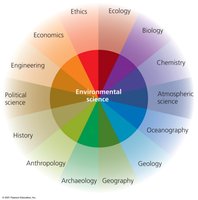
Environmental science is the interdisciplinary study of the natural world and how humans interact with it. It encompasses both living and non-living components of the environment, recognizing that humans are integral to these systems and have significantly altered them through resource use and technological advancement.
Environment: Includes all living (biotic) and non-living (abiotic) things around us.
Human Impact: Humans utilize and modify the environment for their benefit, often leading to environmental changes.
Interdisciplinary Nature: Environmental science draws from biology, chemistry, ecology, geology, atmospheric science, and other fields to address complex environmental issues.
The Scientific Method and Process of Science
The scientific method is a systematic approach used to investigate natural phenomena. It involves making observations, forming hypotheses, making predictions, conducting experiments, and analyzing results. This process ensures that scientific ideas are tested and validated through evidence.
Observation: Noticing phenomena in the natural world.
Question: Asking questions about observed phenomena.
Hypothesis: Proposing a tentative explanation or answer.
Prediction: Making testable statements based on the hypothesis.
Experiment: Testing predictions through controlled activities.
Results: Analyzing data to determine if the hypothesis is supported.
Publication & Reproducibility: Sharing findings in peer-reviewed journals and ensuring results can be reproduced by others.
Types of Experiments:
Manipulative Experiment: Researcher actively changes the independent variable.
Natural Experiment: Researcher observes changes in variables that occur naturally.
Control: A unit with all characteristics in common except the variable being tested.
Statistical Analysis: Used to interpret data, accounting for sampling error but not for bias or non-sampling error.
Natural Resources and Ecosystem Services
Types of Natural Resources
Natural resources are substances and materials that humans rely on for survival. They are classified based on their ability to be replenished.
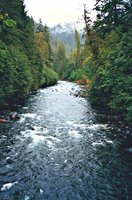
Renewable Resources: Can be replenished within a human lifetime (e.g., timber, water, animals, wind, sun).
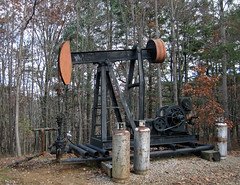
Nonrenewable Resources: Exist in finite supply and are replenished very slowly (e.g., minerals, oil, coal).
Ecosystem Services
Ecosystem services are essential functions provided by natural systems that support human life and well-being. These services are often undervalued but are critical for survival.
Water Purification: Natural filtration of water by ecosystems.
Air Purification: Removal of pollutants by plants and other organisms.
Nutrient Cycling: Recycling of essential elements like nitrogen and phosphorus.
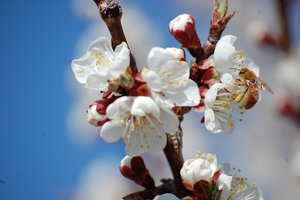
Pollination: Transfer of pollen by insects and animals, vital for plant reproduction.
Breakdown of Organic Waste: Decomposition by microbes and detritivores.
Resource Consumption and Population Growth
Resource Consumption
Human use of natural resources and ecosystem services can lead to depletion and degradation. As the population grows, the impact on the environment increases, making sustainable management crucial.
Depletion: Overuse of resources can exhaust supplies.
Degradation: Excessive use can reduce the quality of ecosystem services.
Population Growth: More people means greater demand for resources and services.
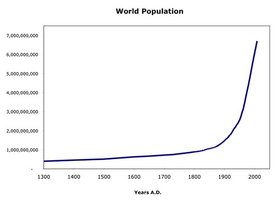
Ecological Footprint and Sustainability
Ecological Footprint
The ecological footprint measures the area of productive land and water required to supply resources and absorb wastes for an individual or population. It is a key indicator of environmental impact and sustainability.
Calculation: Considers resource consumption and waste production.
Application: Used to compare the sustainability of different lifestyles and nations.
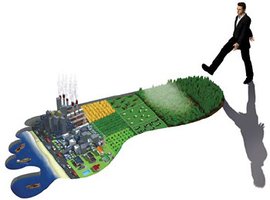
Sustainability
Sustainability involves using resources at a rate that allows them to be replenished and producing waste at a rate that the environment can absorb. It aims to maintain resources and healthy ecosystems for future generations and other organisms.
Resource Management: Use only as many resources as can be replenished.
Waste Management: Produce only as much waste as can be reclaimed by the earth.
Intergenerational Equity: Leave resources and a healthy environment for future generations.
Biodiversity: Ensure the maintenance of other organisms and functioning ecosystems.
