 Back
Scientific Inquiry and Experimental Design in Biology
Study Guide - Smart Notes
 Tailored notes based on your materials, expanded with key definitions, examples, and context.
Scientific Inquiry in Biology
Introduction to Scientific Inquiry
Scientific inquiry is the foundation of biological research, involving a logical process to answer questions about the natural world. It is based on making observations, asking questions, forming hypotheses, predicting outcomes, and testing those hypotheses. - Science is derived from the Latin verb meaning "to know." - Inquiry is the search for information and explanation. - Scientific inquiry (the scientific method) is a systematic approach to understanding phenomena. 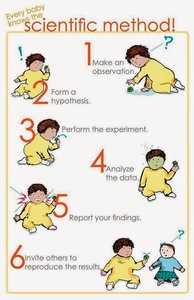
Steps of the Scientific Method
The scientific method consists of several key steps: 1. Observation: Noticing and describing phenomena. 2. Question: Asking questions based on observations. 3. Hypothesis: Proposing a potential explanation. 4. Prediction: Making an "If, then" statement based on the hypothesis. 5. Experiment: Testing the prediction with controlled experiments. 6. Analysis: Interpreting the data collected. 7. Conclusion: Determining whether the results support or falsify the hypothesis. Example: Researchers observed that beach mice have light tan coats while inland mice have darker coats. They hypothesized that coat color evolved as an adaptation for camouflage against predation. 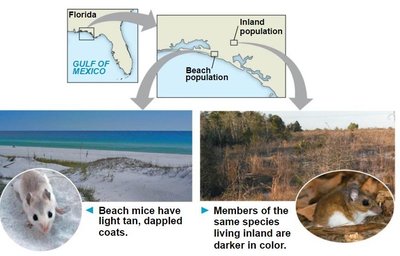
Experimental Design
Variables in Experiments
Understanding variables is crucial for designing experiments: - Independent variable: The factor manipulated by the investigator. - Dependent variable: The factor measured or observed in response to the independent variable. - Confounding factors: Other variables that could affect the outcome and must be controlled. Example: In the mouse camouflage experiment, the independent variable is coat color, and the dependent variable is predation rate.
Control and Experimental Groups
Experiments typically include: - Control group: Not exposed to the independent variable; used for comparison. - Experimental group: Exposed to the independent variable. Purpose of control group: Ensures that observed effects are due to the independent variable and not other factors.
Positive and Negative Controls
- Negative control: A group where no effect is expected, eliminating false positives. - Positive control: A group where an effect is expected, confirming the system works.
Replication and Level of Treatment
- Replication: Repeating the experiment with multiple subjects to ensure reliability. - Level of treatment: The specific value or condition set for the independent variable.
Data Types and Analysis
- Qualitative data: Descriptive information. - Quantitative data: Numerical measurements. - Predation rate formula: 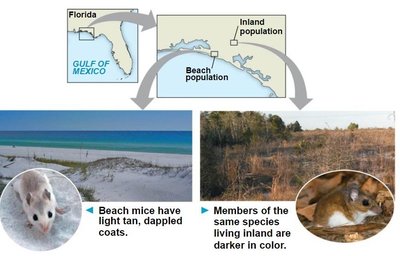
Correlation vs. Causation
- Correlation: When two variables trend together. - Causation: When one variable directly affects another. - Important: Correlation does not imply causation; statistical tests and experimental design are needed to establish causality. 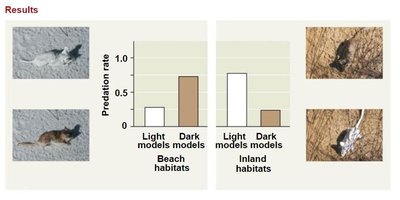
Drawing Conclusions
- Results can support or falsify a hypothesis, but never prove it absolutely. - Consistent results strengthen the hypothesis; inconsistent results may falsify it.
Case Studies in Experimental Design
Aggression Study
This study investigates the effect of sleep on aggression in basketball games. - Question: Does lack of sleep cause aggression in basketball games? - Hypothesis: Less sleep heightens aggression as measured by fouls. - Prediction: If participants sleep less, then they will commit more fouls. - Independent variable: Hours of sleep. - Dependent variable: Number of fouls. - Experimental group: 3-7 hours of sleep. - Control group: More than 7 hours of sleep. - Potential confounding factors: Skill level, stress, caffeine intake, etc. - Level of treatment: 3, 8, and 10 hours of sleep. - Conclusion: Data supports the hypothesis if fewer hours of sleep correlate with more fouls, and error bars do not overlap. 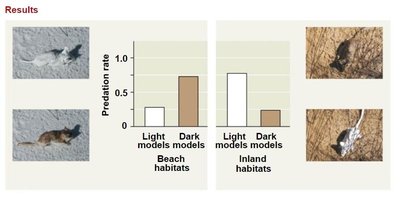
Nutrition Study
This study examines the effect of meal timing on weight gain in mice. - Question: Does the timing of a high fat meal influence body weight in mice after 12 weeks? - Hypothesis: Early high fat meals increase body weight more than late meals. - Prediction: If mice eat a high fat meal early, then they will gain more weight. - Independent variable: Meal timing. - Dependent variable: Body weight after 12 weeks. - Experimental group: High fat meal early in active period. - Control group: High fat meal at regular feeding time. - Potential confounding factors: Activity level, genetic background, environment. - Level of treatment: Early (7 pm) vs. late (7 am) feeding. - Conclusion: Use error bars to determine statistical significance; overlapping bars indicate no significant difference.
Breathing Study
This study explores the relationship between breathing method and brain activity related to fear and anxiety. - Question: Does the location of airflow matter for matching breathing frequency and fear/anxiety brain activity? - Hypothesis: Breathing through the mouth matches brain activity to breathing frequency. - Prediction: If breathing is through the mouth, then brain activity will match breathing frequency. - Independent variable: Breathing method (mouth vs. nose). - Dependent variable: Matching of breathing and brain activity frequencies. - Experimental group: Mouth breathing. - Control group: Nose breathing. - Potential confounding factors: Stress, environment, individual differences. - Level of treatment: Breathing method. - Conclusion: Results support the hypothesis if high brain activity coincides with high breathing frequency in the mouth breathing group. 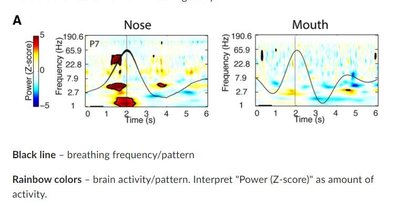
Summary Table: Key Terms in Experimental Design
Term | Definition | Example |
|---|---|---|
Independent Variable | Manipulated factor | Coat color in mice experiment |
Dependent Variable | Measured outcome | Predation rate |
Control Group | Not exposed to independent variable | Mice with matching coat color |
Experimental Group | Exposed to independent variable | Mice with mismatched coat color |
Replication | Repeating experiment | Multiple mouse models |
Confounding Factor | Other variables affecting outcome | Size, weight, activity level |
Conclusion
Scientific inquiry and experimental design are essential for understanding biological phenomena. By carefully controlling variables, using appropriate controls, and analyzing data, biologists can draw meaningful conclusions about the natural world. Correlation does not imply causation, and rigorous experimental design is necessary to establish causal relationships. Additional info: These notes expand on brief points to provide a comprehensive overview suitable for exam preparation in General Biology.
