 Back
BackSensory Systems: Structure, Function, and Evolution
Study Guide - Smart Notes
 Tailored notes based on your materials, expanded with key definitions, examples, and context.
Sensory Systems Overview
Introduction to Sensory Systems
Sensory systems are specialized biological mechanisms that allow organisms to detect and interpret information from their environment. These systems rely on sensory receptors that transduce physical or chemical stimuli into neural signals, which are then processed by the nervous system to generate perception and guide behavior.
Sensory receptors are specialized cells or structures that detect specific types of stimuli (e.g., light, sound, touch, chemicals).
Transduction is the process by which sensory receptors convert external stimuli into electrical signals (receptor potentials).
Perception is the interpretation of these signals by the brain, forming our conscious experience of the world.
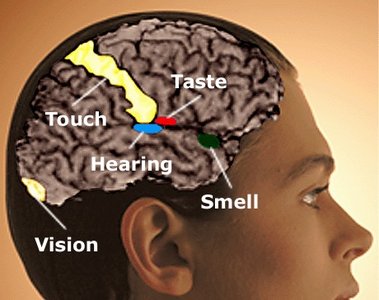
Types of Sensory Receptors
Classification of Sensory Receptors
Sensory receptors are classified based on the type of stimulus they detect:
Mechanoreceptors: Detect mechanical forces such as touch, pressure, vibration, and stretch.
Photoreceptors: Detect light (vision).
Chemoreceptors: Detect chemical stimuli (taste and smell).
Thermoreceptors: Detect changes in temperature.
Nociceptors: Detect pain (damaging or potentially damaging stimuli).
Electromagnetic receptors: Detect electromagnetic fields (e.g., magnetic field detection in some animals).
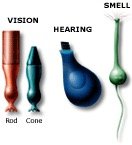
Ionotropic vs. Metabotropic Sensory Detection
There are two main mechanisms by which sensory receptors transduce stimuli:
Ionotropic detection: The receptor protein is part of an ion channel. When the stimulus binds, the channel opens or closes directly, altering the membrane potential.
Metabotropic detection: The receptor protein activates a G protein and a signaling cascade, which eventually opens or closes ion channels indirectly.
Receptor Potential (RP)
A receptor potential is a change in the membrane potential of a sensory cell in response to a stimulus. If the receptor potential is strong enough to reach threshold, it triggers an action potential that is transmitted to the nervous system.
Examples of Sensory Systems
Touch (Skin) Sensory System
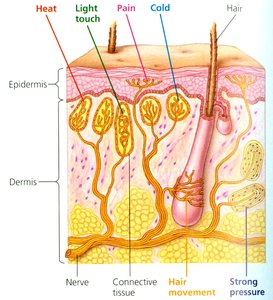
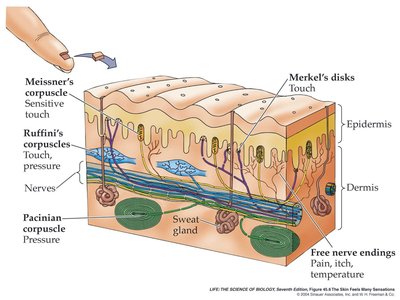
The skin contains various mechanoreceptors that detect different types of mechanical stimuli. These receptors are distributed in both the epidermis and dermis and are responsible for sensations such as touch, pressure, vibration, and hair movement.
Merkel's disks: Slow-adapting, provide continuous information about pressure and texture.
Meissner's corpuscles: Rapidly adapting, sensitive to light touch.
Ruffini corpuscles: Slow-adapting, detect skin stretch and low-frequency vibration.
Pacinian corpuscles: Rapidly adapting, detect deep pressure and high-frequency vibration.
Free nerve endings: Detect pain, itch, and temperature.
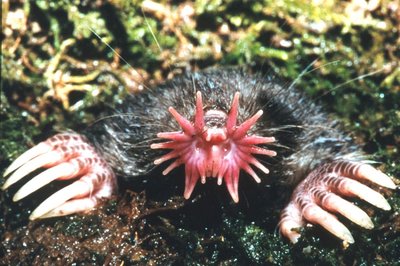
Specialized Touch: The Star-Nosed Mole
The star-nosed mole has a highly specialized structure with a dense concentration of touch receptors on its nose, allowing it to detect prey and navigate in darkness with exceptional sensitivity.
Hearing: Hair Cells in the Cochlea
Hair cells are specialized mechanoreceptors located in the cochlea of the inner ear. They detect vibrations caused by sound waves and convert them into electrical signals that are sent to the brain.
Sound waves cause movement of the basilar membrane, bending the hair cells and opening ion channels.
This leads to a receptor potential and, if threshold is reached, an action potential in the auditory nerve.
Vision: Structure and Evolution of Eyes
Photoreceptors and Rhodopsins
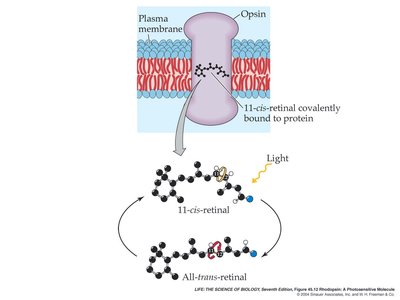
Photoreceptors are specialized cells that detect light. The primary photoreceptive molecule in animals is rhodopsin, composed of a light-absorbing pigment (retinal) bound to a protein (opsin).
Light causes retinal to change from the 11-cis to the all-trans form, triggering a conformational change in opsin and initiating a signal transduction cascade.
Evolution of Photoreceptors
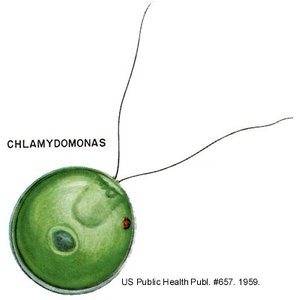
Photosensitivity is an ancient trait, with rhodopsin-like molecules found in both animals and some plants (e.g., Chlamydomonas). The evolution of eyes shows a progression from simple light-sensitive patches to complex camera-type eyes in mollusks and vertebrates.
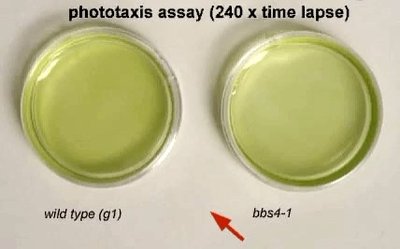
Phototaxis in Algae
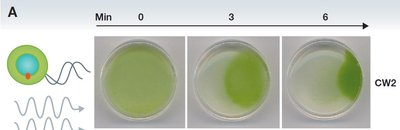
Single-celled algae like Chlamydomonas use rhodopsin-based photoreceptors to move toward or away from light (phototaxis), demonstrating the evolutionary conservation of light detection mechanisms.
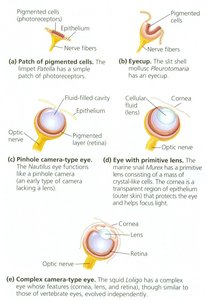
Evolution of the Eye in Mollusks
The evolution of the eye in mollusks provides a clear example of increasing complexity, from simple pigmented cells to complex camera-type eyes similar to those of vertebrates.
Vestigial Eyes: Adaptation and De-evolution
When selective pressure for vision is relaxed, as in some subterranean animals, eyes may become vestigial (reduced or non-functional), as seen in the Eastern American mole.

Compound Eyes in Arthropods
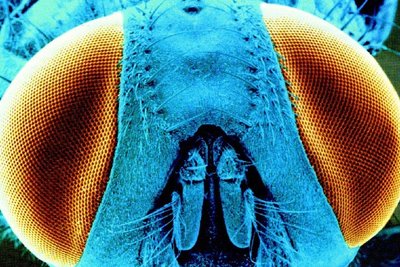
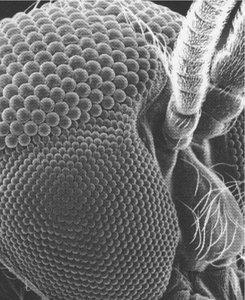
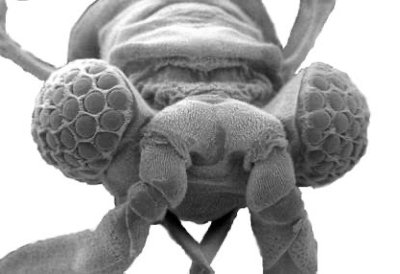
Arthropods, such as insects, possess compound eyes made up of many units called ommatidia. Each ommatidium contains a lens and photoreceptor cells, providing a mosaic view of the world.
The number of ommatidia varies by species, influencing visual resolution.
Compound eyes are especially effective for detecting motion.
Vertebrate Eyes: Structure and Function
Vertebrate eyes contain two main types of photoreceptors: rods and cones. Rods are highly sensitive to low light and provide black-and-white vision, while cones are responsible for color vision and visual acuity.
The retina contains layers of photoreceptors, bipolar cells, and ganglion cells, which process and transmit visual information to the brain.
Light absorption by rhodopsin in rods triggers a cascade involving the G protein transducin and cGMP phosphodiesterase, leading to closure of Na+ channels and hyperpolarization of the cell.
Color Vision
Humans have three types of cone cells, each sensitive to different wavelengths (blue, green, red). Other animals may have more or fewer types, resulting in different color vision capabilities (e.g., tetrachromacy in birds, dichromacy in some mammals).
Comparative Eye Structure: Vertebrates vs. Cephalopods
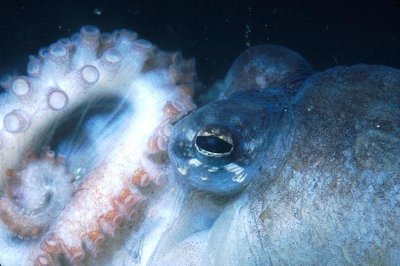
Both vertebrates and cephalopod mollusks (e.g., squids, octopi) have complex camera-type eyes, but their anatomical organization differs. In cephalopods, photoreceptors face incoming light directly, resulting in no blind spot, whereas in vertebrates, the arrangement creates a blind spot where the optic nerve exits the retina.
The World Beyond Human Perception
Non-Human Sensory Modalities
Many animals possess sensory capabilities beyond human perception, such as detection of ultraviolet or infrared light, electric fields, echolocation, and magnetic fields. These adaptations allow them to interact with their environments in unique ways.
Bees can see ultraviolet patterns on flowers.
Snakes detect infrared radiation from warm-blooded prey.
Fish can sense electric fields.
Bats and dolphins use echolocation to navigate and hunt.
Birds and butterflies may use Earth's magnetic field for navigation.
Philosophical Implications
Sensory systems do not provide a direct readout of objective reality but rather construct perceptions that are adaptive for survival. This raises philosophical questions about the nature of reality and perception, as discussed by thinkers such as Plato, Descartes, Berkeley, and Kant.
Practice Questions
Multiple Choice Example
Consider a sensory receptor such as a stretch receptor in a vertebrate muscle: as compared with a weak stimulus that barely reaches above threshold, a very strong stimulus evokes in the receptor cell’s axon:
A) A higher frequency of action potentials
B) A lower frequency of action potentials
C) A more depolarized action potential as it progresses along the axon
D) A more hyperpolarized action potential as it progresses along the axon
E) A change from passive flow of current to salutatory conduction
F) More than one of the above (A-E).
G) None of the above (A-E).
In the human retina, the molecule that most directly absorbs light which leads to vision is ...
A) Opsin
B) Transducin
C) Channelrhodopsin
D) Phototropin
E) Amacrine
F) More than one of the above (A-E)
G) None of the above (A-E).
The appendages that form the “star nose” of the Star-nosed Mole are . . .
A) chemosensory structures.
B) tactile structures.
C) olfactory structures.
D) highly sensitive photoreceptors.
E) gustatory structures.
F) none of the above (A-E).
Short Answer Example
One of the potential side effects of Viagra is “a sudden loss of vision.” Given your understanding of the enzyme which is the target of Viagra in the case of penile erection, explain why it is not surprising that Viagra might also have an effect on vision. Your answer should include:
A. A complete description of the signal transduction pathway in the photoreceptors of the visual system.
B. An explanation of where and how in this pathway Viagra might be causing problems.
Summary Table: Types of Sensory Receptors and Their Stimuli
Receptor Type | Stimulus Detected | Example Location |
|---|---|---|
Mechanoreceptor | Touch, pressure, vibration, stretch | Skin, cochlea (hair cells) |
Photoreceptor | Light | Retina (rods and cones) |
Chemoreceptor | Chemicals (taste, smell) | Tongue, nasal epithelium |
Thermoreceptor | Temperature | Skin |
Nociceptor | Pain | Skin, internal organs |
Electromagnetic receptor | Magnetic fields, light (some animals) | Birds, fish |
