 Back
BackSexual Reproduction and Genetic Variation: Meiosis and Life Cycles
Study Guide - Smart Notes
 Tailored notes based on your materials, expanded with key definitions, examples, and context.
Sexual Reproduction and Variation
Introduction to Heredity and Variation
Sexual reproduction is a biological process that results in offspring with genetic material inherited from two parents. This process is fundamental to the generation of genetic diversity within populations, which is essential for evolution and adaptation.
Heredity: The transmission of traits from one generation to the next via DNA/genes.
Variation: Differences in appearance and traits among offspring, siblings, and parents, primarily due to sexual reproduction.
Genetics: The scientific study of heredity and variation, including the mechanisms of DNA transfer at cellular, organismal, and molecular levels.
Modes of Reproduction
Asexual vs. Sexual Reproduction
Organisms can reproduce either asexually or sexually, each with distinct genetic consequences.
Asexual reproduction: One parent produces genetically identical offspring (clones) by mitosis. This method is efficient for rapid population growth and is common in single-celled organisms, some plants, and some animals.
Sexual reproduction: Two parents contribute genetic material, resulting in offspring with unique combinations of genes. This increases genetic variability and enhances the adaptive potential of populations.
Examples of asexual reproduction:
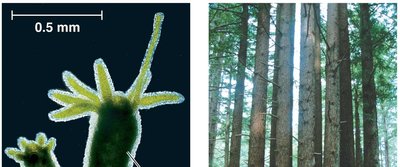
Budding in Hydra
Clonal growth in redwood trees
Genes, Chromosomes, and Cell Types
Genes and Chromosomes
Genes are units of heredity, each located at a specific locus on a chromosome. Chromosomes are long DNA molecules that carry genetic information.
Somatic cells: All body cells except gametes; diploid (2n), containing two sets of chromosomes (one from each parent).
Gametes: Reproductive cells (sperm and eggs); haploid (n), containing one set of chromosomes.
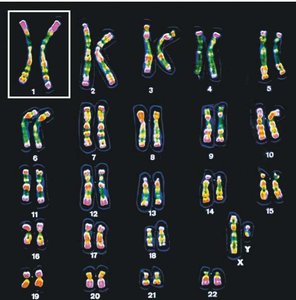
Karyotype: An ordered display of the pairs of chromosomes in a cell, used to study chromosome number and structure.
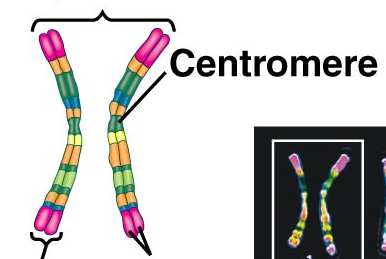
Homologous chromosomes (homologs): Chromosome pairs, one from each parent, similar in size, centromere position, and gene content.
Diploid and Haploid Cells
Organisms alternate between diploid and haploid stages in their life cycles.
Diploid (2n): Cells with two sets of chromosomes (e.g., human somatic cells: 46 chromosomes).
Haploid (n): Cells with one set of chromosomes (e.g., human gametes: 23 chromosomes).
Life Cycles: Asexual and Sexual
Asexual Life Cycles
Asexual reproduction involves mitosis or binary fission, producing genetically identical offspring from a single parent. This is common in bacteria, protists, some fungi, and some plants and animals.
Sexual Life Cycles
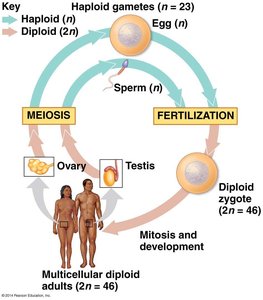
Sexual life cycles alternate between haploid gametes and diploid somatic cells. Fertilization restores diploidy, while meiosis reduces chromosome number by half.
Fertilization: Fusion of two gametes to form a diploid zygote.
Meiosis: Specialized cell division that produces haploid gametes from diploid cells.
Diversity of Sexual Life Cycles
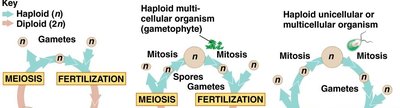
Different organisms exhibit variations in their sexual life cycles, such as alternation of generations in plants and algae, where both haploid and diploid stages are multicellular.
Meiosis: Mechanism and Stages
Overview of Meiosis
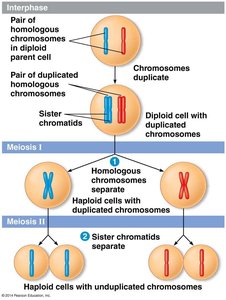
Meiosis is a two-division process that reduces the chromosome number by half, producing four genetically distinct haploid cells from one diploid cell.
Meiosis I: Homologous chromosomes separate.
Meiosis II: Sister chromatids separate.
Meiosis I: Prophase I
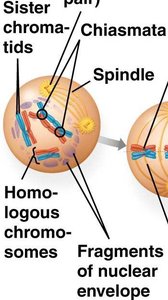
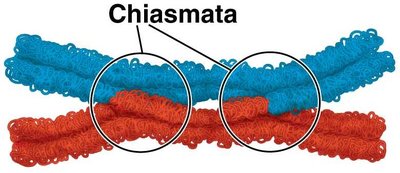
During Prophase I, chromatin condenses, the spindle forms, and the nuclear envelope breaks down. A key event is crossing over, where homologous chromosomes exchange genetic material at regions called chiasmata. This process increases genetic variation.
Synapsis: Homologous chromosomes pair up and exchange segments.
Meiosis I: Metaphase I and Anaphase I
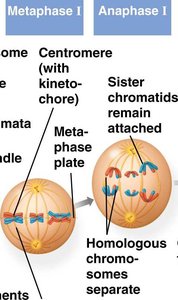
In Metaphase I, homologous chromosome pairs align at the metaphase plate. In Anaphase I, homologs are pulled to opposite poles, but sister chromatids remain attached.
Meiosis I: Telophase I and Cytokinesis
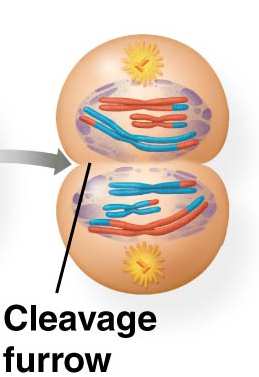
Each half of the cell now has a haploid set of chromosomes, each still consisting of two sister chromatids. Cytokinesis divides the cell into two haploid cells.
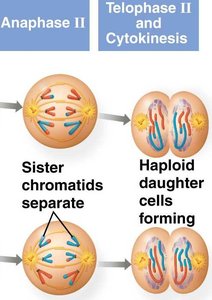
Meiosis II: Prophase II, Metaphase II, Anaphase II, Telophase II, and Cytokinesis
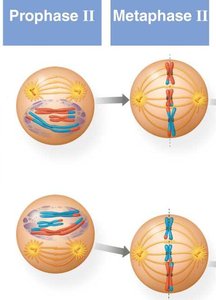
Meiosis II resembles mitosis. Sister chromatids are separated, resulting in four haploid cells, each genetically distinct.
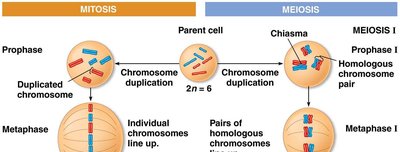
Comparison of Meiosis and Mitosis
Key Differences and Similarities
While both processes involve DNA replication and similar stages, their outcomes and mechanisms differ significantly.
Mitosis: Produces two genetically identical diploid cells; conserves chromosome number.
Meiosis: Produces four genetically unique haploid cells; reduces chromosome number by half.
Unique to meiosis: Synapsis and crossing over, homologous chromosome pairing and separation in Meiosis I.
Property | Mitosis | Meiosis |
|---|---|---|
Number of divisions | One | Two |
Number of daughter cells | Two (identical) | Four (genetically distinct) |
Chromosome number | Conserved (2n → 2n) | Halved (2n → n) |
Genetic variation | Low | High (crossing over, independent assortment) |
Genetic Variation in Sexual Life Cycles
Sources of Genetic Variation
Sexual reproduction generates genetic diversity through several mechanisms:
Independent assortment of chromosomes: Random orientation of homologous pairs during Metaphase I leads to different combinations of maternal and paternal chromosomes in gametes.
Crossing over: Exchange of genetic material between homologous chromosomes during Prophase I creates recombinant chromosomes.
Random fertilization: Any sperm can fuse with any egg, further increasing genetic combinations.
For example, in humans, independent assortment alone allows for 8.4 million possible gamete combinations; with fertilization, the number of possible zygotes exceeds 70 trillion, not including the effects of crossing over.
Practice Questions
A cell containing 28 chromatids at Metaphase I of Meiosis I produces four daughter cells at the end of meiosis. How many chromosomes does each cell contain? Answer: 7
How do cells at the completion of meiosis compare with cells that have replicated their DNA and are just about to begin meiosis? Answer: They have half the number of chromosomes and one-fourth the amount of DNA.
