 Back
BackLec 30
Study Guide - Smart Notes
 Tailored notes based on your materials, expanded with key definitions, examples, and context.
Sexual Selection and Sexual Dimorphism
Introduction to Sexual Selection
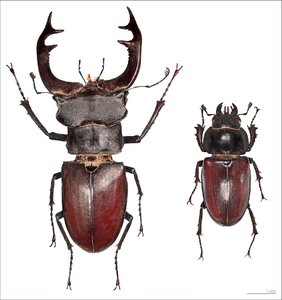
Sexual selection is a form of natural selection that arises from differences in reproductive success due to variation in the ability to obtain mates. It often leads to the evolution of traits that are advantageous for mating but may be maladaptive for survival. Sexual selection explains the presence of sexual dimorphism—distinct differences in size or appearance between the sexes of a species.
Sexual Dimorphism: Differences in morphology, behavior, or physiology between males and females of the same species.
Examples: Larger body size or elaborate ornaments in males compared to females.


Mechanisms of Sexual Selection
Male-Male Competition and Female Choice
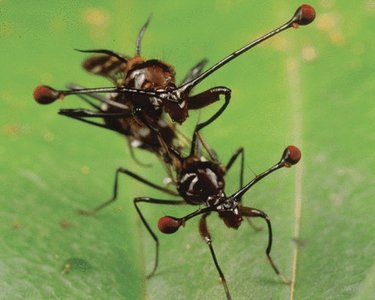
Sexual selection operates through two main mechanisms: competition among males for access to females (intrasexual selection) and female choice of mates (intersexual selection). These mechanisms can lead to the evolution of exaggerated male traits and behaviors.
Male-Male Competition: Males compete directly for access to females, often resulting in the evolution of weapons (e.g., antlers, large mandibles).
Female Choice: Females select mates based on specific traits, such as elaborate displays or courtship behaviors.
Superficially Maladaptive Traits: Traits that may reduce survival but increase mating success (e.g., long tails, bright colors).
Social Mating Systems
Types of Mating Systems
Mating systems describe the patterns of mating behavior in a population. They are shaped by the relative investment of each sex in offspring and the ecological context.
Monogamy: One male and one female form an exclusive pair bond, often with prolonged association.
Promiscuity: Both sexes have multiple mating partners, with no prolonged pair bonds.
Polygamy: Individuals have multiple mates. Includes:
Polygyny: One male mates with multiple females.
Polyandry: One female mates with multiple males.
Parental Investment and Reproductive Success
Evolutionary theory predicts that the sex investing more in offspring (usually females) becomes a limiting resource for the other sex (usually males), leading to competition for mates. In mammals, females typically invest more in parenting, while males compete for access to females.
Male Investment: Males may invest in gaining access to mates or, in some systems, in parental care if it increases reproductive success.
Female Investment: Females invest in offspring and select mates based on genetic quality or resources.
Male Competition and Alternative Strategies
Alternative Mating Tactics
When direct competition is not possible, some males adopt alternative strategies to achieve reproductive success.
Sneaky Copulation: Smaller or less dominant males attempt to mate covertly.
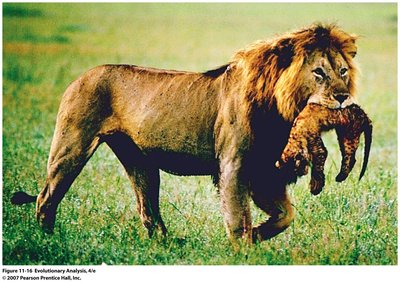
Infanticide: Males may kill offspring sired by other males to bring females into estrus sooner.
Sperm Competition: Competition between sperm of different males to fertilize eggs in species where females mate with multiple males.
Sperm Competition
Mechanisms of Sperm Competition
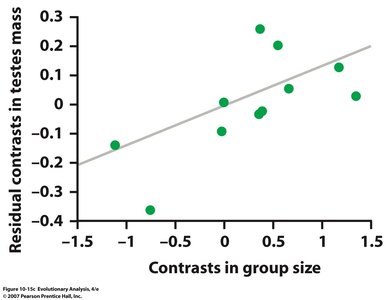
Sperm competition occurs when the sperm of multiple males compete to fertilize a female's eggs. This can lead to the evolution of various adaptations in males.
Increased Sperm Production: Larger testes and higher sperm counts.
Mate Guarding: Behaviors to prevent other males from mating with a female.
Prolonged Copulation: Extended mating to reduce the chance of other males mating with the female.
Copulatory Plugs: Substances deposited in the female reproductive tract to block subsequent matings.
Scent Marking: Use of pheromones to signal mating status.

Evolution of Sperm Traits
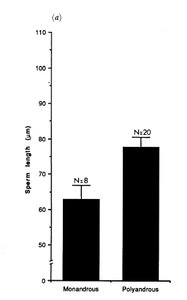
Sperm competition can drive the evolution of sperm quality, including swimming speed, energetics, and tolerance to the female reproductive environment. In polyandrous species, sperm tend to be longer and faster.
Sperm Length: Longer sperm are often found in species with high sperm competition.
Sperm Quality: Includes swimming speed, volume, and tolerance to vaginal chemistry.
Female Choice and Cryptic Female Choice
Mechanisms of Female Choice
Females may choose mates based on intrinsic preferences for male appearance, behaviors, or breeding sites. Additionally, females can exert choice after mating through cryptic mechanisms.
Intrinsic Preferences: Selection for traits such as bright coloration, elaborate displays, or specific courtship behaviors.
Cryptic Female Choice: Postcopulatory mechanisms such as sperm storage, selective sperm ejection, or differential investment in offspring.
Inbreeding Avoidance
Females may avoid inbreeding through premating or postmating mechanisms, including kin recognition and selection based on genetic dissimilarity (e.g., MHC genes).
Premating Mechanisms: Kin recognition, disassortative mating, and chemosensory cues.
Postmating Mechanisms: Sperm storage and cryptic female choice favoring genetically dissimilar sperm.
Empirical Evidence for Female Choice
Studies have shown that females can bias fertilization toward non-sibling males, even when sperm quality is similar, indicating egg-driven selection against related sperm.
Summary Table: Mating Systems and Sperm Competition
Mating System | Male Strategy | Female Strategy | Sperm Competition |
|---|---|---|---|
Monogamy | Mate guarding, parental care | Mate choice, parental care | Low |
Polygyny | Male-male competition, display traits | Choose high-quality males | Moderate |
Polyandry | Sperm competition, alternative tactics | Cryptic choice, sperm storage | High |
Promiscuity | Sperm competition, mate guarding | Multiple mating, cryptic choice | High |
Key Terms and Concepts
Sexual Selection: Selection for traits that increase mating success.
Sexual Dimorphism: Differences between males and females in morphology or behavior.
Sperm Competition: Competition between sperm from different males to fertilize eggs.
Mate Guarding: Behaviors to prevent other males from mating with a partner.
Cryptic Female Choice: Female-mediated selection after copulation.
Parental Investment: Energy and resources devoted to raising offspring.
Mating System: The pattern of mating behavior in a population.
Relevant Equations
Bateman's Principle: The sex with greater variance in reproductive success will be subject to stronger sexual selection.
Relative Testes Size:
Further Reading
Clutton-Brock, T. (2009). Structure and function in mammalian societies.
Fitzpatrick, J.L. & Lüpold, S. (2014). Sexual selection and the evolution of sperm quality.
Birkhead, T.R. & Pizzari, T. (Year). Postcopulatory sexual selection.
