 Back
BackSpeciation and Macroevolution: Mechanisms and Concepts
Study Guide - Smart Notes
 Tailored notes based on your materials, expanded with key definitions, examples, and context.
Speciation and Macroevolution
Introduction to Macroevolution
Macroevolution refers to evolutionary changes that result in the formation of new species and groups of species over long periods of time. This process is fundamental to understanding the diversity of life on Earth and is closely linked to the mechanisms of speciation.
Species Concepts and Definitions
What is a Species?
A species is a group of organisms that maintains a distinctive set of attributes in nature. However, defining a species can be challenging due to the existence of subspecies, ecotypes, and the diversity of life forms.
Morphological Species Concept: Species are identified based on physical traits and structures.
Biological Species Concept: Species are groups of actually or potentially interbreeding natural populations that are reproductively isolated from other such groups.
Phylogenetic Species Concept: Species are the smallest group of individuals that share a common ancestor, forming one branch on the tree of life.
Ecological Species Concept: Species are defined by their ecological niche, focusing on unique adaptations to particular roles in a biological community.
Limitations: Each concept has limitations. For example, the biological species concept does not apply to asexual or extinct species, and morphological traits can be misleading due to convergent evolution or phenotypic plasticity.
Examples of Species Identification
Morphological traits: Used when only physical characteristics are available, such as in fossil species or preserved specimens.
Molecular features: DNA sequence comparisons can help distinguish species, but the degree of difference required is sometimes arbitrary.
Ecological characteristics: Especially useful for bacteria and other microorganisms.
Example: When classifying preserved jellyfish with no additional information, morphology is the best characteristic to use.
Mechanisms of Reproductive Isolation
Reproductive Isolation
Reproductive isolation is essential for the divergence of populations and the formation of new species. It prevents gene flow between populations, allowing them to evolve independently.
Prezygotic Barriers
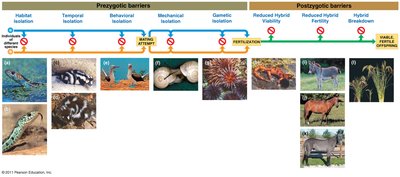
Prezygotic barriers prevent mating or fertilization between species. The main types include:
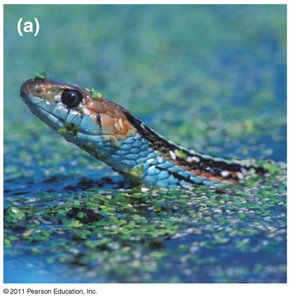
Habitat Isolation: Species occupy different habitats and do not meet.
Temporal Isolation: Species breed at different times (seasons, years, or times of day).
Behavioral Isolation: Unique courtship rituals or behaviors prevent mating.
Mechanical Isolation: Morphological differences prevent successful mating.
Gametic Isolation: Gametes are incompatible and cannot fuse to form a zygote.
Postzygotic Barriers
Postzygotic barriers occur after fertilization and reduce the viability or reproductive capacity of hybrid offspring. These include:
Hybrid Inviability: Hybrid embryos do not develop properly and die early.
Hybrid Sterility: Hybrids are healthy but sterile (e.g., mule).
Hybrid Breakdown: Hybrids are viable and fertile, but their offspring are weak or sterile.
Speciation: The Formation of New Species
Allopatric Speciation
Allopatric speciation is the most common mechanism of speciation. It occurs when populations are geographically separated, leading to reproductive isolation and divergence due to evolutionary processes such as natural selection, genetic drift, and mutation.
Geographic barriers (mountains, rivers, etc.) prevent gene flow.
Over time, genetic differences accumulate, resulting in speciation.
Sympatric Speciation
Sympatric speciation occurs without geographic separation. Mechanisms include:
Habitat Differentiation: Subpopulations exploit different resources or habitats within the same area.
Polyploidy: Especially in plants, errors in cell division result in extra sets of chromosomes, creating reproductive barriers.
Sexual Selection: Preferences for specific traits can lead to reproductive isolation within the same environment.
Hybrid Zones
Hybrid zones are regions where members of different species meet and mate, producing hybrids. If gene flow is reduced, reproductive isolation can increase, leading to speciation.
Adaptive Radiation
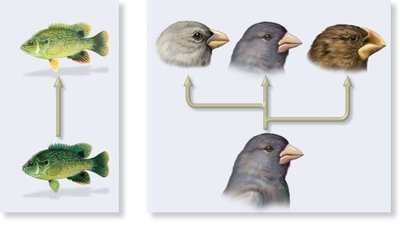
Adaptive radiation is the rapid evolution of many diverse species from a common ancestor, often following the colonization of new environments or the extinction of competitors.
Key Terms and Definitions
Term | Definition |
|---|---|
Speciation | The process by which one species splits into two or more species |
Reproductive Isolation | Barriers that prevent members of different species from producing viable, fertile offspring |
Allopatric Speciation | Speciation that occurs due to geographic separation |
Sympatric Speciation | Speciation that occurs without geographic separation |
Hybrid Zone | A region where different species meet and mate, producing hybrids |
Polyploidy | Condition in which an organism has extra sets of chromosomes |
Hybrid | Offspring resulting from the mating of individuals from two different species |
Intraspecific | Within a species |
Interspecific | Between different species |
Adaptive Radiation | Rapid evolution of many species from a common ancestor |
Relationship Between Microevolution and Macroevolution
Microevolution refers to changes in allele frequencies within a population, while macroevolution involves the accumulation of these changes leading to the formation of new species. The same evolutionary processes (natural selection, genetic drift, non-random mating, migration) drive both, but macroevolution requires reproductive isolation to maintain genetic differences between populations.
Summary Table: Mechanisms of Reproductive Isolation
Barrier Type | Mechanism | Example |
|---|---|---|
Prezygotic | Habitat Isolation | Water vs. terrestrial snakes |
Prezygotic | Temporal Isolation | Different breeding seasons |
Prezygotic | Behavioral Isolation | Unique courtship rituals |
Prezygotic | Mechanical Isolation | Incompatible genitalia |
Prezygotic | Gametic Isolation | Gamete incompatibility in sea urchins |
Postzygotic | Hybrid Inviability | Hybrid embryos die early |
Postzygotic | Hybrid Sterility | Mule (horse × donkey) |
Postzygotic | Hybrid Breakdown | Stunted offspring in hybrid rice |
Additional info: The images included are directly relevant to the mechanisms of speciation, reproductive isolation, and adaptive radiation as described in the notes. The tables summarize key terms and mechanisms for clarity and exam preparation.
