 Back
Ch.24 Speciation and Species Concepts: Mechanisms, Human Impact, and Biodiversity
Study Guide - Smart Notes
 Tailored notes based on your materials, expanded with key definitions, examples, and context.
Speciation: Mechanisms and Human Impact
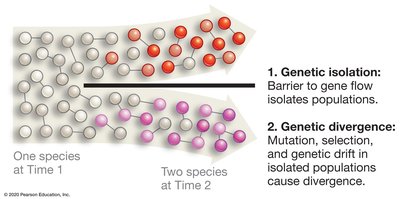
Genetic Divergence and Reproductive Isolation
Speciation is the evolutionary process by which populations diverge into distinct species. This occurs through the accumulation of genetic differences over time, often driven by mutation, natural selection, and genetic drift. Reproductive isolation is essential for speciation, as it prevents gene flow between diverging populations.
Genetic Isolation: Barriers to gene flow isolate populations, allowing independent evolution.
Genetic Divergence: Mutation, selection, and drift cause divergence in isolated populations.
Reproductive Isolation: When divergence leads to inability to interbreed, speciation is complete.
Human Influence on Speciation
Human activities can accelerate or alter speciation processes, especially in plants.
Creation of New Barriers: Habitat fragmentation, deforestation, and urbanization can isolate populations.
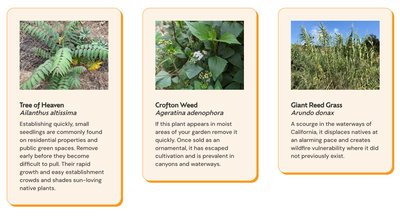
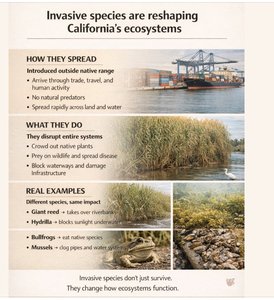
Species Movement: Introduction of species to new regions (invasive species) can lead to hybridization or competition.
Hybridization: Humans create hybrids, especially in plants (e.g., orchids).
Population Decline: Reduction in population size increases genetic drift and divergence.
Polyploidy and Speciation in Plants
Autopolyploidy and Allopolyploidy
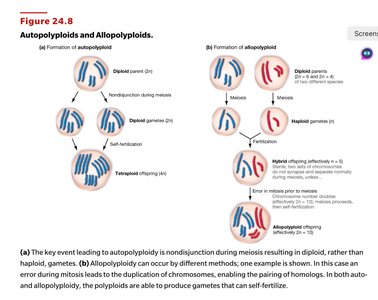
Polyploidy is a major mechanism of speciation in plants, involving chromosome duplication.
Autopolyploidy: Chromosome doubling within a single species due to nondisjunction during meiosis, resulting in diploid gametes that can self-fertilize.
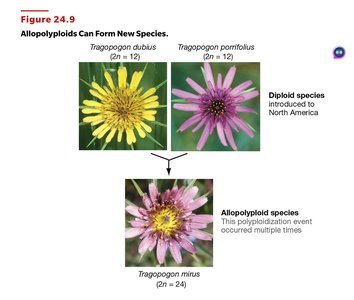
Allopolyploidy: Chromosome doubling following hybridization between two species, producing fertile polyploid offspring.
Formation of New Species via Polyploidy
Polyploidy can rapidly create new plant species that are reproductively isolated from their parents.
Example: Tragopogon mirus is an allopolyploid species formed from hybridization between Tragopogon dubius and Tragopogon porrifolius.
Polyploid plants often exhibit greater robustness and environmental tolerance.
Species Concepts: Definitions and Challenges
Biological Species Concept
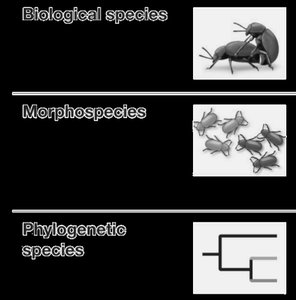
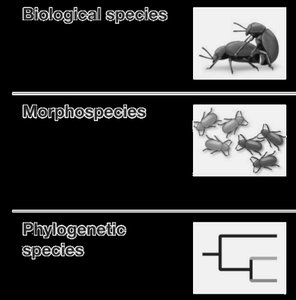
The biological species concept defines a species as a group of individuals that can interbreed in nature and produce viable, fertile offspring.
Advantages: Directly relates to reproductive isolation, easy to observe in sexually reproducing organisms.
Disadvantages: Not applicable to asexual organisms or fossils.
Morphospecies Concept
The morphospecies concept identifies species based on morphological similarity.
Advantages: Useful for fossils and newly discovered organisms.
Disadvantages: Morphologically similar organisms may be genetically distinct; convergent evolution can mislead classification.
Phylogenetic Species Concept
The phylogenetic species concept defines species as the smallest monophyletic group on a phylogenetic tree, based on unique genetic history.
Advantages: Applicable to all organisms, including asexual and extinct species.
Disadvantages: Requires genetic analysis, which can be resource-intensive.
Summary Table: Species Concepts
Concept | Definition | Advantages | Disadvantages |
|---|---|---|---|
Biological Species | Interbreeding, viable offspring | Direct, reproductive isolation | Not for asexual/fossils |
Morphospecies | Morphological similarity | Fossils, unknown organisms | Convergent evolution, cryptic species |
Phylogenetic Species | Unique genetic history | Universal, genetic evidence | Requires DNA analysis |
Hybrid Zones and Speciation Outcomes
Hybrid Zones
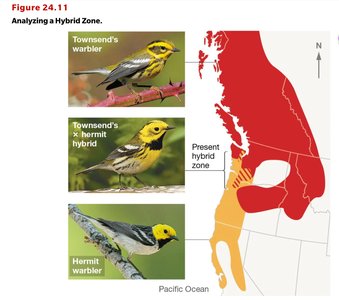
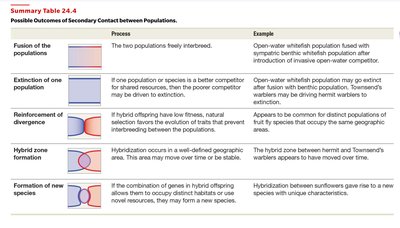
Hybrid zones are regions where two species meet and interbreed, producing hybrids. The outcomes depend on gene flow and selection.
Fusion: High gene flow merges populations.
Stability: Limited gene flow maintains hybrid zone.
Reinforcement: Selection increases reproductive barriers.
Extinction: One population outcompetes the other.
Formation of New Species: Hybrids exploit new niches and become distinct species.
Phylogenetic Trees and Evolutionary Relationships
Anatomy of a Phylogenetic Tree
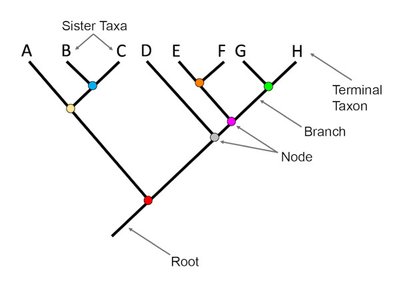
Phylogenetic trees illustrate evolutionary relationships among taxa.
Taxon: Named group of organisms.
Node: Represents common ancestor.
Branch: Lineage divergence.
Synapomorphy: Shared derived trait supporting a node.
Evolution, Biodiversity, and Binomial Nomenclature
Evolution and Biodiversity
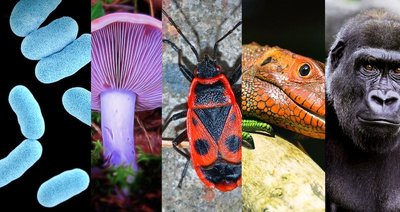
Evolution leads to biodiversity by generating new species through genetic divergence and speciation.
Biodiversity: The variety of all life forms on Earth.
Binomial Nomenclature: Scientific naming system using genus and species (e.g., Ursus arctos for brown bear).
Rapid Speciation and Evolution
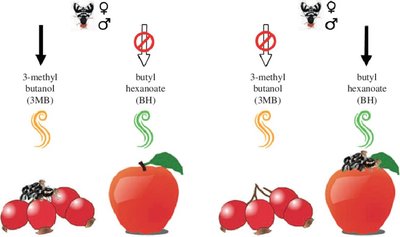
Evolution and speciation can occur rapidly, as observed in peppered moths, bacteria, and hawthorn flies.
Peppered Moth: Evolved in 50–100 years due to environmental changes.
Bacteria: Speciation observed in laboratory conditions within days.
Hawthorn Flies: Speciation in less than 200 years, possibly due to mutations in olfactory genes.
Summary
Speciation is a fundamental process in biology, driven by genetic divergence and reproductive isolation. Human activities, polyploidy, and hybrid zones all play significant roles in the formation of new species. Understanding species concepts and phylogenetic relationships is essential for studying biodiversity and evolution. Key Equations:
Hardy-Weinberg Principle:
Allele Frequency Change:
Example: The formation of polyploid plant species and hybrid zones in birds illustrate speciation mechanisms. Additional info: Rapid speciation can occur in both plants and animals, especially under strong environmental pressures or genetic changes.
