 Back
BackSpeciation and the Formation of New Species
Study Guide - Smart Notes
 Tailored notes based on your materials, expanded with key definitions, examples, and context.
Speciation and the Formation of New Species
Introduction to Speciation
Speciation is the evolutionary process by which populations evolve to become distinct species. It is a central concept in evolutionary biology, explaining the diversity of life and the mechanisms that drive the formation of new species. Understanding speciation involves exploring how reproductive barriers arise and how genetic divergence leads to the emergence of new species.
Modes of Selection and Speciation
Types of Natural Selection
Natural selection can drive speciation through different modes, each affecting the distribution of traits within a population:
Directional Selection: Favors individuals at one extreme of a trait distribution, shifting the population mean in one direction. Example: A population of birds where larger beaks are favored due to a change in available seeds.
Stabilizing Selection: Favors intermediate variants and reduces variation, maintaining the status quo for a particular trait. Example: Human birth weight, where very high or very low weights are selected against.
Disruptive Selection: Favors individuals at both extremes of a trait distribution, potentially leading to two distinct groups. Example: African seedcracker finches with either very large or very small beaks, but not intermediate sizes.
Sexual Selection and Fitness
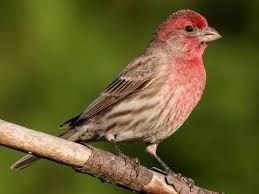
Sexual selection occurs when certain traits increase an individual's chances of mating. For example, female North American house finches prefer colorful males, which also have higher overwinter survivorship. This is an example of sexual selection and fitness, where mate choice and survival are linked to specific traits.
Taxonomy and Classification
Hierarchical Classification
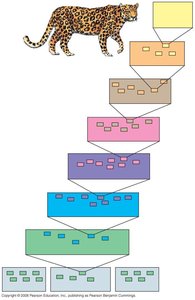
Taxonomy is the science of naming, defining, and classifying organisms into groups based on shared characteristics. The major taxonomic ranks are:
Domain
Kingdom
Phylum
Class
Order
Family
Genus
Species
What is a Species?
Biological Species Concept (BSC)
The Biological Species Concept defines a species as a group of individuals capable of interbreeding and producing viable, fertile offspring. This concept is widely used but has limitations:
Cannot be applied to fossilized organisms
Issues with organisms in captivity versus in the wild
Difficulties with asexually reproducing species
Uncertainty in molecular differences—how different is different enough?
Hybridization and Species Boundaries
Hybridization can blur species boundaries. For example, hybrids between melon-headed whales and rough-toothed dolphins have been observed, challenging the strict application of the BSC.

Mechanisms of Speciation
Allopatric Speciation
Allopatric speciation occurs when a population is divided by a geographic barrier, preventing gene flow. Over time, genetic divergence leads to the formation of new species. This is considered a form of macroevolution because it results in the emergence of new species.
Example: Harris' antelope squirrel and white-tailed antelope squirrel, separated by the Grand Canyon.

Sympatric Speciation
Sympatric speciation occurs without geographic separation. Instead, reproductive isolation arises within a single population, often due to genetic, behavioral, or ecological factors.
Example: Polyploidy in plants, where chromosome duplication leads to reproductive isolation.
Reproductive Isolation Mechanisms
Pre-zygotic Barriers
Pre-zygotic barriers prevent fertilization from occurring. Types include:
Habitat (Ecological) Isolation: Species live in the same area but occupy different habitats. Example: Aquatic vs. terrestrial garter snakes.
Temporal Isolation: Species breed at different times. Example: Two skunk species with different breeding seasons.
Behavioral Isolation: Unique behaviors attract mates of the same species. Example: Laysan albatross mating dance.
Mechanical Isolation: Morphological differences prevent mating. Example: Damselfly species with incompatible reproductive organs.
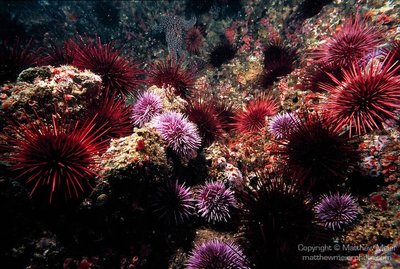
Gametic Isolation: Gametes cannot fuse to form a zygote. Example: Different sea urchin species.




Post-zygotic Barriers
Post-zygotic barriers occur after fertilization, reducing the viability or reproductive capacity of hybrids:
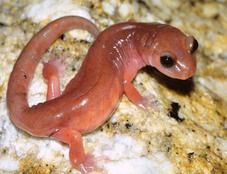
Reduced Hybrid Viability: Hybrids fail to develop or are frail. Example: Salamanders of the same genus.
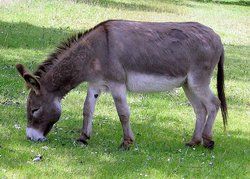
Reduced Hybrid Fertility: Hybrids are sterile. Example: Mule (horse + donkey hybrid).
Hybrid Breakdown: First-generation hybrids are viable and fertile, but subsequent generations are weak or sterile. Example: Cultivated rice plants.

Speed of Speciation
Rates of Speciation
The rate at which new species form can vary greatly:
Rapid Speciation: Hawaiian honeycreepers diversified into 55 species in 5–7 million years.
Slow Speciation: Coelacanths have only two species over 400 million years.
Artificial Selection: Wolves and dogs diverged in 10,000–40,000 years due to human intervention.
Instant Speciation: Some plants form new species in a single generation via polyploidy.

Models of Evolutionary Change
Gradualism
Gradualism proposes that evolution proceeds by the accumulation of small, gradual changes over long periods. The rate of speciation is relatively constant.
Punctuated Equilibrium
Punctuated equilibrium suggests that species experience long periods of stability interrupted by brief periods of rapid change, leading to new species. The rate of speciation is not constant.
Adaptive Radiation
Definition and Examples
Adaptive radiation is the rapid diversification of a common ancestor into many new species, often when new ecological niches become available. This process is exemplified by the Hawaiian honeycreepers, which evolved a variety of beak shapes and sizes to exploit different food sources.
Summary Table: Pre-zygotic and Post-zygotic Barriers
Barrier Type | Mechanism | Example |
|---|---|---|
Pre-zygotic | Habitat Isolation | Aquatic vs. terrestrial garter snakes |
Pre-zygotic | Temporal Isolation | Skunks with different breeding seasons |
Pre-zygotic | Behavioral Isolation | Laysan albatross mating dance |
Pre-zygotic | Mechanical Isolation | Damselfly reproductive parts |
Pre-zygotic | Gametic Isolation | Sea urchin gametes |
Post-zygotic | Reduced Hybrid Viability | Salamander hybrids |
Post-zygotic | Reduced Hybrid Fertility | Mule (horse + donkey) |
Post-zygotic | Hybrid Breakdown | Cultivated rice plants |
Conclusion
Speciation is a fundamental process in evolutionary biology, driven by mechanisms such as reproductive isolation, natural selection, and genetic divergence. Understanding the various modes and barriers to speciation helps explain the vast diversity of life on Earth.
