 Back
Speciation: Concepts, Mechanisms, and Outcomes
Study Guide - Smart Notes
 Tailored notes based on your materials, expanded with key definitions, examples, and context.
Speciation
Introduction to Speciation
Speciation is the evolutionary process by which populations evolve to become distinct species. It links microevolutionary changes in allele frequencies to macroevolutionary patterns of descent with modification, forming the basis for biodiversity and the tree of life.
Microevolution: Changes in allele frequencies within populations over time due to natural selection, genetic drift, and gene flow.
Macroevolution: Large-scale evolutionary changes, such as the formation of new species and major adaptations.
Speciation: The process where genetic divergence leads to the formation of new, evolutionarily independent groups.
What is a Species?
A species is defined as an evolutionarily independent population or group of populations. Determining species boundaries is complex, and biologists use several concepts to identify species.
Biological Species Concept: Species are groups that are reproductively isolated from others, preventing gene flow.
Morphospecies Concept: Species are identified by distinct morphological features.
Ecological Species Concept: Species exploit a unique set of resources and have specific environmental tolerances.
Phylogenetic Species Concept: Species are the smallest monophyletic groups on a phylogenetic tree, identified by unique synapomorphies.
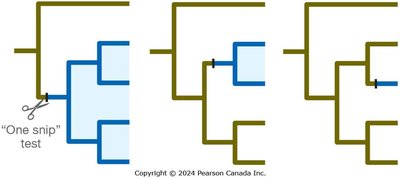
Comparison of Species Concepts
Each species concept has advantages and disadvantages, and their applicability varies depending on the organism and context.
Criterion | Advantages | Disadvantages |
|---|---|---|
Biological | Reproductive isolation = evolutionary independence | Not applicable to asexual or fossil species; not meaningful for geographically isolated populations |
Morphospecies | Widely applicable | Subjective; misses cryptic species |
Ecological | Applies to asexual species | Different species may have similar ecological roles |
Phylogenetic | Widely applicable, testable criteria | Lack of data; favors splitting |
Subspecies
Subspecies are populations within a species that live in discrete geographic areas, have unique traits, but are not distinct enough to be considered separate species. They can interbreed if barriers are removed.
Example: Domestic dog and dingo are subspecies of the wolf.
Case Study: Elephant Species
Determining the number of elephant species involves applying different species concepts and molecular phylogenetics. DNA sequencing reveals distinct monophyletic groups for Asian, African forest, and African savanna elephants.
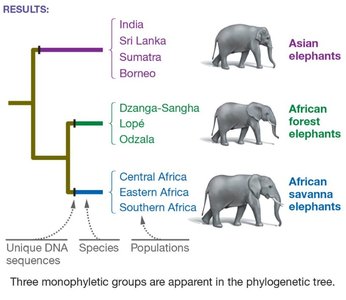
Mechanisms of Speciation
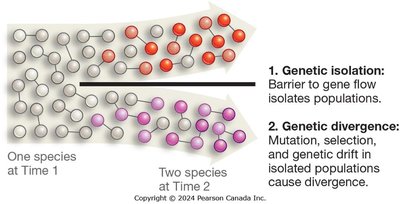
Genetic Isolation and Divergence
Speciation begins when gene flow between populations stops, allowing allele frequencies to diverge due to mutation, natural selection, and genetic drift.
Allopatric Speciation
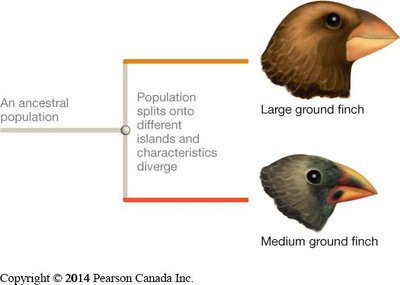
Allopatric speciation occurs when populations become physically separated, leading to genetic isolation and divergence.
Dispersal: A population moves to a new habitat and forms a new population.
Vicariance: A physical barrier splits a population into isolated subgroups.
Vicariance Example: Amazon Basin Trumpeters
Geological events such as river formation can isolate populations, leading to speciation.
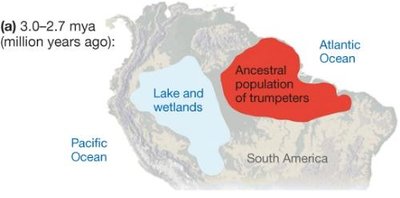
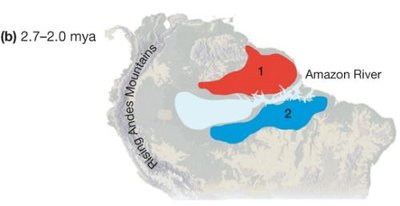
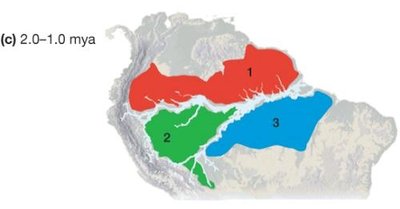
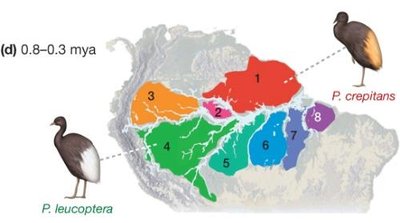
Sympatric Speciation
Sympatric speciation occurs when populations diverge within the same geographic area. Natural selection can overcome gene flow, especially through disruptive selection or chromosomal mutations.
External events: Disruptive selection based on ecological niches or mate preferences.
Internal events: Chromosomal mutations, such as polyploidy.
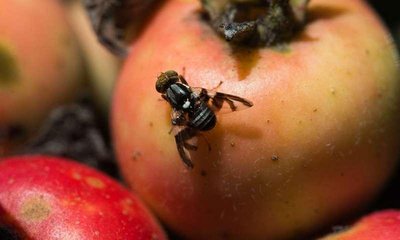
Example: Apple Maggot Flies
Apple maggot flies and hawthorn flies are nearly identical but mate and feed on different fruits, leading to reproductive isolation.
Polyploidy and Speciation
Polyploidy is a major mechanism of sympatric speciation in plants. Polyploid individuals are genetically isolated from diploid relatives due to differences in chromosome number.
Allopolyploid: Chromosome doubling in hybrids from different species.
Autopolyploid: Chromosome doubling within a single species.
Secondary Contact and Speciation Outcomes
Secondary Contact
Secondary contact occurs when populations that have undergone allopatric speciation come back into contact. Several outcomes are possible:
Fusion: Populations interbreed, erasing differences.
Extinction: One population outcompetes the other.
Reinforcement: Selection against interbreeding strengthens reproductive isolation.
Stable Hybrid Zone: Hybrid offspring are viable and form a stable zone.
Hybrid Speciation: Hybrid offspring occupy a distinct niche and become a new species.
Hybrid Zones Example: Warblers
Hybrid zones can shift over time, as seen in Townsend’s and hermit warblers, where hybridization and competition affect species ranges.
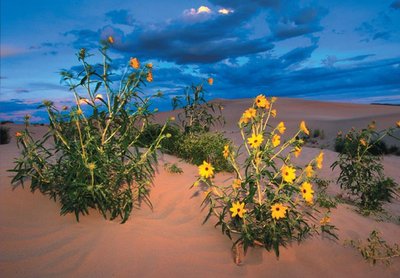
Hybrid Speciation Example: Sunflowers
Hybridization between two sunflower species produced a new species adapted to drier habitats.
Summary Table: Secondary Contact Outcomes
Outcome | Process | Example |
|---|---|---|
Fusion | Populations freely interbreed | Any time two populations of the same species meet |
Extinction | One population outcompetes the other | Invasive benthic whitefish, hermit and Townsend warblers |
Reinforcement | Hybrid offspring have low fitness; selection for prezygotic isolation | Hawthorn and apple maggot flies |
Stable Hybrid Zone | Stable area where hybridization occurs | Hermit and Townsend warblers |
Hybrid Speciation | Hybrid occupies distinct niche | Hybridization in sunflowers |
Mechanisms of Evolution and Their Impact on Speciation
Mechanism | Type of Impact | Impact on Speciation |
|---|---|---|
Natural Selection | Adaptation | Causes divergence if habitats differ; reinforcement upon secondary contact |
Genetic Drift | Random changes in allele frequencies | Causes divergence, especially in small populations |
Gene Flow | Increases similarity | Counteracts speciation by preventing divergence |
Mutation | Adds alleles | Contributes to differences by adding new alleles |
