 Back
BackSpeciation: Mechanisms and Concepts
Study Guide - Smart Notes
 Tailored notes based on your materials, expanded with key definitions, examples, and context.
Speciation
Introduction to Speciation
Speciation is the evolutionary process by which populations evolve to become distinct species. It is central to evolutionary biology, as it explains the origin of new species and the diversity of life. Speciation involves the accumulation of genetic differences that lead to reproductive isolation.
Microevolution: Adaptations that evolve within a population, confined to a single gene pool.
Macroevolution: Evolutionary changes above the species level, resulting from the accumulation of microevolutionary changes.


The Biological Species Concept
Definition and Application
The biological species concept defines a species as a group of populations whose members have the potential to interbreed in nature and produce viable, fertile offspring, but do not successfully breed with other such groups.
Gene flow between populations maintains the integrity of a species by holding the phenotype together.
Reproductive isolation is key to maintaining species boundaries.
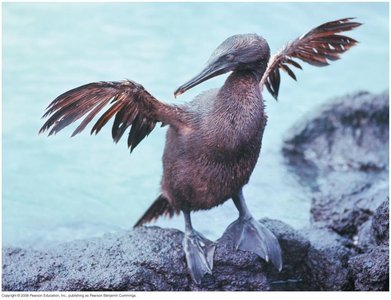
Variation Within and Between Species
Species can show both similarities and diversity.
Different species may appear similar but are reproductively isolated.
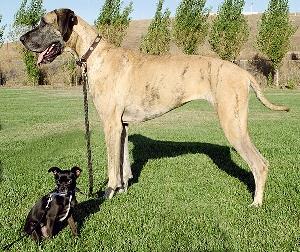
Individuals within a species can be highly diverse yet still interbreed.

Reproductive Isolation
Definition and Importance
Reproductive isolation refers to biological barriers that prevent two species from producing viable, fertile offspring. These barriers are classified as prezygotic (before fertilization) or postzygotic (after fertilization).
Hybrids: Offspring resulting from crosses between different species.
Prezygotic Barriers
Prezygotic barriers block fertilization from occurring by impeding mating, preventing successful mating, or hindering fertilization if mating occurs.
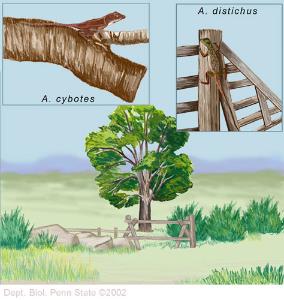
Habitat Isolation: Species occupy different habitats and rarely encounter each other.
Temporal Isolation: Species breed at different times (day, season, or year).
Behavioral Isolation: Unique courtship rituals or behaviors prevent mating.
Mechanical Isolation: Morphological differences prevent successful mating.
Gametic Isolation: Sperm of one species may not fertilize eggs of another.
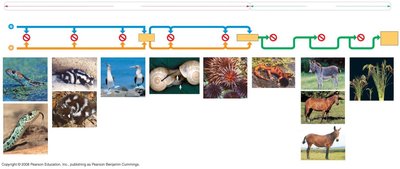
Examples of Prezygotic Barriers
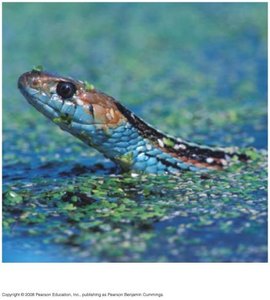
Habitat Isolation: Two species of garter snakes, one terrestrial and one aquatic, rarely meet.
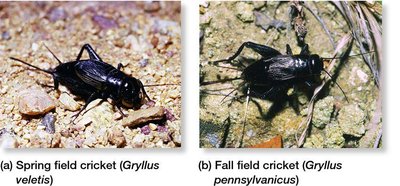
Temporal Isolation: Spring and fall field crickets breed in different seasons.
Behavioral Isolation: Blue-footed boobies use unique courtship dances.
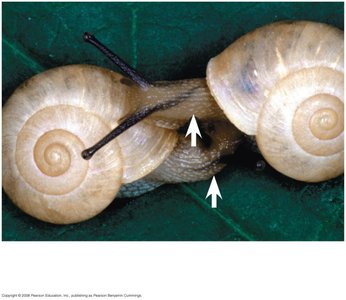
Mechanical Isolation: Snails with shells spiraling in opposite directions cannot mate.
Gametic Isolation: Sea urchin sperm cannot fertilize eggs of a different species.
Postzygotic Barriers
Postzygotic barriers prevent hybrid zygotes from developing into viable, fertile adults.
Reduced Hybrid Viability: Hybrids fail to develop or are frail.
Reduced Hybrid Fertility: Hybrids are sterile (e.g., mule).
Hybrid Breakdown: First-generation hybrids are fertile, but their offspring are feeble or sterile.
Other Species Concepts
Limitations of the Biological Species Concept
The biological species concept does not apply to fossils or asexual organisms (e.g., prokaryotes). Other concepts include:
Morphological Species Concept: Defines species by structural features; applies to sexual and asexual species but is subjective.
Ecological Species Concept: Defines species by ecological niche; applies to sexual and asexual species.
Phylogenetic Species Concept: Defines species as the smallest group on a phylogenetic tree; applies to sexual and asexual species but can be difficult to apply.
Modes of Speciation
Allopatric Speciation
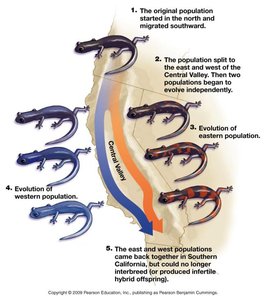
Allopatric speciation occurs when gene flow is interrupted or reduced by geographic barriers, leading to the divergence of populations.
Populations evolve independently through mutation, natural selection, and genetic drift.
Reproductive isolation increases with geographic distance.
Sympatric Speciation
Sympatric speciation occurs in populations that live in the same geographic area. Mechanisms include:
Polyploidy: Presence of extra chromosome sets due to errors in cell division.
Sexual Selection: Preference for certain traits can drive divergence.
Polyploidy
Autopolyploid: More than two chromosome sets from one species.
Allopolyploid: Chromosome sets from different species.
Hybrid Zones
Definition and Outcomes
A hybrid zone is a region where members of different species meet and mate, producing hybrids.
Hybrids often have reduced fitness compared to parent species.
Hybrid zones can be stable, or lead to reinforcement or fusion of species.
Possible Outcomes in Hybrid Zones
Reinforcement: Strengthening of reproductive barriers; hybrids are less fit.
Fusion: Weakening of barriers; species fuse.
Stability: Continued production of hybrids.
Patterns and Rates of Speciation
Punctuated Equilibrium vs. Gradualism
Punctuated Equilibrium: Species appear suddenly, remain unchanged, then disappear; periods of stasis punctuated by rapid change.
Gradualism: Species diverge gradually over time.
Genetics of Speciation
Advances in genomics allow identification of genes involved in speciation.
Speciation may require changes in one or many genes.
Summary Table: Prezygotic and Postzygotic Barriers
Barrier Type | Definition | Example |
|---|---|---|
Habitat Isolation | Species occupy different habitats | Garter snakes (aquatic vs. terrestrial) |
Temporal Isolation | Breed at different times | Spring vs. fall field crickets |
Behavioral Isolation | Unique courtship rituals | Blue-footed boobies |
Mechanical Isolation | Morphological differences prevent mating | Snails with opposite shell spirals |
Gametic Isolation | Sperm cannot fertilize eggs | Sea urchins |
Reduced Hybrid Viability | Hybrids fail to develop or are frail | Hybrid salamanders |
Reduced Hybrid Fertility | Hybrids are sterile | Mule (horse × donkey) |
Hybrid Breakdown | Offspring of hybrids are feeble or sterile | Hybrid rice plants |
Key Concepts to Master
Define and discuss the limitations of the four species concepts.
Describe and provide examples of prezygotic and postzygotic reproductive barriers.
Distinguish between and provide examples of allopatric and sympatric speciation.
Explain how polyploidy can cause reproductive isolation.
Define the term hybrid zone and describe three outcomes for hybrid zones over time.
Describe the differences between gradualism and punctuated equilibrium in rates of speciation.
