 Back
BackSpeciation: Mechanisms and Patterns of Species Formation
Study Guide - Smart Notes
 Tailored notes based on your materials, expanded with key definitions, examples, and context.
Speciation
Introduction to Speciation
Speciation is the evolutionary process by which populations evolve to become distinct species. It is a central concept in evolutionary biology, representing the origin of new species and the diversification of life. Speciation links microevolutionary processes (changes within populations) to macroevolutionary patterns (broad evolutionary changes above the species level).
Microevolution: Adaptations that evolve within a population, confined to a single gene pool.
Macroevolution: Evolutionary change above the species level, resulting from the accumulation of microevolutionary changes.

The Biological Species Concept
Definition and Application
The biological species concept defines a species as a group of populations whose members have the potential to interbreed in nature and produce viable, fertile offspring, but do not breed successfully with other populations. Gene flow within a species maintains phenotypic cohesion.
Gene flow: The transfer of alleles or genes from one population to another, which holds the phenotype of a population together.
Limitations: This concept does not apply to fossils or asexual organisms and can be difficult to use when gene flow occurs between distinct populations.

Reproductive Isolation
Barriers to Gene Flow
Reproductive isolation refers to biological factors (barriers) that impede two species from producing viable, fertile offspring. These barriers are classified as prezygotic (before fertilization) or postzygotic (after fertilization).
Prezygotic barriers: Block fertilization from occurring by impeding mating, preventing successful mating, or hindering fertilization if mating occurs.
Postzygotic barriers: Prevent the hybrid zygote from developing into a viable, fertile adult.
Hybrids: Offspring resulting from the mating of individuals from different species.
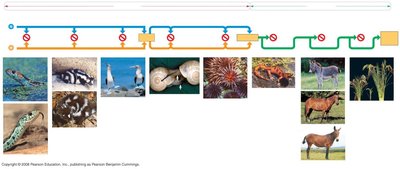
Types of Prezygotic Barriers
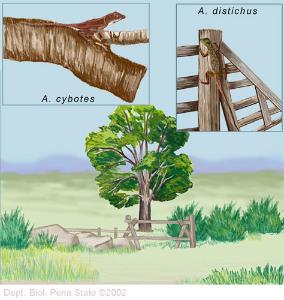
Habitat isolation: Species occupy different habitats and rarely encounter each other, even without physical barriers.
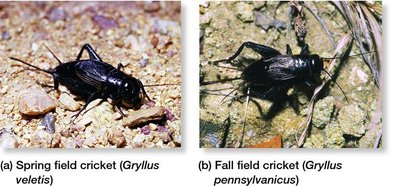
Temporal isolation: Species breed at different times (day, season, or year), preventing gamete mixing.
Behavioral isolation: Unique courtship rituals and behaviors prevent interbreeding between species.
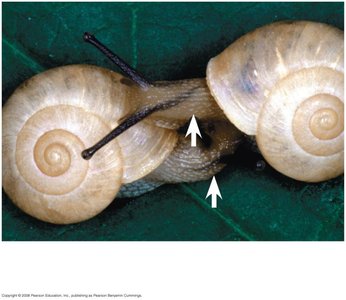
Mechanical isolation: Morphological differences prevent successful mating.
Gametic isolation: Sperm of one species may not fertilize eggs of another species.
Types of Postzygotic Barriers
Reduced hybrid viability: Genes of different parent species interact and impair hybrid development or survival.
Reduced hybrid fertility: Hybrids are sterile even if they are otherwise healthy and vigorous (e.g., mule).
Hybrid breakdown: First-generation hybrids are viable and fertile, but their offspring are feeble or sterile.
Other Species Concepts
Alternative Definitions
Other species concepts are used when the biological species concept is not applicable:
Morphological species concept: Defines species by structural features; applicable to sexual and asexual species but subjective.
Ecological species concept: Defines species by their ecological niche; applicable to sexual and asexual species.
Phylogenetic species concept: Defines species as the smallest group of individuals sharing a common ancestor on a phylogenetic tree.
Modes of Speciation
Allopatric and Sympatric Speciation
Speciation can occur with or without geographic separation:
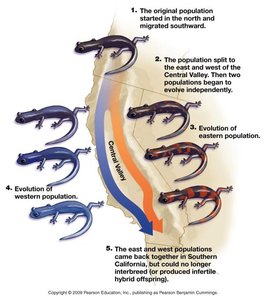
Allopatric speciation: Gene flow is interrupted when a population is divided by a geographic barrier, leading to independent evolution.
Sympatric speciation: Speciation occurs in populations that live in the same geographic area, often through mechanisms such as polyploidy, sexual selection, or habitat differentiation.
Evidence for Allopatric Speciation
Regions with more geographic barriers tend to have more species.
Reproductive isolation generally increases with geographic distance between populations.
Polyploidy and Sympatric Speciation
Polyploidy is the presence of extra sets of chromosomes due to errors in cell division. It is a common mechanism of sympatric speciation in plants.
Autopolyploid: An individual with more than two chromosome sets, all derived from a single species.
Allopolyploid: A species with multiple sets of chromosomes derived from different species.
Sexual Selection and Sympatric Speciation
Sexual selection for specific traits (such as coloration) can drive sympatric speciation, as seen in cichlid fish in Lake Victoria.
Hybrid Zones and Their Outcomes
Definition and Dynamics
A hybrid zone is a region where members of different species meet and mate, producing hybrids. These zones can be stable or dynamic, depending on the fitness of hybrids and the strength of reproductive barriers.
Hybrids often have reduced fitness compared to parent species.
Hybrid zones can be narrow or wide, depending on the extent of gene flow and selection.
Possible Outcomes in Hybrid Zones
Reinforcement: Strengthening of reproductive barriers, leading to fewer hybrids over time.
Fusion: Weakening of reproductive barriers, resulting in the merging of species.
Stability: Continued production of hybrids without significant change in species boundaries.
Patterns and Rates of Speciation
Punctuated Equilibrium vs. Gradualism
The fossil record shows two main patterns of speciation:
Punctuated equilibrium: Species appear suddenly, remain unchanged for long periods, and then disappear. This pattern suggests rapid speciation events.
Gradualism: Species diverge slowly and steadily over time.
Genetics of Speciation
Modern genomics allows researchers to identify specific genes involved in speciation. The number of genetic changes required for speciation can vary from a single allele to many alleles, depending on the species.
Summary Table: Prezygotic and Postzygotic Barriers
Barrier Type | Mechanism | Example |
|---|---|---|
Habitat Isolation | Species occupy different habitats | Garter snakes in water vs. terrestrial habitats |
Temporal Isolation | Species breed at different times | Spring vs. fall field crickets |
Behavioral Isolation | Unique courtship behaviors | Blue-footed boobies' dance |
Mechanical Isolation | Morphological differences prevent mating | Snails with opposite shell spirals |
Gametic Isolation | Sperm cannot fertilize eggs | Sea urchin gametes |
Reduced Hybrid Viability | Hybrids fail to develop or are frail | Hybrid salamanders |
Reduced Hybrid Fertility | Hybrids are sterile | Mule (horse × donkey) |
Hybrid Breakdown | Offspring of hybrids are feeble or sterile | Hybrid rice plants |
Key Concepts to Master
Define and discuss the limitations of the four species concepts.
Describe and provide examples of prezygotic and postzygotic reproductive barriers.
Distinguish between and provide examples of allopatric and sympatric speciation.
Explain how polyploidy can cause reproductive isolation.
Define the term hybrid zone and describe three outcomes for hybrid zones over time.
Describe the differences between gradualism and punctuated equilibrium in rates of speciation.
