 Back
Back8.1 Species Abundance, Diversity, and Biodiversity: Community Ecology Study Notes
Study Guide - Smart Notes
 Tailored notes based on your materials, expanded with key definitions, examples, and context.
Species Abundance and Diversity
Biodiversity: Definition and Importance
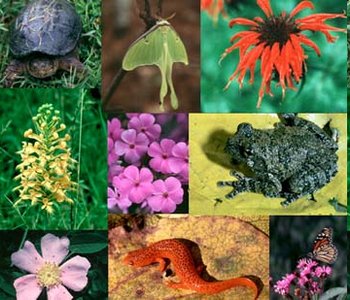
Biodiversity refers to the variety of important ecological entities that span multiple spatial scales, including genes, species, and communities. It is a central concept in ecology, reflecting the complexity and health of ecosystems.
Biodiversity encompasses genetic diversity, species diversity, and ecosystem diversity.
High biodiversity is often associated with greater ecosystem stability and resilience.
Understanding biodiversity helps scientists measure, compare, and conserve ecological communities.
Global Species Estimates
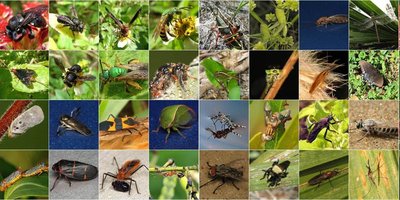
Scientists estimate that there are about 2 million described species on Earth, but the actual number may range from 5 to 30 million. The distribution among major groups is highly uneven.
~4% are vertebrates
~75% are invertebrates
~18% are plants
~3% are other groups
Patterns of Biodiversity: Latitude and Composition
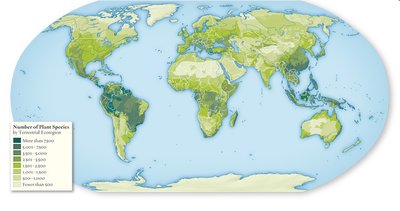
Biodiversity patterns vary globally, with lower latitudes (closer to the equator) generally supporting more species and greater variation in community composition. This is known as the latitudinal diversity gradient.
Species richness is highest in tropical regions.
Environmental complexity, such as vegetation and elevation, contributes to higher diversity.
Measuring Biodiversity in Communities
Sampling and Estimation Methods
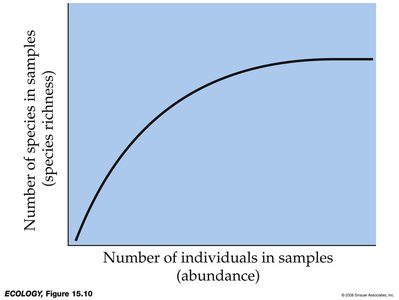
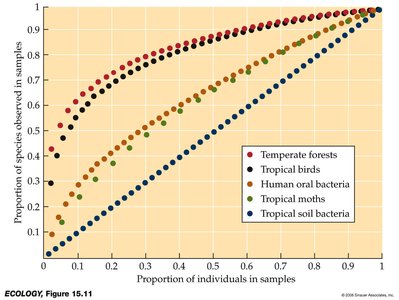
Estimating the number of species in a community requires careful sampling. The sampling effort should continue until the number of new species observed plateaus, indicating most species have been detected.
Sampling should be standardized (same plot sizes, methods).
Indicator taxa (easy-to-find groups) are often used for efficient sampling.
Relative abundance can be determined through standardized sampling.
Species Diversity and Sampling Effort
The relationship between sampling effort and observed species diversity varies among ecosystems. More complex environments require greater sampling to capture their diversity.
Different taxa and habitats show different accumulation curves.
Sampling must be sufficient to accurately estimate richness and evenness.
Standardized Sampling Techniques
Standardized sampling involves using consistent methods and plot sizes across different locations to allow for accurate comparisons of species abundance and diversity.
Quadrats are commonly used for plant and small animal surveys.
Standardization helps determine relative abundance and community structure.

Measures of Community Structure
Quantitative Descriptions of Communities
Community structure is described quantitatively to compare variation between communities and generate hypotheses about ecological processes. Three main measures are used:
Species richness (S): The number of species present.
Species evenness: The relative abundance of each species, indicating commonness or rarity.
Species diversity: Combines richness and evenness into a single index.
Species Richness
Species richness is simply the count of species found in a community. It is denoted as S.
Richness does not account for the abundance of each species.
Communities with the same richness may differ in evenness and diversity.
Species Evenness
Species evenness provides information on the commonness or rarity of species within a community. It incorporates the abundance of each species.
High evenness means species are present in similar proportions.
Low evenness indicates dominance by a few species.
Species Diversity Indices
Species diversity indices combine richness and evenness. The most common is the Shannon Index (H'), which increases as both richness and evenness increase.
Shannon Index (H') formula:
Where: - = proportion of the ith species - = total number of species - = natural logarithm
Higher H' values indicate greater diversity.
Indices allow comparison between communities, but may not reflect landscape-scale rarity or commonness.
Example Calculation: Shannon Index
Consider two communities, each with five species but different abundances:
Community A: H’ = -(0.6*ln0.6 + 2*0.133*ln0.133 + 2*0.067*ln0.067) = 1.21
Community B: H’ = -(5*0.2*ln0.2) = 1.61
Community B has greater evenness, resulting in higher diversity.
Rank-Abundance Curves
Rank-abundance curves graphically display species richness and evenness. The length of the curve indicates richness, while the slope reflects evenness.
Flatter slopes indicate higher evenness.
Longer curves indicate greater richness.
Environmental Complexity and Species Diversity
Role of Environmental Complexity
More complex environments support higher species diversity. Complexity can include vegetation structure, elevation, nutrient availability, hydrology, and other factors.
Complex habitats provide more niches and resources.
Example: MacArthur’s warblers showed higher bird diversity in areas with greater foliage height.
Consequences of Biodiversity
Stability and Resilience
Diverse communities are generally more stable and resilient. Stability is the tendency of a community to remain unchanged in structure and function, while resilience is the rate of recovery after disturbance.
Greater biodiversity enhances ecosystem functions and recovery from environmental stress.
Examples include ability to survive drought and maintain nutrient cycling.
Community Functions
Biodiversity supports multiple community functions, such as nutrient cycling, carbon sequestration, water purification, waste decomposition, air purification, pollination, and more.
More diverse communities perform more functions.
Functional diversity is key to ecosystem health.
Hypotheses of Diversity-Function Relationship
Several hypotheses explain how species richness affects community function:
Complementarity hypothesis: Linear increase in function with richness.
Redundancy hypothesis: Upper limit to function; additional species become redundant.
Driver and passenger hypothesis: Effect strength varies by species.
Driver and passenger with overlap: Drivers and passengers overlap in their functions.
Conservation Biology Preview
Preserving Biodiversity
Conservation biology aims to preserve biodiversity by understanding its patterns, consequences, and threats. Strategies include habitat protection, restoration, and sustainable management.
Maintaining biodiversity is essential for ecosystem stability and human well-being.
Future study will focus on conservation approaches and their effectiveness.
