 Back
BackLec 32
Study Guide - Smart Notes
 Tailored notes based on your materials, expanded with key definitions, examples, and context.
Speciation and the Species Problem
Introduction to the Species Problem
The concept of 'species' is central to biology, yet its definition remains debated among scientists. The 'species problem' refers to the challenge of defining what constitutes a species, given the diversity of life and the multiple, sometimes conflicting, criteria used to distinguish species.
Species are fundamental units in taxonomy, evolution, ecology, and conservation biology.
There are multiple species concepts, each with strengths and limitations.
Philosophical and practical issues arise when attempting to delimit species, as highlighted by Darwin and modern biologists.
Species in Taxonomy and Classification
Linnaean System and Taxonomic Hierarchy
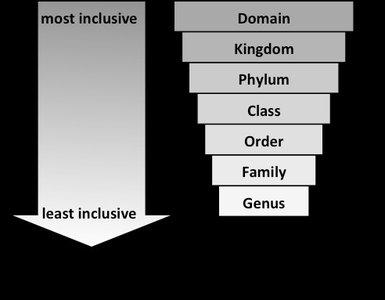
The Linnaean system organizes biological diversity into a hierarchical structure, with species as the basic unit. Taxonomic species are named entities, while evolutionary species refer to actual populations of organisms.
Linnaean hierarchy: Domain, Kingdom, Phylum, Class, Order, Family, Genus, Species.
Taxonomic species: Names assigned by taxonomists to groups of organisms.
Evolutionary species: Actual populations that share a common evolutionary history.
Biodiversity Knowledge Shortfalls
Linnaean and Wallacean Shortfalls
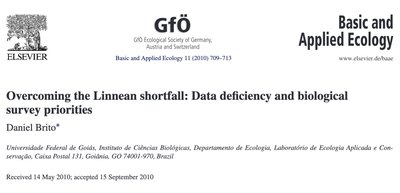
Despite centuries of taxonomic work, much of Earth's biodiversity remains undescribed. The 'Linnean shortfall' refers to the gap between known and unknown species, while the 'Wallacean shortfall' refers to incomplete knowledge of species distributions.
Linnean shortfall: Most species on Earth have not yet been described by science.
Wallacean shortfall: Even for described species, distributional data are often fragmentary.
These shortfalls hinder conservation and our understanding of biodiversity.

The Importance of Species Delimitation
Why Species Matter
Species are critical units for biological research, conservation, and legal frameworks. Accurate species delimitation impacts ecological studies, evolutionary research, and policy decisions.
Species are units of biodiversity and conservation management.
They are used in analyses such as species-area curves, species richness, and evolutionary studies.
Legal definitions of species affect conservation laws and regulations (e.g., Endangered Species Act).
Species Concepts
Overview of Major Species Concepts
Biologists use several concepts to define and recognize species. Each concept has specific criteria and is suited to different contexts.
Biological Species Concept (BSC): Species are groups of interbreeding populations reproductively isolated from others.
Morphological Species Concept (MSC): Species are defined by morphological similarities and differences.
Phylogenetic Species Concept (PSC): Species are the smallest monophyletic groups distinguished by unique traits.
General Lineage Concept: Species are segments of population lineages evolving independently.
Biological Species Concept (BSC)
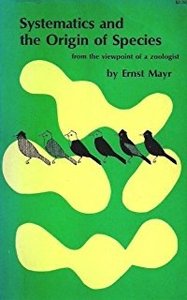
The BSC, proposed by Ernst Mayr, defines species based on reproductive isolation. It is widely used but has limitations, especially for asexual organisms and those difficult to study in nature.
Reproductive isolation is the main criterion.
Legal basis for the US Endangered Species Act.
Limitations: Not applicable to asexual organisms, many plants, extinct species, or geographically isolated populations.

Morphological Species Concept (MSC)
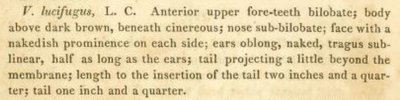
The MSC defines species based on observable morphological traits. It is practical for field identification but can be subjective and less effective for cryptic species or those with few distinguishing features.
Relies on careful taxonomic work and measurable traits.
Difficult to apply to small or morphologically simple organisms.
May overlook behavioral or ecological differences.
Phylogenetic Species Concept (PSC)
The PSC uses monophyly and statistically significant differences in traits to delimit species. It is broadly applicable and testable but requires extensive data and analysis.
Species are monophyletic groups containing all descendants of a common ancestor.
Applicable to any organism, including asexual and extinct species.
Limitations: Data-intensive, not always practical for field identification, and subject to theoretical challenges.
General Lineage Concept and Coalescent Species
The General Lineage Concept views species as independently evolving lineages. Coalescent species are identified using genetic data and population genetic models, but their biological significance is debated.
Integrates multiple lines of evidence (morphological, genetic, ecological).
Coalescent species may represent population structure or nascent species.
Modern approaches use genomic data, machine learning, and integrative frameworks for species delimitation.
Modern Approaches to Species Delimitation
Integrative Taxonomy and Genomic Data
Recent advances combine morphological, genomic, and environmental data to delimit species more accurately. Machine learning and statistical methods are increasingly used to analyze complex datasets.
Genomic sequencing and computational pipelines enable high-resolution species delimitation.
2D and 3D morphometric analyses provide detailed morphological comparisons.
Machine learning frameworks integrate multiple data types for robust species identification.
Summary Table: Comparison of Major Species Concepts
Species Concept | Main Criterion | Strengths | Limitations |
|---|---|---|---|
Biological Species Concept | Reproductive isolation | Legal relevance; clear for sexually reproducing organisms | Not applicable to asexual/extinct species; hard to test in nature |
Morphological Species Concept | Morphological traits | Practical for fieldwork; applicable to fossils | Subjective; may miss cryptic species |
Phylogenetic Species Concept | Monophyly; unique traits | Broadly applicable; testable | Data-intensive; not always practical |
General Lineage Concept | Independent evolutionary lineages | Integrative; uses multiple data types | Interpretation of genetic structure can be debated |
Case Study: Bat Species Delimitation
Application of Species Concepts in Bats
Bats of the genus Myotis illustrate the challenges and methods of species delimitation. Researchers use morphological traits, genetic data, and advanced computational methods to distinguish species.
Diagnostic and meristic traits (e.g., calcar structure, forearm length) are used for identification.
Genomic data and machine learning approaches provide additional resolution.
Integrative taxonomy combines multiple lines of evidence for robust species delimitation.
Example: Four species of yellow bats (Lasiurus or Dasypterus) were delimited using genomic and morphological data, demonstrating the power of integrative approaches.
Additional info: Modern species delimitation often involves statistical analysis, dimensionality reduction, and artificial neural networks to handle large, complex datasets.
