 Back
Sperm Transport, Storage, and Capacitation in Mammals
Study Guide - Smart Notes
 Tailored notes based on your materials, expanded with key definitions, examples, and context.
Sperm Transport and Ejaculation
Neural and Hormonal Control of Ejaculation
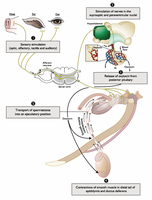
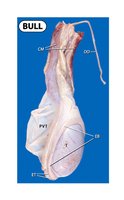
The process of ejaculation is regulated by a complex interplay between sensory stimulation, neural pathways, and hormonal signals. Sensory input from sexual preparation and teasing stimulates nerves in the paraventricular nucleus (PVN) of the hypothalamus, leading to the release of oxytocin and subsequent muscular contractions that propel sperm through the reproductive tract.
Sensory Stimulation: Involves input from tactile, visual, and auditory cues.
Neural Pathways: Afferent nerves transmit signals to the spinal cord and brain, activating motor pathways.
Hormonal Response: Oxytocin released from the posterior pituitary enhances smooth muscle contraction in the epididymis and vas deferens.
Muscular Contraction: Drives sperm from the epididymis toward the urethra for ejaculation.
Mechanics of Ejaculation
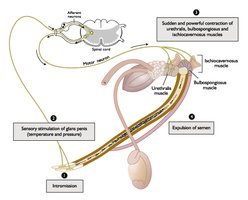
Ejaculation is triggered by sensory stimulation of the glans penis, leading to powerful contractions of the urethral, bulbospongiosus, and ischiocavernosus muscles. This results in the expulsion of semen from the body.
Step 1: Sensory stimulation (temperature and pressure) activates afferent nerves.
Step 2: Motor nerves stimulate muscle contractions.
Step 3: Semen is expelled through the urethra.
Sperm Transport in the Female Reproductive Tract
Immediate Transport and Barriers
After insemination, sperm undergo immediate transport, facing several barriers such as retrograde loss, phagocytosis by immune cells, and selective entrance into the cervix and uterus. Only a fraction of sperm successfully navigate these barriers.
Retrograde Loss: Sperm lost from the female tract shortly after insemination.
Phagocytosis: Neutrophils and other immune cells engulf and destroy sperm.
Selective Entrance: Sperm must enter the cervix and uterus to continue their journey.
Statistic: Up to 60% of sperm may be lost during immediate transport.
Immune Response to Sperm
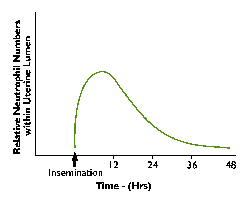
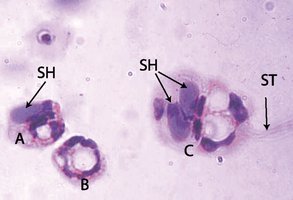
The female immune system responds to sperm as foreign cells, leading to a temporary increase in neutrophil numbers within the uterine lumen. This response peaks within hours after insemination and gradually declines.
Neutrophil Activity: Peaks around 12 hours post-insemination, then decreases by 48 hours.
Purpose: Helps remove non-motile and abnormal sperm, reducing the risk of infection.
Cervical Mucus and Sperm Selection
During estrus, high levels of estradiol stimulate mucus production in the cervix. Two types of mucus, sulfomucin (high viscosity) and sialomucin (low viscosity), create "privileged pathways" that selectively allow motile sperm to pass while removing non-motile and abnormal sperm.
Sulfomucin: High viscosity, forms a barrier to sperm.
Sialomucin: Low viscosity, allows motile sperm to pass.
Privileged Pathways: Facilitate the transport of healthy, motile sperm.
Sperm Reservoirs in the Isthmus
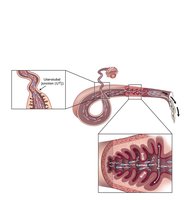
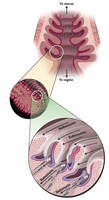
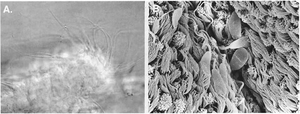
In the isthmus of the oviduct, sperm bind to the epithelial lining, forming sperm reservoirs. This binding is mediated by lectin proteins on the sperm and oligosaccharide moieties on the epithelium. Reservoirs help maintain sperm viability and regulate their release for fertilization.
Sperm Binding: Uncapacitated sperm bind to epithelial cells, forming reservoirs.
Release: Sperm are released in response to ovulatory signals.
Function: Ensures a steady supply of sperm for fertilization.
Capacitation and Sperm Activation
Role of Seminal Plasma
Seminal plasma coats the sperm membrane with proteins, rendering the sperm membrane inactive (decapacitated). This prevents premature activation of sperm before they enter the female reproductive tract.
Decapacitation: Sperm are rendered inactive by seminal plasma proteins.
Protection: Prevents premature acrosome reaction.
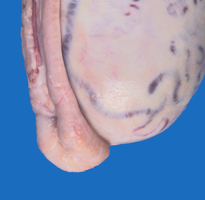
Capacitation Process
Capacitation is a biochemical process that occurs when sperm contact uterine and oviducal fluids. It removes the seminal plasma coating, activates membrane receptors, increases oxygen uptake, and changes sperm motility from forward progressive to hyperactive (bobbing) movement.
Membrane Activation: Removal of seminal plasma proteins exposes functional receptors.
Motility Change: Sperm exhibit hyperactive motility, increasing flagellar activity.
Oxygen Uptake: Enhanced metabolic activity supports motility.
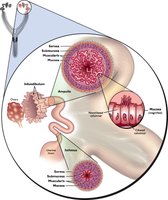
Hormonal Regulation of Sperm Transport
Estrus vs. Diestrus
Hormonal changes during the estrous cycle affect sperm transport and storage. High estradiol during estrus promotes smooth muscle contraction, keeping gametes in the oviduct. High progesterone during diestrus inhibits smooth muscle contraction, opening the oviduct for gamete release.
Estrus: High estradiol, increased muscle contraction, retention of gametes.
Diestrus: High progesterone, muscle inhibition, release of gametes.
Summary Table: Sperm Transport Barriers and Processes
Stage | Barrier/Process | Outcome |
|---|---|---|
Immediate Transport | Retrograde loss, phagocytosis | Up to 60% sperm lost |
Cervix | Mucus viscosity, privileged pathways | Selection of motile sperm |
Uterus | Phagocytosis by neutrophils | Removal of abnormal sperm |
Oviduct | Sperm reservoir formation | Maintenance and timed release |
Capacitation | Removal of seminal plasma coating | Activation of sperm for fertilization |
Key Terms and Definitions
Capacitation: The process by which sperm become capable of fertilizing an egg after exposure to the female reproductive tract.
Decapacitation: The inactivation of sperm by seminal plasma proteins, preventing premature activation.
Estrus: The phase of the reproductive cycle characterized by high estradiol and increased mucus production.
Diestrus: The phase characterized by high progesterone and reduced muscle contraction.
Phagocytosis: The engulfment and destruction of sperm by immune cells.
Sperm Reservoir: A site in the oviduct where sperm bind to epithelial cells and are stored for later release.
Relevant Equations
While sperm transport is primarily a biological process, the following equation can be used to estimate sperm loss:
For example, if 60% of sperm are lost during immediate transport:
Example Application
Understanding sperm transport and capacitation is essential for reproductive biology, fertility treatments, and animal breeding programs. By optimizing conditions for sperm survival and capacitation, successful fertilization rates can be improved.
Additional info: Academic context was added to clarify the mechanisms of sperm transport, immune response, and capacitation, as well as to provide definitions and relevant equations for study purposes.
