 Back
Structure and Function of DNA: Foundations of Molecular Genetics
Study Guide - Smart Notes
 Tailored notes based on your materials, expanded with key definitions, examples, and context.
Genetics and the Human Genome
Overview of the Human Genome
The human genome is the complete set of genetic information in humans, encoded as DNA sequences. It is fundamental to understanding heredity, genetic variation, and the molecular basis of life.
Genome Length: The human genome consists of approximately 3.2 billion base pairs (bp) in both haploid and diploid cells.
Gene Count: There are about 22,300 genes in the human genome.
Gene Copies: Haploid cells have one copy of each gene, diploid cells have two, and tetraploid cells have four.
Molecular Genetics: Structure and Function of DNA
Elements Essential for Life
Life is constructed from just five key elements: nitrogen, phosphorus, oxygen, hydrogen, and carbon. These elements form the backbone of biomolecules, including DNA.
Nitrogen (N)
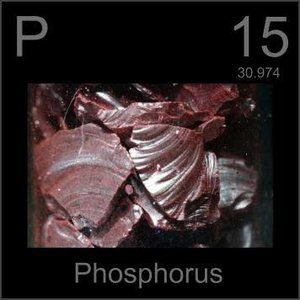
Phosphorus (P)
Oxygen (O)
Hydrogen (H)
Carbon (C)
Chemical Bonds in DNA
Atoms combine through various types of chemical bonds, which determine the structure and stability of DNA:
Covalent Bonds: Sharing of electrons; strongest bond, forms the sugar-phosphate backbone of DNA.
Ionic Bonds: Transfer of electrons; less common in DNA structure.
Hydrogen Bonds: Attraction between dipoles; responsible for base pairing between DNA strands.
Van der Waals Forces: Weak attractions between transient dipoles; contribute to the overall stability of the DNA helix.
Discovery of DNA Structure
Photo 51 and the Double Helix
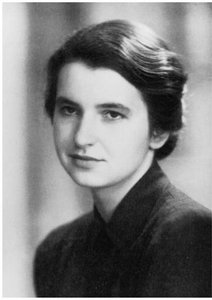
Photo 51, an X-ray diffraction image, was critical in revealing the helical structure of DNA. It provided evidence for the double helix model, with two strands running in opposite directions (antiparallel).
Helical Structure: DNA is a double helix with a right-handed turn.
Backbone: Composed of strong covalent bonds between sugar and phosphate groups.
Internal Zipper: Weak hydrogen bonds between nitrogenous bases hold the two strands together.
Antiparallel Strands: The two DNA strands run in opposite directions (5' to 3' and 3' to 5').
Base Pairing: Adenine (A) pairs with Thymine (T); Cytosine (C) pairs with Guanine (G).
Base Pairing and Complementarity
Base pairing in DNA follows strict rules, confirmed by Chargaff's chemical analysis:
Adenine (A) pairs with Thymine (T) via two hydrogen bonds.
Cytosine (C) pairs with Guanine (G) via three hydrogen bonds.
Complementarity: The sequence of one strand predicts the sequence of the other.
Experimental Evidence: DNA Melting and UV Absorbance
Regions rich in GC pairs are harder to break due to more hydrogen bonds. UV absorbance experiments measure the ratio of single-stranded DNA, indicating the stability of AT-rich versus GC-rich regions.
DNA as the Hereditary Material
Attributes of Heritable Material
DNA is the molecule of heredity because it possesses the following attributes:
Stability: DNA is stable and not easily degraded, allowing it to persist through generations.
Replication: DNA can be accurately copied and passed to offspring.
Information Storage: DNA contains the information that specifies the form and function of living organisms.
Variability: DNA can change, allowing for evolution and adaptation.
DNA Structure: Components and Organization
Monomer of DNA: The Nucleotide
The basic building block of DNA is the nucleotide, which consists of three components:
Nitrogenous Base: Purines (A, G) and Pyrimidines (C, T).
Phosphate Group: Provides a negative charge and links nucleotides together.
Deoxyribose Sugar: A five-carbon sugar lacking an oxygen atom at the 2' position, making DNA more stable than RNA.
Nitrogenous Bases: Purines and Pyrimidines
There are five nitrogenous bases, but only four are found in DNA:
Pyrimidines: Cytosine (C), Thymine (T), Uracil (U; only in RNA)
Purines: Adenine (A), Guanine (G)
DNA Bases: A, T, C, G
RNA Bases: A, U, C, G
Why DNA Contains Thymine Instead of Uracil
DNA uses thymine instead of uracil for two main reasons:
Energetic Cost: Uracil is less expensive to produce, so it is used in RNA, which is more abundant and short-lived.
Error Repair: Cytosine can spontaneously deaminate to form uracil. If DNA contained uracil, it would be difficult to distinguish between genuine uracil and deaminated cytosine, leading to errors. Thymine allows for efficient error correction.
Nucleotide Nomenclature
Nucleotides are named based on their sugar and phosphate content:
dNMP/rNMP: Deoxyribonucleotide/ribonucleotide monophosphate
dNDP/rNDP: Deoxyribonucleotide/ribonucleotide diphosphate
dNTP/rNTP: Deoxyribonucleotide/ribonucleotide triphosphate
Polynucleotide Formation
Nucleotides are joined by condensation reactions, forming phosphodiester bonds catalyzed by enzymes. This creates a strong sugar-phosphate backbone with weak hydrogen-bonded base pairs.
Directionality: DNA strands have a 5' to 3' orientation, with free 3' OH ends for synthesis.
Summary Table: DNA Structure and Base Pairing
Component | Description |
|---|---|
Nitrogenous Base | Adenine (A), Thymine (T), Cytosine (C), Guanine (G) |
Sugar | Deoxyribose (5-carbon sugar) |
Phosphate Group | Links nucleotides, provides negative charge |
Base Pairing | A-T (2 H-bonds), C-G (3 H-bonds) |
Strand Orientation | Antiparallel (5' to 3' and 3' to 5') |
Key Equations
Chargaff's Rule:
Phosphodiester Bond Formation:
Conclusion
DNA's structure, chemical composition, and base pairing rules are central to its role as the hereditary material. Its stability, ability to replicate, information content, and capacity for variability make it the foundation of genetics and molecular biology.
