 Back
Structure and Function of Large Biological Molecules: Macromolecules, Carbohydrates, Lipids, Proteins, and Nucleic Acids
Study Guide - Smart Notes
 Tailored notes based on your materials, expanded with key definitions, examples, and context.
Macromolecules: Polymers and Monomers
Definition and Overview
Macromolecules are large, complex molecules essential for life, including carbohydrates, proteins, and nucleic acids. These are polymers, constructed from repeating units called monomers. The diversity of macromolecules arises from the variety and arrangement of their monomers.
Polymer: A long molecule made of many similar or identical building blocks (monomers).
Monomer: The repeating unit that serves as a building block for polymers.
Enzymes: Specialized macromolecules that catalyze the synthesis and breakdown of polymers.
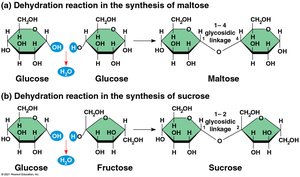
Dehydration Reaction: Joins two monomers by removing a water molecule.
Hydrolysis: Breaks polymers into monomers by adding water, the reverse of dehydration.
Carbohydrates: Structure and Function
Monosaccharides: Simple Sugars
Carbohydrates are sugars and their polymers. The simplest carbohydrates are monosaccharides, which serve as fuel and building material. They are classified by the location of their carbonyl group and the number of carbons in their skeleton.
Monosaccharide: Simple sugar with a molecular formula typically a multiple of CH2O.
Glucose (C6H12O6): The most common monosaccharide.
Aldose: Monosaccharide with an aldehyde group.
Ketose: Monosaccharide with a ketone group.
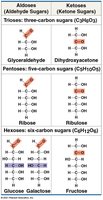
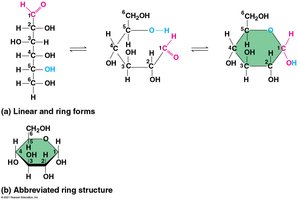
Ring Formation of Sugars
In aqueous solutions, many monosaccharides form ring structures, which are energetically favorable and commonly found in biological systems.
Linear and Ring Forms: Glucose and other sugars can exist in both linear and ring forms.
Major Fuel: Monosaccharides are a primary energy source for cells.
Disaccharides and Glycosidic Linkages
Disaccharides are formed by joining two monosaccharides via a dehydration reaction, resulting in a covalent bond called a glycosidic linkage.
Disaccharide: Two monosaccharides joined by a glycosidic linkage.
Examples: Maltose (glucose + glucose), Sucrose (glucose + fructose).
Polysaccharides: Storage and Structural Roles
Polysaccharides are polymers of sugars with storage and structural functions. Their properties depend on the types of monomers and the positions of glycosidic linkages.
Starch: Storage polysaccharide in plants, composed of glucose monomers.
Glycogen: Storage polysaccharide in animals, stored in liver and muscle cells.
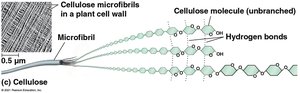
Cellulose: Structural polysaccharide in plant cell walls, composed of glucose with β linkages.
Cellulose Structure
Cellulose molecules are straight and unbranched, allowing hydrogen bonds between parallel molecules, forming strong microfibrils in plant cell walls.
α vs. β Glucose: Starch (α) is helical; cellulose (β) is straight and forms hydrogen bonds.
Digestibility: Enzymes that digest starch cannot hydrolyze β linkages in cellulose.
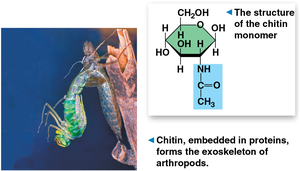
Chitin
Chitin is a structural polysaccharide found in the exoskeletons of arthropods and cell walls of fungi.
Chitin: Composed of modified glucose monomers.
Function: Provides structural support in arthropods and fungi.
Lipids: Hydrophobic Molecules
Types and Properties
Lipids are a diverse group of hydrophobic molecules, not true polymers. They include fats, phospholipids, and steroids, and are characterized by their poor solubility in water.
Fats: Constructed from glycerol and fatty acids; function as energy storage.
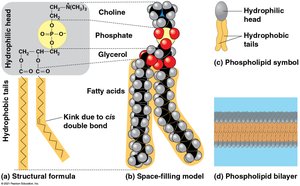
Phospholipids: Major component of cell membranes, with hydrophilic heads and hydrophobic tails.
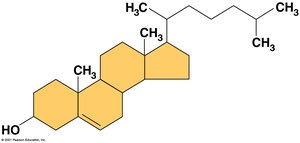
Steroids: Lipids with a four-ring structure, such as cholesterol.
Phospholipid Structure and Function
Phospholipids self-assemble into bilayers in water, forming the fundamental structure of cell membranes.
Hydrophilic Head: Contains phosphate group.
Hydrophobic Tails: Composed of fatty acids.
Bilayer: Forms a boundary between the cell and its environment.
Steroids
Steroids are lipids with a characteristic four-ring structure. Cholesterol is a key steroid in animal cell membranes and a precursor for other steroids.
Cholesterol: Essential for membrane structure and precursor for steroid hormones.
Health Impact: High cholesterol levels may contribute to cardiovascular disease.
Proteins: Structure and Function
Diversity and Roles
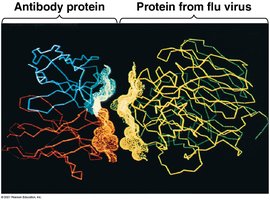
Proteins are polymers of amino acids and account for more than half the dry mass of most cells. They perform a wide range of functions, including catalysis, defense, transport, communication, movement, and structural support.
Enzymes: Proteins that act as catalysts.
Polypeptide: Unbranched polymer of amino acids.
Amino Acid: Organic molecule with amino and carboxyl groups, differing by side chains (R groups).
Protein Structure
The function of a protein depends on its three-dimensional structure, which is determined by its amino acid sequence.
Primary Structure: Unique sequence of amino acids.
Secondary Structure: Coils (α helix) and folds (β sheet) formed by hydrogen bonds.
Tertiary Structure: Overall shape due to interactions among R groups.
Quaternary Structure: Association of multiple polypeptide chains.
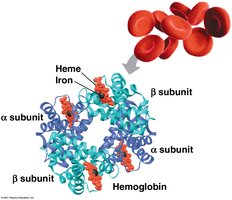
Quaternary Structure Example: Hemoglobin
Hemoglobin is a globular protein with four polypeptide subunits, responsible for oxygen transport in blood.
Subunits: Two α and two β chains.
Function: Binds and transports oxygen.
Protein Denaturation
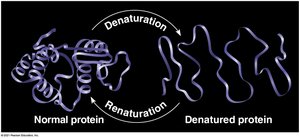
Proteins can lose their native structure and function due to changes in environmental conditions, a process called denaturation. Sometimes, denaturation can be reversed (renaturation).
Causes: Alterations in pH, salt concentration, temperature.
Effect: Denatured proteins are biologically inactive.
Nucleic Acids: DNA and RNA
Structure and Function
Nucleic acids store, transmit, and help express hereditary information. DNA and RNA are polymers of nucleotides, each consisting of a nitrogenous base, a pentose sugar, and a phosphate group.
DNA: Deoxyribonucleic acid, double-stranded, stores genetic information.
RNA: Ribonucleic acid, single-stranded, involved in protein synthesis.
Nucleotide: Monomer of nucleic acids; composed of a nucleoside (base + sugar) and a phosphate group.
Phosphodiester Linkage: Covalent bond joining nucleotides in a polynucleotide.
Gene Expression: DNA → RNA → Protein
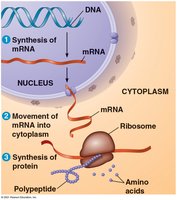
DNA directs the synthesis of messenger RNA (mRNA), which is then translated into protein by the cell's machinery. This flow of genetic information is fundamental to all living organisms.
Transcription: DNA is transcribed to mRNA in the nucleus.
Translation: mRNA is translated into protein in the cytoplasm.
DNA Structure and Base Pairing
DNA consists of two antiparallel polynucleotide strands forming a double helix. Complementary base pairing ensures accurate replication and transmission of genetic information.
Base Pairing: Adenine (A) pairs with Thymine (T); Guanine (G) pairs with Cytosine (C).
Antiparallel: Strands run in opposite 5′ → 3′ directions.
Genomics and Proteomics
Advances in sequencing technology have enabled the study of entire genomes (genomics) and large sets of proteins (proteomics), transforming biological research and applications.
Bioinformatics: Computational tools for analyzing genetic and protein data.
Molecular Genealogy: DNA and protein sequences document evolutionary relationships.
Macromolecule | Monomer | Polymer | Main Function |
|---|---|---|---|
Carbohydrate | Monosaccharide | Polysaccharide | Energy, structure |
Lipid | Fatty acid, glycerol | Not true polymer | Energy storage, membranes |
Protein | Amino acid | Polypeptide | Catalysis, structure, transport |
Nucleic Acid | Nucleotide | Polynucleotide | Information storage, expression |
Additional info: Table above summarizes the main classes of macromolecules, their monomers, polymers, and primary functions in biological systems.
