 Back
Structure and Function of Large Biological Molecules: Carbohydrates & Lipids
Study Guide - Smart Notes
 Tailored notes based on your materials, expanded with key definitions, examples, and context.
Macromolecules: Structure and Function
Definition and Types of Macromolecules
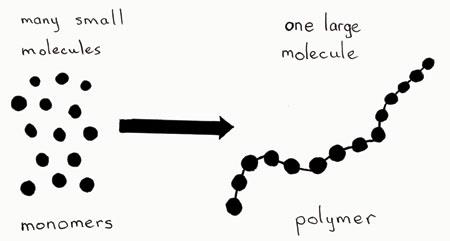
Large biological molecules, or macromolecules, are essential for life and are constructed from smaller subunits called monomers. These monomers are linked together to form polymers, except for lipids, which do not form true polymers. The four major classes of biological macromolecules are carbohydrates, lipids, proteins, and nucleic acids.
Monomers: Small, repeating units that serve as the building blocks of polymers.
Polymers: Large molecules composed of chains of monomers.
Macromolecules: Carbohydrates, proteins, and nucleic acids are true polymers; lipids are not.
Synthesis and Breakdown of Polymers
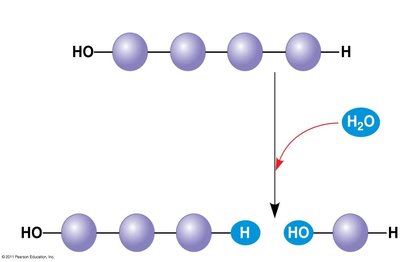
The formation and degradation of polymers in cells involve two main types of chemical reactions: dehydration (condensation) reactions and hydrolysis reactions.
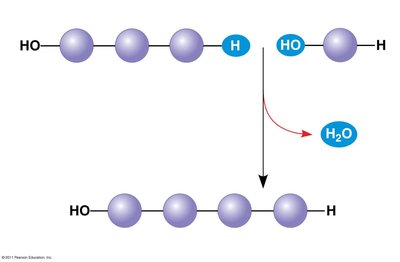
Dehydration Reaction: Joins two monomers together by removing a water molecule, forming a new covalent bond.
Hydrolysis Reaction: Breaks a polymer into monomers by adding a water molecule, splitting the covalent bond.
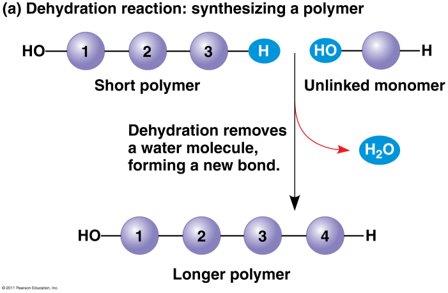
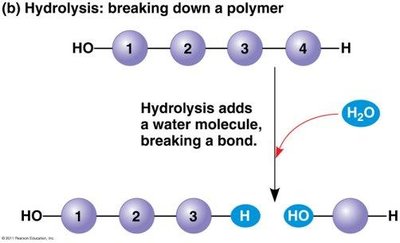
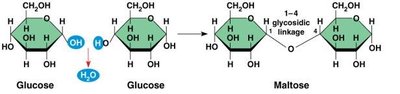
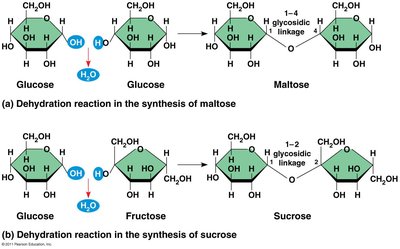
Example: The synthesis of maltose from two glucose molecules is a dehydration reaction, while its breakdown is a hydrolysis reaction.
Carbohydrates
Overview and Classification
Carbohydrates are sugars and polymers of sugars, serving as a primary energy source and structural material in living organisms. They are classified based on the number of sugar units:
Monosaccharides: Single sugar units (e.g., glucose, ribose).
Disaccharides: Two monosaccharides joined by a covalent bond (e.g., maltose, sucrose, lactose).
Polysaccharides: Many monosaccharides linked together (e.g., starch, glycogen, cellulose, chitin).
Monosaccharides: Structure and Function
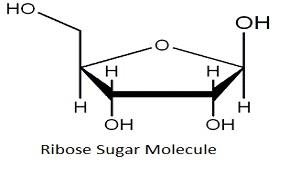
Monosaccharides are the simplest carbohydrates, typically containing 3-7 carbon atoms. They have the general formula (CH2O)n and contain hydroxyl and carbonyl functional groups.
Glucose (C6H12O6): The most common monosaccharide, used as an energy source.
Ribose (C5H10O5): A component of RNA.
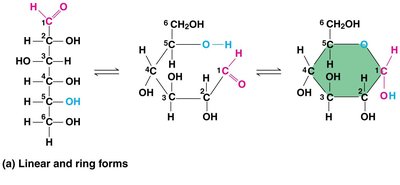
Aldose vs. Ketose: Classification based on the position of the carbonyl group. Aldoses have the carbonyl at the end (e.g., glucose), ketoses have it in the middle (e.g., fructose).
Ring Formation in Sugars
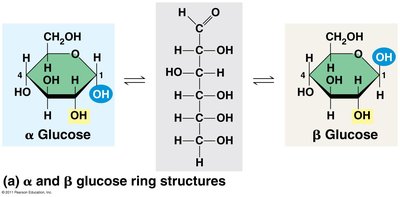
In aqueous solutions, 5- and 6-carbon sugars often form ring structures. The carbonyl group reacts with a hydroxyl group, resulting in a ring that includes an oxygen atom.
α (alpha) and β (beta) Glucose: Differ in the position of the hydroxyl group on the first carbon (below the ring in α, above in β).
Disaccharides
Disaccharides are formed by joining two monosaccharides via a dehydration reaction, creating a glycosidic linkage.
Maltose: Glucose + Glucose
Sucrose: Glucose + Fructose
Lactose: Glucose + Galactose
Polysaccharides: Storage and Structural Roles
Polysaccharides are large polymers of monosaccharides and serve as energy storage or structural materials.
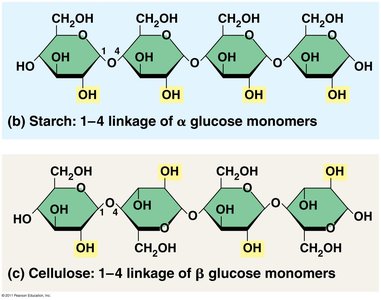
Starch: Energy storage in plants; composed of amylose (unbranched, helical) and amylopectin (branched, helical).
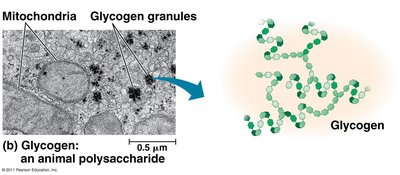
Glycogen: Energy storage in animals; highly branched polymer of glucose, stored in liver and muscles.
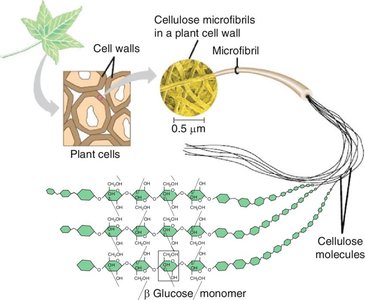
Cellulose: Structural component of plant cell walls; composed of β glucose monomers, forming straight, unbranched fibers.
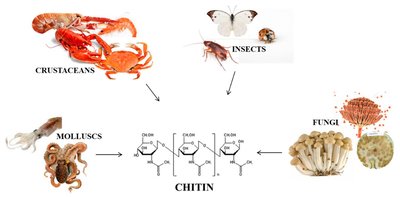
Chitin: Structural polysaccharide in arthropod exoskeletons and fungal cell walls; composed of modified glucose monomers.

Structural Differences: Starch vs. Cellulose
The difference between starch and cellulose lies in the type of glucose monomer and the glycosidic linkage:
Starch: Contains α glucose; forms helical structures.
Cellulose: Contains β glucose; forms straight, rigid fibers due to alternating orientation of monomers.
Lipids
Overview and Types of Lipids
Lipids are a diverse group of hydrophobic molecules that do not form true polymers. They are composed mainly of carbon, hydrogen, and oxygen, but lack a fixed ratio. Major types include fats, phospholipids, steroids, waxes, and pigments.
Hydrophobic: Lipids do not mix well with water due to their nonpolar nature.
Fats (Triglycerides): Composed of glycerol and three fatty acids, formed by dehydration reactions.
Phospholipids: Major component of cell membranes; contain two fatty acids and a phosphate group attached to glycerol.
Steroids: Characterized by a carbon skeleton with four fused rings (e.g., cholesterol).
Fats: Structure and Function
Fats, or triglycerides, are formed by linking three fatty acids to a glycerol molecule via dehydration reactions. They serve as energy storage, insulation, and cushioning for organs.
Saturated Fatty Acids: No double bonds; straight chains; solid at room temperature; mainly from animal sources.
Unsaturated Fatty Acids: One or more double bonds; bent chains; liquid at room temperature; mainly from plant sources.
Cis vs. Trans Fats: Cis double bonds cause bending; trans fats are artificially produced, linear, and associated with health risks.
Phospholipids and Biological Membranes
Phospholipids are essential for cell membrane structure. They are amphipathic, containing both hydrophilic (phosphate head) and hydrophobic (fatty acid tails) regions. In water, they self-assemble into bilayers, forming the basis of all cellular membranes.
Steroids
Steroids are lipids with a structure of four fused carbon rings. Cholesterol is a key steroid, serving as a component of cell membranes and a precursor for other steroids, such as hormones.
Cholesterol: Amphipathic molecule; hydrophilic region is the hydroxyl group attached to the ring structure.
