 Back
Structure and Function of Large Biological Molecules: Functional Groups, Macromolecules, and Biomolecular Classes
Study Guide - Smart Notes
 Tailored notes based on your materials, expanded with key definitions, examples, and context.
Functional Groups in Biomolecules
Major Functional Groups and Their Properties
Functional groups are specific groups of atoms within molecules that are responsible for the characteristic chemical reactions of those molecules. Understanding these groups is essential for predicting the behavior of biomolecules.
Hydroxyl group (-OH): Found in alcohols; increases solubility in water.
Carbonyl group (C=O): Found in aldehydes and ketones; affects reactivity and polarity.
Carboxyl group (-COOH): Found in organic acids; acts as an acid by donating H+.
Amino group (-NH2): Found in amino acids; acts as a base by accepting H+.
Sulfhydryl group (-SH): Found in some amino acids; forms disulfide bonds in proteins.
Phosphate group (-PO4): Found in nucleotides; important for energy transfer.
Methyl group (-CH3): Nonpolar; affects gene expression and molecular shape.
Example: The carboxyl group in amino acids gives them acidic properties, while the amino group gives basic properties. 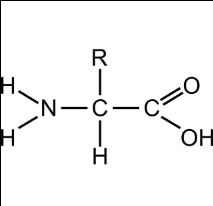
Macromolecules: Monomers, Polymers, and Synthesis
Condensation (Dehydration Synthesis) and Hydrolysis
Macromolecules are large molecules formed by joining smaller units called monomers. The process of joining monomers is called condensation or dehydration synthesis, while breaking them apart is called hydrolysis.
Monomer: A small molecule that can join with others to form a polymer.
Polymer: A long molecule consisting of many similar or identical monomers linked together.
Macromolecule: A very large molecule, such as a protein, nucleic acid, or polysaccharide.
Condensation (Dehydration Synthesis): Removes a water molecule to form a bond between monomers.
Hydrolysis: Adds a water molecule to break a bond between monomers.
Equation: Example: Formation of a peptide bond between amino acids.
Carbohydrates
Classification and Glycosidic Bonds
Carbohydrates are organic molecules composed of carbon, hydrogen, and oxygen. They serve as energy sources and structural materials.
Monosaccharides: Simple sugars (e.g., glucose, fructose).
Disaccharides: Two monosaccharides joined by a glycosidic bond (e.g., sucrose, lactose).
Polysaccharides: Long chains of monosaccharides (e.g., starch, cellulose, glycogen).
Storage polysaccharides: Starch (plants) and glycogen (animals) store energy.
Structural polysaccharides: Cellulose (plants) and chitin (fungi, arthropods) provide structure.
Example: Cellulose is a structural polysaccharide in plant cell walls, while starch is used for energy storage.
Lipids
Types, Composition, and Functions
Lipids are hydrophobic molecules that include fats, phospholipids, and steroids. They are important for energy storage, membrane structure, and signaling.
Fats (triglycerides): Composed of glycerol and three fatty acids; used for energy storage.
Phospholipids: Composed of glycerol, two fatty acids, and a phosphate group; form cell membranes.
Steroids: Four fused carbon rings; include hormones like cholesterol.
Ester bond: The bond formed between glycerol and fatty acids in fats.
Example: Phospholipids form the bilayer of cell membranes, providing structural integrity and selective permeability. 
Proteins
Amino Acids, Peptide Bonds, and Protein Structure
Proteins are polymers of amino acids, each with a central carbon, an amino group, a carboxyl group, a hydrogen atom, and a variable R group.
Amino acid monomers: Share a common structure but differ in their R groups.
Peptide bond: The bond formed between the amino group of one amino acid and the carboxyl group of another.
Classes of amino acids: Grouped by properties of their side chains (polar, nonpolar, acidic, basic).
Example: Glycine is a nonpolar amino acid, while glutamic acid is acidic.
Levels of Protein Structure
Proteins have four levels of structural organization:
Primary (1°) structure: Linear sequence of amino acids.
Secondary (2°) structure: Local folding into alpha helices or beta sheets, stabilized by hydrogen bonds.
Tertiary (3°) structure: Overall three-dimensional shape, determined by interactions among R groups.
Quaternary (4°) structure: Association of multiple polypeptide chains.
Example: Hemoglobin has quaternary structure, consisting of four polypeptide chains.
Nucleic Acids
Nucleotide Structure and Types of Nucleic Acids
Nucleic acids are polymers of nucleotides, which consist of a sugar, a phosphate group, and a nitrogenous base.
Nucleotide: The monomer of nucleic acids, composed of a pentose sugar, phosphate, and nitrogenous base.
Phosphodiester bond: The bond linking nucleotides in a nucleic acid chain.
DNA (deoxyribonucleic acid): Contains deoxyribose sugar; stores genetic information.
RNA (ribonucleic acid): Contains ribose sugar; involved in protein synthesis.
Example: DNA is double-stranded, while RNA is usually single-stranded.
Ribose vs Deoxyribose
Ribose: Sugar in RNA; has a hydroxyl group at the 2' carbon.
Deoxyribose: Sugar in DNA; lacks the hydroxyl group at the 2' carbon.
Pyrimidines vs Purines
Pyrimidines: Single-ring bases (cytosine, thymine, uracil).
Purines: Double-ring bases (adenine, guanine).
Example: Adenine (purine) pairs with thymine (pyrimidine) in DNA.
Summary Table: Biomolecule Classes and Bonds
Biomolecule | Monomer | Bond Type | Example |
|---|---|---|---|
Carbohydrate | Monosaccharide | Glycosidic | Starch, Cellulose |
Lipid | Fatty acid, Glycerol | Ester | Triglyceride, Phospholipid |
Protein | Amino acid | Peptide | Hemoglobin, Enzyme |
Nucleic Acid | Nucleotide | Phosphodiester | DNA, RNA |
Additional info:
Functional groups determine the solubility, reactivity, and biological activity of biomolecules.
Macromolecules are essential for structure, function, and regulation of cells and organisms.
