 Back
Structure and Function of Large Biological Molecules
Study Guide - Smart Notes
 Tailored notes based on your materials, expanded with key definitions, examples, and context.
The Molecules of Life
Overview of Biological Macromolecules
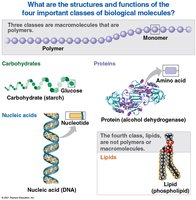
All living organisms are composed of four major classes of large biological molecules: carbohydrates, lipids, proteins, and nucleic acids. These molecules are essential for life, serving structural, functional, and informational roles.
Carbohydrates: Serve as energy sources and structural materials.
Lipids: Provide energy storage, membrane structure, and signaling.
Proteins: Perform a wide range of functions including catalysis, transport, and structural support.
Nucleic acids: Store and transmit genetic information.
Macromolecules and Polymers
Polymers and Monomers
Macromolecules are polymers, which are long chains made from repeating units called monomers. Carbohydrates, proteins, and nucleic acids are true polymers, while lipids are not.
Polymer: A molecule composed of many similar or identical monomers.
Monomer: The basic building block of a polymer.
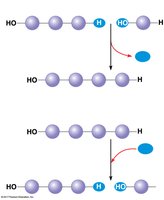
Enzymes: Biological catalysts that facilitate the synthesis (dehydration) and breakdown (hydrolysis) of polymers.
Carbohydrates
Monosaccharides and Classification
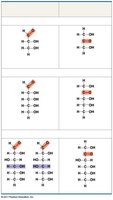
Carbohydrates include simple sugars (monosaccharides) and their polymers (polysaccharides). Monosaccharides are classified by the location of their carbonyl group (aldose or ketose) and the number of carbon atoms.
Monosaccharide: The simplest carbohydrate, typically with a formula (CH2O)n.
Aldose: Sugar with an aldehyde group.
Ketose: Sugar with a ketone group.
Examples: Glucose (C6H12O6), Ribose (C5H10O5).
Structure of Monosaccharides
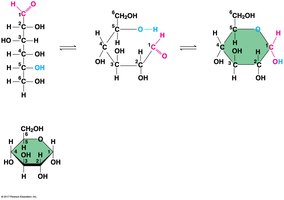
Monosaccharides often exist as ring structures in aqueous solutions, which are more stable than their linear forms.
Glucose: Most common monosaccharide, forms a ring in solution.
Disaccharides and Glycosidic Linkages
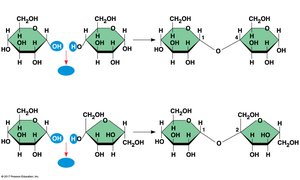
Disaccharides are formed by joining two monosaccharides via a dehydration reaction, creating a covalent bond called a glycosidic linkage.
Example: Maltose (glucose + glucose), Sucrose (glucose + fructose).
Polysaccharides: Storage and Structural Roles
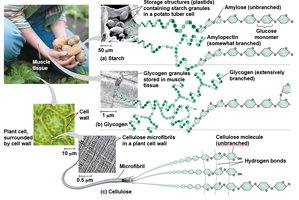
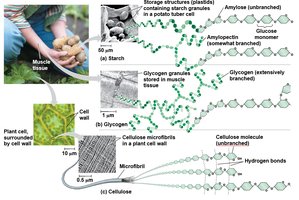
Polysaccharides are polymers of sugars with storage (starch, glycogen) or structural (cellulose, chitin) functions.
Starch: Storage polysaccharide in plants, composed of glucose monomers.
Glycogen: Storage polysaccharide in animals, stored in liver and muscle.
Cellulose: Structural polysaccharide in plant cell walls, composed of β-glucose.
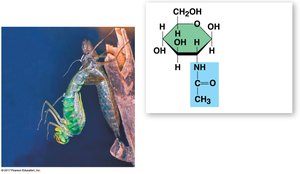
Chitin: Structural polysaccharide in arthropod exoskeletons and fungal cell walls.
Lipids
Structure and Properties
Lipids are hydrophobic molecules that do not form true polymers. The main types are fats, phospholipids, and steroids.
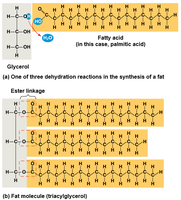
Fats: Composed of glycerol and fatty acids, joined by ester linkages to form triglycerides.
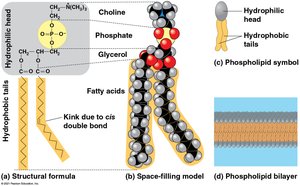
Phospholipids: Consist of two fatty acids and a phosphate group attached to glycerol; form cell membranes.
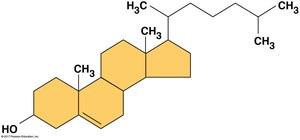
Steroids: Characterized by four fused carbon rings; cholesterol is a key example.
Saturated vs. Unsaturated Fats
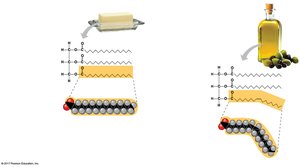
Saturated fatty acids have no double bonds and are solid at room temperature, while unsaturated fatty acids have one or more double bonds and are liquid.
Saturated fats: Straight chains, solid, mostly animal fats.
Unsaturated fats: Kinked chains (cis double bonds), liquid, mostly plant and fish fats.
Phospholipids and Cell Membranes
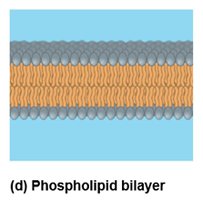
Phospholipids self-assemble into bilayers in water, forming the fundamental structure of cell membranes.
Hydrophilic head: Attracted to water.
Hydrophobic tails: Repelled by water.
Steroids
Steroids are lipids with a characteristic four-ring structure. Cholesterol is an important steroid in animal cell membranes.
Cholesterol: Precursor for other steroids; high levels can contribute to cardiovascular disease.
Proteins
Structure and Function
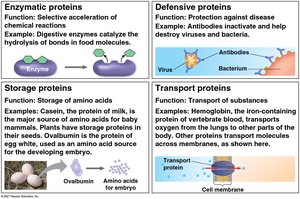
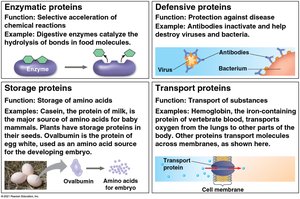
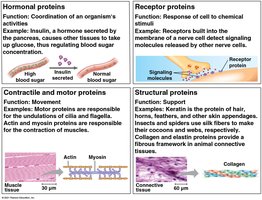
Proteins are polymers of amino acids and account for more than half the dry mass of most cells. They perform diverse functions, including catalysis, defense, storage, transport, communication, movement, and structural support.
Enzymes: Catalyze biochemical reactions.
Defensive proteins: Protect against disease.
Storage proteins: Store amino acids.
Transport proteins: Move substances across membranes.
Hormonal proteins: Coordinate activities.
Receptor proteins: Respond to chemical signals.
Contractile and motor proteins: Enable movement.
Structural proteins: Provide support.
Polypeptides and Protein Structure
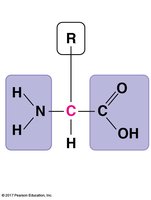
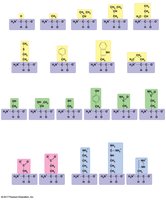
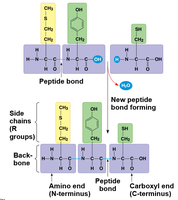
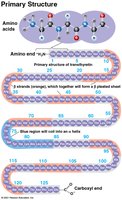
Proteins are made from 20 different amino acids, linked by peptide bonds to form polypeptides. The sequence of amino acids determines the protein's structure and function.
Primary structure: Unique sequence of amino acids.
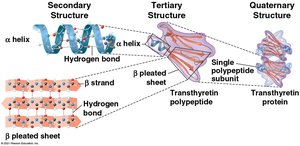
Secondary structure: Coils (α helix) and folds (β sheet) due to hydrogen bonding.
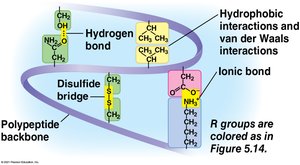
Tertiary structure: Overall shape from interactions among R groups.
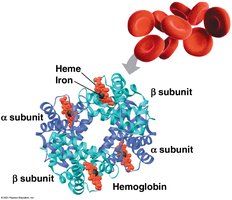
Quaternary structure: Association of multiple polypeptide chains.
Protein Denaturation and Folding
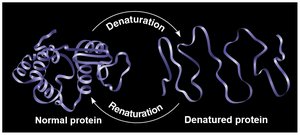
Protein structure can be disrupted by changes in pH, salt concentration, or temperature, leading to denaturation and loss of function. Some proteins can refold if conditions return to normal.
Denaturation: Loss of native structure and function.
Renaturation: Restoration of structure and function.
Protein Structure Determination
Scientists use X-ray crystallography, NMR spectroscopy, and bioinformatics to determine and predict protein structures.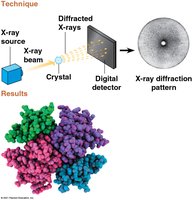
Nucleic Acids
Structure and Function
Nucleic acids store, transmit, and help express hereditary information. DNA and RNA are polymers of nucleotides.
DNA: Stores genetic information; double-stranded helix.
RNA: Transmits genetic information; single-stranded, variable structure.
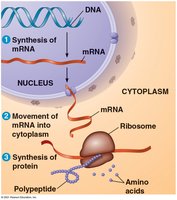
Gene expression: DNA → RNA → protein.
Nucleotide Structure
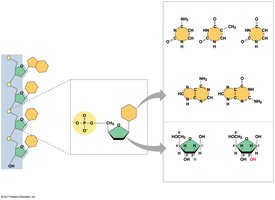
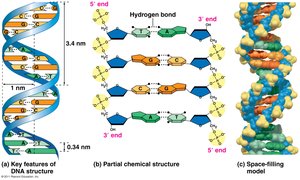
Each nucleotide consists of a nitrogenous base, a pentose sugar, and a phosphate group. Bases are classified as purines (adenine, guanine) or pyrimidines (cytosine, thymine, uracil).
Nucleoside: Base + sugar.
Nucleotide: Nucleoside + phosphate group.
DNA and RNA Structure
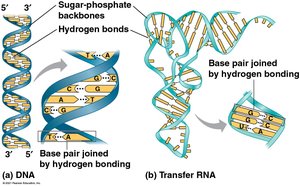
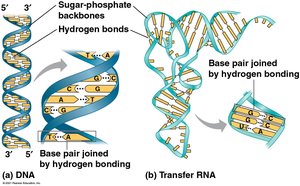
DNA is a double helix with antiparallel strands and complementary base pairing (A-T, C-G). RNA is single-stranded, with A-U pairing.
Phosphodiester linkage: Joins nucleotides in a polynucleotide chain.
Hydrogen bonds: Hold base pairs together in DNA and RNA.
Genomics and Proteomics
Modern Biological Inquiry
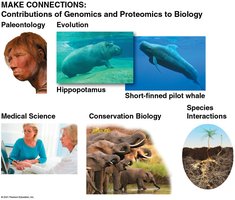
Genomics and proteomics use computational tools to analyze large sets of genes and proteins, transforming biological research and applications.
Genomics: Study of whole genomes.
Proteomics: Study of large sets of proteins and their sequences.
Summary Table: Biological Macromolecules
Class | Monomer | Polymer | Main Function |
|---|---|---|---|
Carbohydrates | Monosaccharide | Polysaccharide | Energy, structure |
Proteins | Amino acid | Polypeptide | Catalysis, structure, transport |
Nucleic acids | Nucleotide | Polynucleotide | Information storage |
Lipids | Fatty acid, glycerol | None (not true polymers) | Energy storage, membranes |
