Back
Structure and Function of Large Biological Molecules: Study Notes
Study Guide - Smart Notes
 Tailored notes based on your materials, expanded with key definitions, examples, and context.
Structure and Function of Large Biological Molecules
Overview of Biological Macromolecules
Biological macromolecules are large, complex molecules essential for life. They include carbohydrates, proteins, nucleic acids, and lipids. Each class of macromolecule has unique properties, structures, and functions that contribute to cellular processes and organismal biology.
Molecular Diversity Due to Carbon
Carbon's versatility allows for a wide range of molecular structures, enabling the diversity of biological macromolecules. Carbon atoms can form chains, rings, and branched structures, serving as the backbone for macromolecules.
Macromolecules: Large molecules composed of smaller subunits.
Four main classes: Carbohydrates, Proteins, Nucleic acids, Lipids.
Carbon, nitrogen, and phosphorus are key elements for building these molecules.
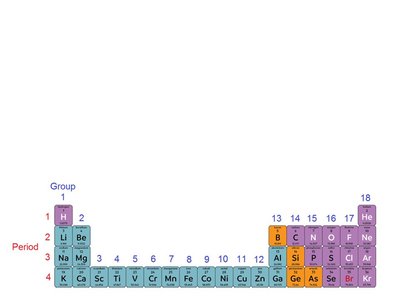
Additional info: Silicon is positioned below carbon in the periodic table, indicating similar valence electron configurations, but carbon's ability to form stable, diverse bonds makes it uniquely suited for life.
Formation and Breakdown of Macromolecules
Polymers and Monomers
Most macromolecules are polymers, which are chains of repeating units called monomers. The formation and breakdown of polymers involve specific chemical reactions.
Polymer: Chain-like macromolecule of similar or identical repeating units covalently bonded together.
Monomer: The repeating unit that makes up polymers.
Dehydration and Hydrolysis Reactions
Polymers are synthesized and broken down by dehydration and hydrolysis reactions, respectively.
Dehydration reaction: Joins two monomers by removing a water molecule. Example:
Hydrolysis reaction: Breaks a polymer into monomers by adding water.
Carbohydrates
Structure and Types
Carbohydrates are organic molecules that include sugars and their polymers. They are composed of carbon, hydrogen, and oxygen, and serve as energy sources and structural components.
Monosaccharides: Simple sugars (e.g., glucose), molecular formula is a multiple of CH2O.
Disaccharides: Two monosaccharides joined by a glycosidic linkage (e.g., sucrose = glucose + fructose).
Polysaccharides: Polymers of many sugars joined via dehydration reactions.
Storage and Structural Polysaccharides
Polysaccharides serve as storage and structural molecules in organisms.
Starch: Storage polysaccharide in plants, composed of glucose monomers.
Glycogen: Storage polysaccharide in animals, stored in liver and muscle cells.
Cellulose: Structural polysaccharide in plant cell walls.
Chitin: Structural polysaccharide in arthropod exoskeletons.
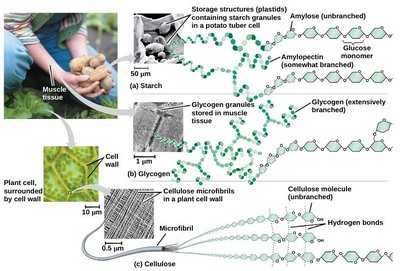
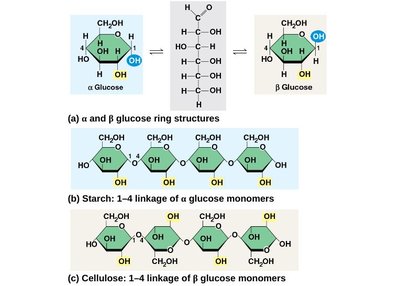
Additional info: The difference between alpha and beta glucose linkages determines whether a polysaccharide is digestible (starch) or indigestible (cellulose) by humans.
Proteins
Structure and Formation
Proteins are polymers of amino acids, folded into specific three-dimensional shapes. Their structure determines their function in biological systems.
Amino acids: Molecules with an amino group, carboxyl group, and a unique side chain (R group).
Twenty different amino acids exist, classified by their side chains as nonpolar, polar, or charged.
Peptide bond: Covalent bond formed between the carboxyl group of one amino acid and the amino group of another via dehydration reaction.
Polypeptide: Chain of amino acids linked by peptide bonds.


Levels of Protein Structure
Proteins have four levels of structure, each contributing to their function.
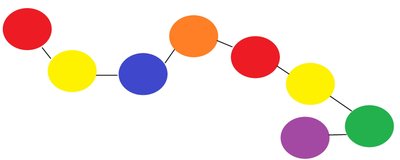
Primary structure: Sequence of amino acids, determined by genes.
Secondary structure: Coils and folds (alpha helix, beta pleated sheet) due to hydrogen bonding.
Tertiary structure: 3D folding due to interactions between side chains (hydrophobic interactions, disulfide bridges).
Quaternary structure: Association of two or more polypeptides (only in some proteins).
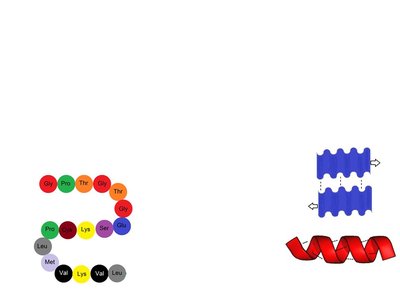
Additional info: The unique sequence of amino acids is determined by the gene encoding the protein.
Functions of Proteins
Proteins perform a wide range of functions in living organisms.
Antibody: Protects the body from disease.
Enzyme: Catalyzes chemical reactions.
Messenger: Transmits signals (e.g., hormones).
Structural: Provides structure and support.
Transport/storage: Binds and carries molecules.
Nucleic Acids
Structure and Function
Nucleic acids are polymers of nucleotide monomers. They store, transmit, and express hereditary information.
Two types: DNA (deoxyribonucleic acid) and RNA (ribonucleic acid).
Nucleotide: Composed of a nitrogenous base, five-carbon sugar, and phosphate group.
Nitrogenous bases: Pyrimidines (cytosine, thymine, uracil) and purines (adenine, guanine).
DNA contains deoxyribose; RNA contains ribose.
Phosphodiester linkage connects nucleotides, giving directionality (5' to 3').
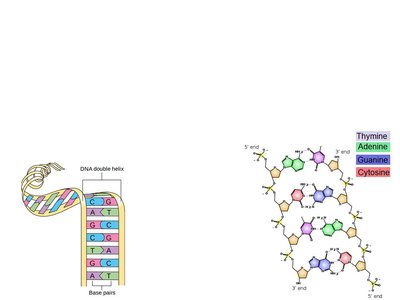
Additional info: The sequence of bases in DNA and RNA determines the amino acid sequence of proteins, which in turn determines protein structure and function.
Lipids
Structure and Types
Lipids are hydrophobic molecules that do not form true polymers. They are important for energy storage, membrane structure, and signaling.
Types: Fats, Phospholipids, Steroids.
Fats are composed of glycerol and fatty acids, joined by ester linkages.
Saturated fatty acids have no double bonds; unsaturated fatty acids have one or more double bonds.
Phospholipids are major components of cell membranes, forming bilayers.
Steroids have four fused rings with unique groups attached (e.g., testosterone).
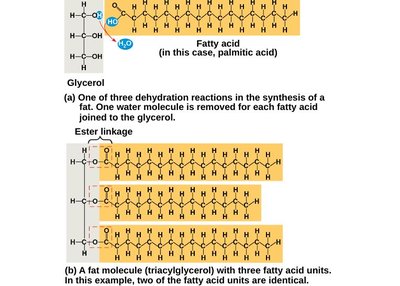
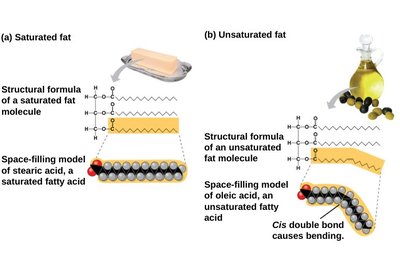
Additional info: The presence of double bonds in unsaturated fats causes bending, affecting membrane fluidity.
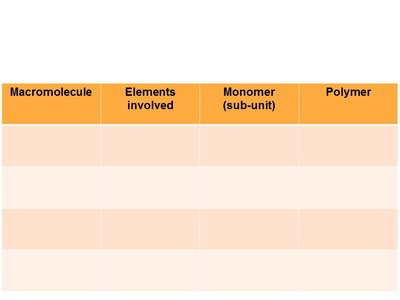
Summary Table: Macromolecules
The following table summarizes the main classes of biological macromolecules, their elements, monomers, and polymers.
Macromolecule | Elements involved | Monomer (sub-unit) | Polymer |
|---|---|---|---|
Carbohydrates | Carbon, hydrogen, oxygen | Monosaccharide | Polysaccharide |
Proteins | Carbon, hydrogen, oxygen, nitrogen, sulfur | Amino acids | Polypeptides |
Lipids | Carbon, hydrogen, oxygen (phosphorus for phospholipids) | Glycerol and fatty acids | Does not contain true polymers |
Nucleic Acids | Carbon, hydrogen, oxygen, nitrogen, phosphorus | Nucleotides | DNA, RNA |