 Back
Structure and Function of Macromolecules: General Biology Study Guide
Study Guide - Smart Notes
 Tailored notes based on your materials, expanded with key definitions, examples, and context.
The Structure and Function of Macromolecules
Polymers and Monomers
Macromolecules are large biological molecules essential for life, composed of smaller units called monomers. The arrangement and sequence of these monomers determine the properties and functions of the macromolecule.
Polymer: A long chain molecule made of repeating monomer subunits.
Monomer: The basic building block of a polymer.
Examples: Starch (polymer of glucose), proteins (polymer of amino acids).
Key Principle: The sequence and type of monomers affect the macromolecule's structure and function.
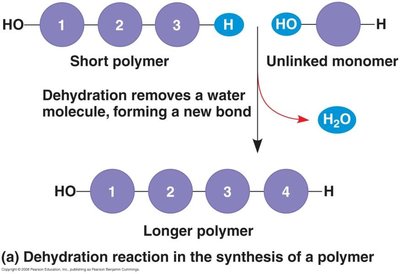
Making and Breaking Polymers
Polymers are synthesized and broken down by specific chemical reactions:
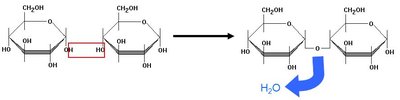
Dehydration Synthesis: Joins two monomers by removing a water molecule, forming a covalent bond. This process builds polymers from monomers.
Hydrolysis: Adds a water molecule to break a covalent bond, splitting a polymer into its monomers.
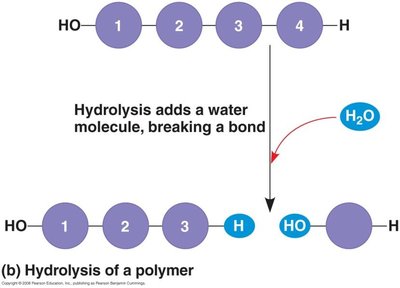
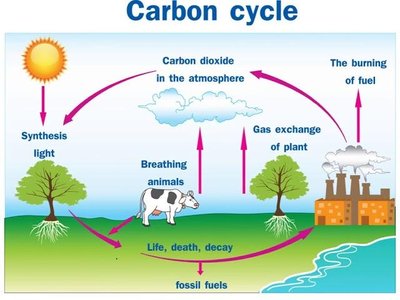
Organisms must exchange matter with the environment to grow, reproduce, and maintain organization. Atoms and molecules from the environment are necessary to build new molecules.
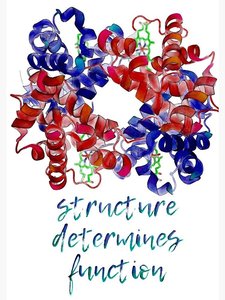
Directionality and Structure-Function Relationship
The directionality of monomer subcomponents influences the structure and function of polymers. This principle applies to carbohydrates, lipids, proteins, and nucleic acids.
Structure Determines Function: The three-dimensional arrangement of atoms in a macromolecule dictates its biological role.
Carbohydrates
Types and Structure
Carbohydrates are organic molecules that include simple sugars and complex polymers. They exist in a ratio of 1 carbon: 2 hydrogen: 1 oxygen (CH2O).
Monosaccharides: Simple sugars (e.g., glucose, ribose).
Disaccharides: Formed by joining two monosaccharides via dehydration synthesis; the bond is called a glycosidic linkage (e.g., sucrose = glucose + fructose).
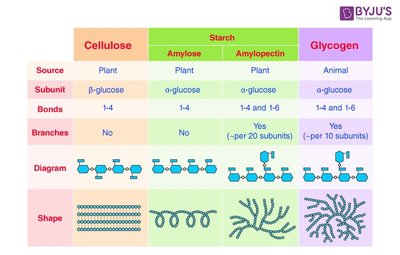
Polysaccharides: Long polymers of monosaccharides (e.g., starch, glycogen, cellulose).
Functions of Polysaccharides
Energy Source: Provide energy for cells.
Energy Storage:
Starch: Storage polysaccharide in plants.
Glycogen: Storage polysaccharide in animals.
Structural Support:
Cellulose: Major component of plant cell walls.
Chitin: Found in exoskeletons of arthropods and cell walls of fungi.
Directionality and Structure
Complex carbohydrates can be linear or branched, and their structure affects their function.
Lipids
Types and Properties
Lipids are hydrophobic molecules not considered true polymers. They include fats, oils, waxes, and steroids.
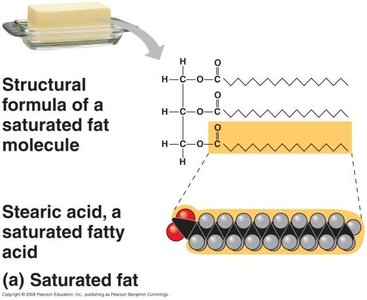
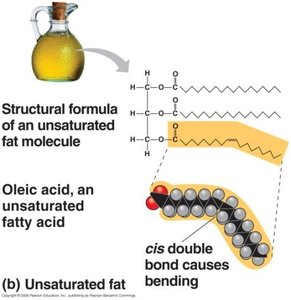
Fats (Triglycerides): Composed of glycerol and three fatty acids. Fatty acids are hydrocarbon chains that vary in length and saturation.
Saturated Fats: No double bonds; solid at room temperature; produced by animals (e.g., butter).
Unsaturated Fats: Have double bonds; liquid at room temperature; produced by plants (e.g., olive oil).
Phospholipids
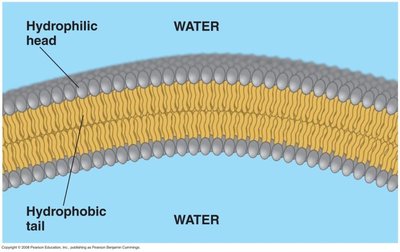
Phospholipids are essential for cell membrane structure. They have a hydrophilic head and two hydrophobic tails, forming a bilayer in membranes.
Steroids
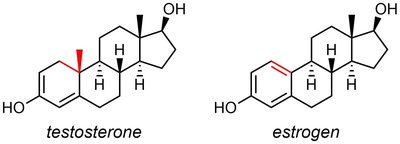
Steroids are lipids with a four-ring structure. Cholesterol is a key steroid in cell membranes, and hormones like estrogen and testosterone regulate reproductive systems.
Functions of Lipids
Fats: Energy storage, protection, insulation.
Phospholipids: Cell membrane structure.
Steroids: Hormones, membrane flexibility.
Proteins
Structure and Properties
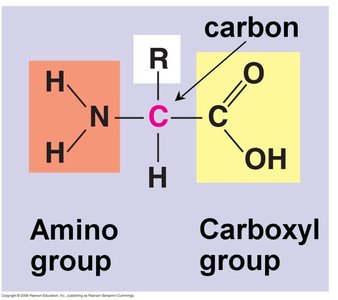
Proteins are polymers of amino acids. Each amino acid has a central carbon, an amino group, a carboxyl group, a hydrogen atom, and an R group.
Amino Acid Properties: R group determines if the amino acid is hydrophobic, hydrophilic, or ionic.
Directionality: Proteins have an amino (NH2) terminus and a carboxyl (COOH) terminus.
Levels of Protein Structure
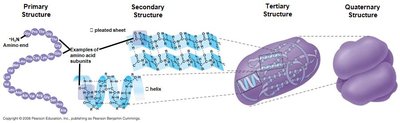
Primary: Unique sequence of amino acids.
Secondary: Coils and folds (alpha helix, beta sheet) due to hydrogen bonding.
Tertiary: Three-dimensional shape from R group interactions.
Quaternary: Multiple polypeptide chains forming a protein.
Protein Function and Enzymes
Enzymes: Proteins that act as catalysts, lowering activation energy and speeding up reactions.
Protein Shape: Crucial for function; misfolding can cause diseases (e.g., sickle cell anemia).
Chaperonins: Assist in proper protein folding.
Denaturation: Loss of shape and function due to heat, pH, or other disturbances.
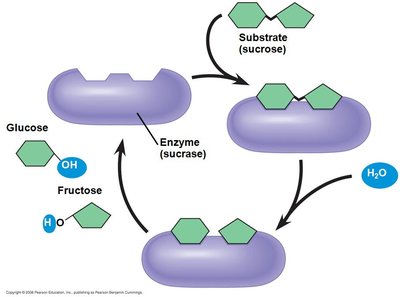
Functions of Proteins
Structure (hair, nails)
Transport (carriers)
Enzymes (chemical reactions)
Defense (immune system)
Signaling (receptors)
Movement (muscle contraction)
Nucleic Acids
Structure and Properties
Nucleic acids (DNA and RNA) encode biological information in sequences of nucleotide monomers. Each nucleotide consists of a nitrogenous base, a pentose sugar, and a phosphate group.
DNA: Deoxyribose sugar, double helix, antiparallel strands, contains thymine.
RNA: Ribose sugar, single-stranded, contains uracil.
Directionality: Nucleic acids have 5' and 3' ends; nucleotides are added to the 3' end during synthesis.
Phosphodiester Bond: Covalent bond linking nucleotides.
Pyrimidines vs. Purines
Pyrimidines: Cytosine, thymine, uracil (single ring).
Purines: Adenine, guanine (double ring).
DNA vs. RNA
Both are linear molecules with 5' and 3' ends.
Nitrogenous bases are perpendicular to the sugar-phosphate backbone.
DNA is double-stranded and antiparallel; RNA is single-stranded.
Directionality and Function
The sequence and directionality of nucleotides determine the function of nucleic acids.
Example: DNA contains the code for amino acid sequences in proteins; RNA facilitates protein synthesis.
Additional info: The notes above expand on the original content by providing definitions, examples, and academic context for each macromolecule type, their synthesis and breakdown, and their biological functions. Images included are directly relevant to the explanations and reinforce key concepts.
