 Back
BackStructure and Function of Macromolecules: Study Notes for BIO 1111
Study Guide - Smart Notes
 Tailored notes based on your materials, expanded with key definitions, examples, and context.
Chapter 5: The Structure and Function of Macromolecules
Introduction to Macromolecules
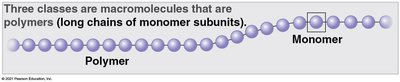
Macromolecules are large, complex molecules essential for life, including carbohydrates, lipids, proteins, and nucleic acids. Most macromolecules are polymers, built from repeating subunits called monomers. Understanding their structure and function is fundamental to biology.
Polymers and Monomers
Polymers are long chains of monomer subunits, and their properties depend on the type and arrangement of these monomers. Carbohydrates, proteins, and nucleic acids are true polymers, while lipids are not.
Polymer: A molecule made of many similar or identical monomers linked together.
Monomer: The basic building block of a polymer.
Macromolecule: A very large molecule, often a polymer, with a high molecular weight.
Formation and Breakdown of Polymers
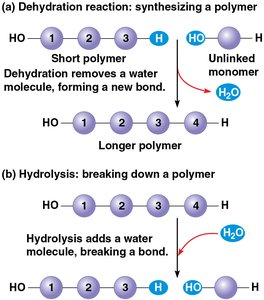
Polymers are synthesized and broken down by specific chemical reactions:
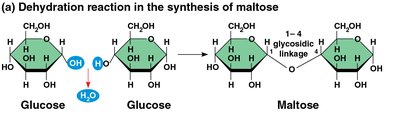
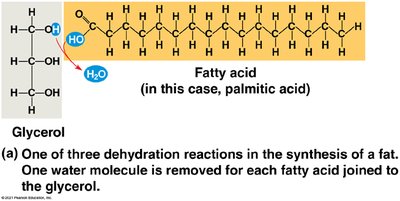
Dehydration Reaction: Joins two monomers by removing a water molecule, forming a new bond.
Hydrolysis: Breaks a polymer into monomers by adding a water molecule, breaking a bond.
Enzymes: Specialized proteins that catalyze these reactions.
Carbohydrates
Monosaccharides and Disaccharides
Carbohydrates include sugars and their polymers. The simplest carbohydrates are monosaccharides, which serve as fuel and building blocks. Disaccharides are formed by joining two monosaccharides via a glycosidic linkage.
Monosaccharide: Simple sugar, e.g., glucose (C6H12O6).
Disaccharide: Two monosaccharides joined by a dehydration reaction.
Glycosidic linkage: Covalent bond between two monosaccharides.
Classification and Structure of Monosaccharides
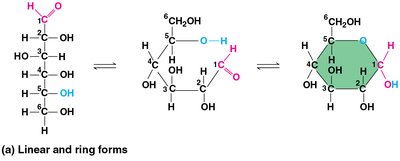
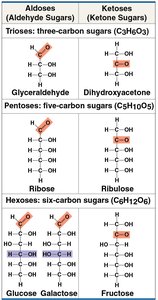
Monosaccharides are classified by the location of their carbonyl group (aldose or ketose) and the number of carbons in their skeleton. They often form rings in aqueous solutions.
Aldose: Carbonyl group at the end of the carbon skeleton.
Ketose: Carbonyl group within the carbon skeleton.
Triose, Pentose, Hexose: Monosaccharides with three, five, or six carbons, respectively.
Polysaccharides: Storage and Structural Roles
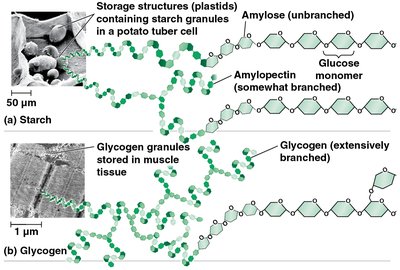
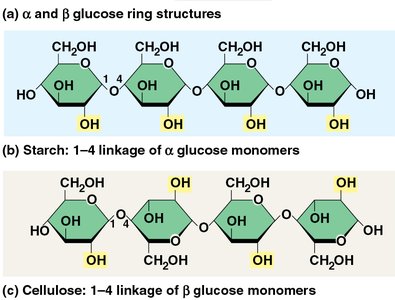
Polysaccharides are polymers of sugars with storage or structural functions. Their properties depend on the type of sugar monomers and the positions of glycosidic linkages.
Starch: Storage polysaccharide in plants, composed of glucose monomers.
Amylose: Unbranched form of starch.
Glycogen: Storage polysaccharide in animals, highly branched, stored in liver and muscle cells.
Structural Polysaccharides
Some polysaccharides provide structural support:
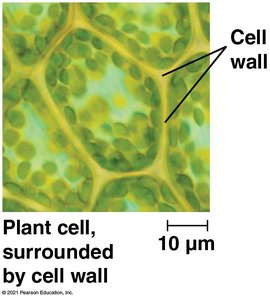
Cellulose: Major component of plant cell walls; polymer of glucose with β glycosidic linkages.
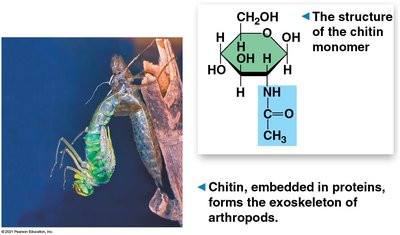
Chitin: Structural polysaccharide in arthropod exoskeletons and fungal cell walls.

Lipids
Introduction to Lipids
Lipids are a diverse group of hydrophobic molecules that do not form true polymers. They include fats, phospholipids, and steroids, and are important for energy storage, membrane structure, and signaling.
Hydrophobic: Repels water; does not mix well with water.
Hydrocarbon region: Nonpolar, contributes to lipid's hydrophobic nature.

Fats: Structure and Function
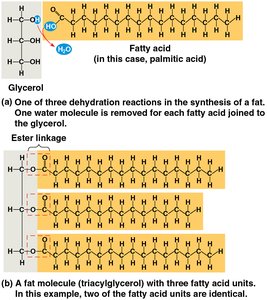
Fats are constructed from glycerol and fatty acids. Their main function is energy storage, but they also cushion organs and insulate the body.
Glycerol: Three-carbon alcohol with hydroxyl groups.
Fatty acid: Carboxyl group attached to a long carbon skeleton.
Triacylglycerol (triglyceride): Three fatty acids joined to glycerol by ester linkages.

Saturated, Unsaturated, and Trans Fats
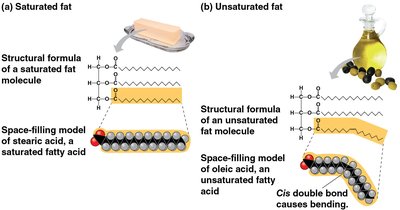
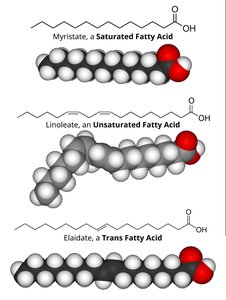
Fatty acids can be saturated (no double bonds) or unsaturated (one or more double bonds). Saturated fats are solid at room temperature, while unsaturated fats are liquid. Trans fats are artificially created and may be more harmful than saturated fats.
Saturated fatty acid: Maximum hydrogen atoms, no double bonds.
Unsaturated fatty acid: One or more double bonds, causes bending.
Trans fat: Unsaturated fat with trans double bonds, created by hydrogenation.
Phospholipids and Steroids
Phospholipids are major components of cell membranes, forming bilayers with hydrophobic tails and hydrophilic heads. Steroids, such as cholesterol, have a four-ring structure and are important in membranes and as hormone precursors.
Phospholipid: Two fatty acids and a phosphate group attached to glycerol.
Bilayer: Double-layered sheet formed by phospholipids in water.
Steroid: Lipid with four fused rings; includes cholesterol.
Proteins
Introduction to Proteins
Proteins are the most versatile macromolecules, performing a wide range of functions including catalysis, structure, transport, and signaling. They are polymers of amino acids.
Enzyme: Protein that acts as a catalyst for biochemical reactions.
Amino acid: Organic molecule with amino and carboxyl groups; monomer of proteins.
Polypeptide: Unbranched polymer of amino acids.
Protein Structure: Four Levels
Protein function depends on its structure, which is organized into four levels:
Primary structure: Unique sequence of amino acids.
Secondary structure: Coils and folds (α helix, β pleated sheet) formed by hydrogen bonds.
Tertiary structure: Overall shape due to interactions among R groups.
Quaternary structure: Association of multiple polypeptide chains.
Protein Denaturation and Disease
Proteins can lose their structure and function due to changes in environmental conditions, a process called denaturation. Misfolded proteins are associated with diseases such as Alzheimer's and sickle-cell disease.
Denaturation: Loss of protein's native structure and function.
Sickle-cell disease: Caused by a single amino acid substitution in hemoglobin.
Summary Table: Macromolecule Classes
Macromolecule | Polymer? | Monomer | Main Function | Example |
|---|---|---|---|---|
Carbohydrate | Yes | Monosaccharide | Energy, structure | Starch, cellulose |
Lipid | No | Fatty acid, glycerol | Energy storage, membranes | Fat, phospholipid, steroid |
Protein | Yes | Amino acid | Catalysis, structure, transport | Enzyme, collagen |
Nucleic Acid | Yes | Nucleotide | Information storage | DNA, RNA |
Additional info: Nucleic acids are not covered in detail in these notes but are also macromolecules and polymers, essential for genetic information storage and transfer.
