 Back
Study Guide: Chromosome Behavior, Mitosis, and Meiosis
Study Guide - Smart Notes
 Tailored notes based on your materials, expanded with key definitions, examples, and context.
Q1. At which stage of mitosis are chromosomes usually photographed in the preparation of a karyotype?
Background
Topic: Chromosome Structure and Karyotyping
This question tests your understanding of the stages of mitosis and when chromosomes are most visible for karyotype analysis.
Key Terms:
Karyotype: An ordered display of chromosomes from a cell.
Mitosis: The process of cell division in somatic cells.
Chromosome condensation: Chromosomes become highly condensed and visible under a microscope.
Step-by-Step Guidance
Recall the stages of mitosis: prophase, metaphase, anaphase, telophase.
Consider at which stage chromosomes are most condensed and aligned for easy visualization.
Think about why scientists need chromosomes to be clearly separated and organized for karyotyping.
Review the characteristics of each mitotic stage and identify when chromosomes are best suited for photography.
Try solving on your own before revealing the answer!
Final Answer: Metaphase
Chromosomes are most condensed and aligned at the metaphase plate during metaphase, making them ideal for karyotype analysis.
Q2. Which of the following is true of a species that has a chromosome number of 2n = 16?
Background
Topic: Chromosome Number and Ploidy
This question tests your understanding of diploid and haploid chromosome numbers and how they relate to homologous pairs and gametes.
Key Terms:
Diploid (2n): Two sets of chromosomes per cell.
Homologous pairs: Chromosome pairs with the same genes, one from each parent.
Gamete: A haploid reproductive cell (egg or sperm).
Step-by-Step Guidance
Identify what 2n = 16 means: the diploid number is 16.
Calculate the number of homologous pairs: divide 16 by 2.
Determine the chromosome number in gametes (haploid cells).
Consider what happens during the S phase regarding chromosome replication.
Try solving on your own before revealing the answer!
Final Answer: Each cell has eight homologous pairs.
With 2n = 16, there are 8 pairs of homologous chromosomes in diploid cells.
Q3. What is a major difference between mitosis and meiosis I?
Background
Topic: Cell Division - Mitosis vs. Meiosis
This question tests your understanding of the differences in chromosome separation during mitosis and meiosis I.
Key Terms:
Sister chromatids: Identical copies of a chromosome connected by a centromere.
Homologous chromosomes: Chromosomes with the same genes but possibly different alleles.
Meiosis I: The first division in meiosis, separating homologous chromosomes.
Step-by-Step Guidance
Recall what happens during mitosis: sister chromatids are separated.
Recall what happens during meiosis I: homologous chromosomes are separated.
Compare the genetic outcomes of mitosis and meiosis I.
Think about the implications for genetic diversity and cell type.
Try solving on your own before revealing the answer!
Final Answer: Sister chromatids separate in mitosis, and homologues separate in meiosis I.
This is the key distinction between the two processes.
Q4. Crossover, the exchange of segments of homologous chromosomes, takes place during which of the following processes?
Background
Topic: Genetic Recombination
This question tests your understanding of when crossing over occurs during meiosis.
Key Terms:
Crossing over: Exchange of genetic material between homologous chromosomes.
Synapsis: Pairing of homologous chromosomes during meiosis.
Meiosis: Cell division that produces gametes.
Step-by-Step Guidance
Recall the stages of meiosis where homologous chromosomes pair up.
Identify the process where crossing over occurs.
Consider the role of synapsis in facilitating crossover.
Think about the genetic consequences of crossing over.
Try solving on your own before revealing the answer!
Final Answer: Synapsis
Crossing over occurs during synapsis in prophase I of meiosis.
Q5. After telophase I of meiosis, the chromosomal makeup of each daughter cell is:
Background
Topic: Chromosome Number After Meiosis I
This question tests your understanding of chromosome composition and ploidy after the first meiotic division.
Key Terms:
Telophase I: The stage after homologous chromosomes have separated.
Haploid: One set of chromosomes per cell.
Chromatid: Each of the two identical halves of a replicated chromosome.
Step-by-Step Guidance
Recall what happens during meiosis I: homologous chromosomes are separated.
Determine the ploidy of the resulting cells after telophase I.
Consider the structure of chromosomes (single or double chromatids) at this stage.
Review the options and match them to the chromosomal makeup after telophase I.
Try solving on your own before revealing the answer!
Final Answer: Haploid, and the chromosomes are each composed of two chromatids.
After telophase I, cells are haploid and each chromosome consists of two sister chromatids.
Q6. Chromatids are separated from each other.
Background
Topic: Chromatid Separation in Cell Division
This question tests your understanding of when sister chromatids are separated during mitosis and meiosis.
Key Terms:
Sister chromatids: Identical copies of a chromosome.
Mitosis: Division of somatic cells.
Meiosis I and II: Two divisions in meiosis, with chromatids separating in meiosis II.
Step-by-Step Guidance
Recall the stages of mitosis and meiosis where chromatids are separated.
Identify which divisions involve separation of sister chromatids.
Compare mitosis, meiosis I, and meiosis II in terms of chromatid behavior.
Review the answer choices and match them to the correct processes.
Try solving on your own before revealing the answer!
Final Answer: The statement is true for mitosis and meiosis II.
Chromatids are separated during mitosis and meiosis II, but not meiosis I.
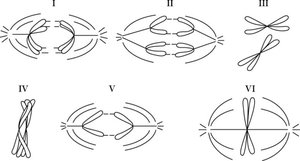
Q7. Which diagram represents anaphase I of meiosis?
Background
Topic: Stages of Meiosis
This question tests your ability to identify the correct stage of meiosis based on chromosome movement.
Key Terms:
Anaphase I: Homologous chromosomes are pulled to opposite poles.
Meiosis: Cell division that produces gametes.
Homologous chromosomes: Chromosome pairs with the same genes.
Step-by-Step Guidance
Review the diagrams and identify which show homologous chromosomes separating.
Recall that in anaphase I, homologous chromosomes (not sister chromatids) move apart.
Compare the diagrams to the description of anaphase I.
Look for the diagram where chromosome pairs are moving to opposite sides.
Try solving on your own before revealing the answer!
Final Answer: Diagram I represents anaphase I of meiosis.
In diagram I, homologous chromosomes are being pulled to opposite poles, characteristic of anaphase I.
Q8. The nuclear division that reduces the chromosome number from diploid to haploid is called meiosis.
Background
Topic: Chromosome Reduction in Meiosis
This question tests your understanding of the process that reduces chromosome number in gamete formation.
Key Terms:
Diploid: Two sets of chromosomes.
Haploid: One set of chromosomes.
Meiosis: Cell division that produces haploid gametes.
Step-by-Step Guidance
Recall the purpose of meiosis in sexual reproduction.
Identify which division reduces chromosome number.
Consider the difference between mitosis and meiosis in terms of chromosome number.
Review the terminology for diploid and haploid.
Try solving on your own before revealing the answer!
Final Answer: Meiosis
Meiosis is the nuclear division that reduces chromosome number from diploid to haploid.
Q9. In a life cycle the zygote always has a diploid number of chromosomes.
Background
Topic: Fertilization and Chromosome Number
This question tests your understanding of chromosome number in the zygote after fertilization.
Key Terms:
Zygote: The cell formed by the fusion of two gametes.
Diploid: Two sets of chromosomes.
Gamete: Haploid reproductive cell.
Step-by-Step Guidance
Recall what happens during fertilization: fusion of two haploid gametes.
Determine the chromosome number in the resulting zygote.
Consider the implications for the organism's life cycle.
Review the terminology for diploid and haploid.
Try solving on your own before revealing the answer!
Final Answer: Diploid
The zygote always has a diploid number of chromosomes after fertilization.
Q10. In the animal life cycle meiosis results in haploid gametes.
Background
Topic: Gamete Formation in Animals
This question tests your understanding of the outcome of meiosis in animals.
Key Terms:
Meiosis: Cell division that produces gametes.
Gamete: Haploid reproductive cell.
Haploid: One set of chromosomes.
Step-by-Step Guidance
Recall the purpose of meiosis in the animal life cycle.
Identify the chromosome number in gametes produced by meiosis.
Consider the role of gametes in sexual reproduction.
Review the terminology for haploid and diploid.
Try solving on your own before revealing the answer!
Final Answer: Haploid gametes
Meiosis produces haploid gametes in animals.
Q11. A pair of chromosomes having the same length and centromere position are called homologous chromosomes.
Background
Topic: Chromosome Structure
This question tests your understanding of homologous chromosomes and their characteristics.
Key Terms:
Homologous chromosomes: Chromosome pairs with the same genes, length, and centromere position.
Centromere: The region where sister chromatids are joined.
Chromosome: DNA molecule with genetic information.
Step-by-Step Guidance
Recall the definition of homologous chromosomes.
Identify the features that distinguish homologous chromosomes from others.
Consider the role of homologous chromosomes in meiosis.
Review the terminology for chromosome structure.
Try solving on your own before revealing the answer!
Final Answer: Homologous chromosomes
Chromosomes with the same length and centromere position are homologous chromosomes.
Q12. The zygote is a product of fertilization and is always diploid.
Background
Topic: Fertilization and Chromosome Number
This question tests your understanding of the chromosome number in the zygote after fertilization.
Key Terms:
Zygote: The cell formed by the fusion of two gametes.
Diploid: Two sets of chromosomes.
Fertilization: Fusion of gametes.
Step-by-Step Guidance
Recall what happens during fertilization: fusion of two haploid gametes.
Determine the chromosome number in the resulting zygote.
Consider the implications for the organism's life cycle.
Review the terminology for diploid and haploid.
Try solving on your own before revealing the answer!
Final Answer: Diploid
The zygote is always diploid after fertilization.
Q13. In asexual reproduction, a single individual passes genes to its offspring without the fusion of gametes.
Background
Topic: Types of Reproduction
This question tests your understanding of asexual reproduction and its characteristics.
Key Terms:
Asexual reproduction: Reproduction without gamete fusion.
Gamete: Haploid reproductive cell.
Offspring: The next generation produced by reproduction.
Step-by-Step Guidance
Recall the definition of asexual reproduction.
Identify the role of gametes in sexual vs. asexual reproduction.
Consider the genetic consequences of asexual reproduction.
Review the terminology for reproduction types.
Try solving on your own before revealing the answer!
Final Answer: Asexual reproduction
A single individual passes genes to offspring without gamete fusion in asexual reproduction.
Q14. A karyotype is an ordered display of the pairs of chromosomes from a cell.
Background
Topic: Chromosome Analysis
This question tests your understanding of what a karyotype is and its purpose.
Key Terms:
Karyotype: Ordered display of chromosomes.
Chromosome: DNA molecule with genetic information.
Cell: Basic unit of life.
Step-by-Step Guidance
Recall the definition of a karyotype.
Identify the purpose of a karyotype in genetics.
Consider how chromosomes are arranged in a karyotype.
Review the terminology for chromosome analysis.
Try solving on your own before revealing the answer!
Final Answer: Karyotype
A karyotype is an ordered display of chromosome pairs from a cell.
Q15. The sex chromosomes, which determine the sex of the individual, are called X and Y. In humans the remaining 22 pairs of chromosomes that do not determine sex are called autosomes.
Background
Topic: Chromosome Classification
This question tests your understanding of sex chromosomes and autosomes in humans.
Key Terms:
Sex chromosomes: X and Y chromosomes determining sex.
Autosomes: Non-sex chromosomes.
Chromosome: DNA molecule with genetic information.
Step-by-Step Guidance
Recall the definition of sex chromosomes and autosomes.
Identify the number of autosome pairs in humans.
Consider the role of sex chromosomes in determining sex.
Review the terminology for chromosome classification.
Try solving on your own before revealing the answer!
Final Answer: X and Y are sex chromosomes; the other 22 pairs are autosomes.
Sex chromosomes determine sex, autosomes do not.
Q16. Each replicated chromosome consists of two identical sister chromatids.
Background
Topic: Chromosome Replication
This question tests your understanding of chromosome structure after replication.
Key Terms:
Replicated chromosome: Chromosome after DNA replication.
Sister chromatids: Identical copies joined by a centromere.
Centromere: Region joining sister chromatids.
Step-by-Step Guidance
Recall what happens during DNA replication.
Identify the structure of a replicated chromosome.
Consider the role of sister chromatids in cell division.
Review the terminology for chromosome structure.
Try solving on your own before revealing the answer!
Final Answer: Sister chromatids
Each replicated chromosome consists of two identical sister chromatids.
Q17. Indicate whether the following statements regarding the role of meiosis are true (T) or false (F)
Background
Topic: Role of Meiosis in Life Cycles
This question tests your understanding of the functions and outcomes of meiosis.
Key Terms:
Meiosis: Cell division producing haploid cells.
Diploid: Two sets of chromosomes.
Somatic cells: Body cells, not gametes.
Step-by-Step Guidance
Review each statement about meiosis and its role in animals.
Recall the outcomes of meiosis: formation of gametes, haploid cells, and genetic diversity.
Identify whether meiosis occurs in somatic cells or only in germ cells.
Consider the number and ploidy of cells produced by meiosis.
Try solving on your own before revealing the answer!
Final Answer:
In animals, meiosis forms gametes that fuse to form a zygote: True
Meiosis forms haploid cells in the life cycle of animals: True
Meiosis occurs in somatic cells: False
Meiosis produces four diploid cells over two divisions: False (should be four haploid cells)
Q18. Please fill in the following table (Mitosis, Meiosis I, Meiosis II)
Background
Topic: Comparison of Mitosis and Meiosis
This question tests your ability to distinguish between the processes and outcomes of mitosis, meiosis I, and meiosis II.
Key Terms:
Mitosis: Division of somatic cells.
Meiosis I: First division in meiosis.
Meiosis II: Second division in meiosis.
Haploid/Diploid: Chromosome number in cells.
Crossing over: Exchange of genetic material.
Step-by-Step Guidance
Review the characteristics of mitosis, meiosis I, and meiosis II.
Identify which processes involve separation of sister chromatids and homologous chromosomes.
Determine the ploidy of cells resulting from each process.
Recall where crossing over occurs and which cells are affected.
Try solving on your own before revealing the answer!
Final Answer:
Sister Chromatids separate: Yes (Mitosis), No (Meiosis I), Yes (Meiosis II)
Homologous chromosomes separate: No (Mitosis), Yes (Meiosis I), No (Meiosis II)
Results in haploid cells: Yes if starting from haploid parent (Mitosis), Yes (Meiosis I), Yes (Meiosis II)
Results in diploid cells: Yes (Mitosis), No (Meiosis I), No (Meiosis II)
Crossing over occurs: No (Mitosis), Yes (Meiosis I), No (Meiosis II)
Occurs in somatic cells: Yes (Mitosis), No (Meiosis I), No (Meiosis II)
Q19. Identify the following phases of meiosis (Metaphase I, Anaphase II, Anaphase I, Telophase I)
Background
Topic: Phases of Meiosis
This question tests your ability to recognize and distinguish the stages of meiosis based on chromosome arrangement and movement.
Key Terms:
Metaphase I: Homologous chromosomes align at the metaphase plate.
Anaphase I: Homologous chromosomes separate.
Anaphase II: Sister chromatids separate.
Telophase I: Chromosomes reach the poles and cells divide.
Step-by-Step Guidance
Review the diagrams and identify the arrangement of chromosomes in each phase.
Recall the defining features of each phase: alignment, separation, and division.
Match the visual cues in the diagrams to the descriptions of each phase.
Look for key differences between metaphase, anaphase, and telophase stages.
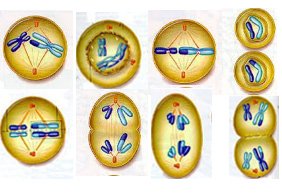
Try solving on your own before revealing the answer!
Final Answer:
Metaphase I: Chromosomes aligned at the metaphase plate in pairs.
Anaphase I: Homologous chromosomes moving apart.
Anaphase II: Sister chromatids moving apart.
Telophase I: Chromosomes at poles, cell division occurring.
