 Back
Study Guide: Evolution, Population Genetics, Speciation, and the History of Life (Chapters 22–25)
Study Guide - Smart Notes
 Tailored notes based on your materials, expanded with key definitions, examples, and context.
Evolution: The Darwinian Revolution and Evidence for Evolution
Historical Roots of Evolutionary Theory
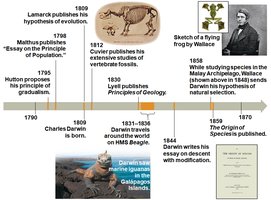
The development of evolutionary theory was influenced by various scientists and discoveries. Charles Darwin's ideas challenged traditional views of a young Earth inhabited by unchanging species, building on earlier work by Lamarck, Lyell, and others.
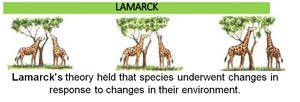
Lamarck's Theory: Proposed that species change in response to their environment through the inheritance of acquired traits.
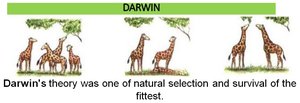
Darwin's Theory: Introduced natural selection, where individuals with favorable traits survive and reproduce, leading to adaptation.
Key Events: The timeline of discoveries and publications highlights the progression of evolutionary thought.
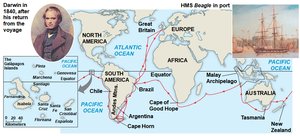
Example: Darwin's voyage on the HMS Beagle provided critical observations for his theory.
Fossils and the Study of Strata
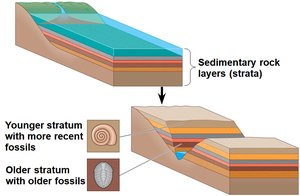
Fossils are the preserved remains or traces of organisms from the past, typically found in sedimentary rock layers called strata. The study of fossils provides evidence for change over time and the succession of life forms.
Strata: Layers of sedimentary rock, with older layers beneath younger ones.
Fossil Evidence: Fossils in different strata show the progression and extinction of species.
Artificial Selection, Natural Selection, and Adaptation
Darwin observed that humans modify species through artificial selection, while natural selection occurs in nature. Adaptation is the process by which organisms become better suited to their environment.
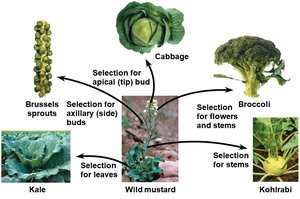
Artificial Selection: Humans breed organisms for desired traits.
Natural Selection: Environmental pressures favor certain traits, leading to adaptation.
Example: Wild mustard has been bred into various vegetables through artificial selection.
Darwin's Observations and Inferences
Darwin made two key observations and drew two inferences about natural selection:
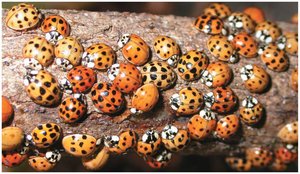
Observation 1: Members of a population vary in their inherited traits.
Observation 2: All species produce more offspring than the environment can support.
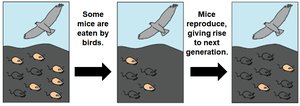
Inference 1: Individuals with advantageous traits are more likely to survive and reproduce.
Inference 2: Favorable traits accumulate in the population over generations.
Homology and Comparative Anatomy
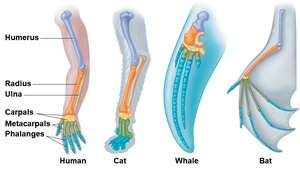
Homology refers to similarities resulting from common ancestry. Homologous structures are anatomical features that are similar in different species due to shared ancestry, while analogous structures have similar functions but different evolutionary origins.
Homologous Structures: Similar anatomy, different uses (e.g., forelimbs of humans, cats, whales, bats).
Analogous Structures: Different anatomy, similar uses (e.g., wings of insects and birds).
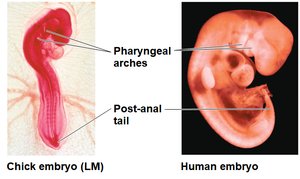
Comparative Embryology: Reveals homologies not visible in adults, such as post-anal tails and pharyngeal arches in vertebrate embryos.
Vestigial Structures: Remnants of features that served functions in ancestors.
Biogeography and Endemic Species
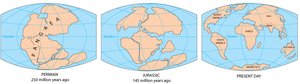
Biogeography is the study of the geographic distribution of species. The movement of continents (continental drift) and the presence of endemic species on islands provide evidence for evolution and speciation.
Pangaea: Earth's continents were once joined, affecting species distribution.
Endemic Species: Species found only in specific locations, often on islands.
Example: Island species are closely related to mainland species but have adapted to unique environments.
Population Genetics and Microevolution
Microevolution and Mechanisms of Allele Frequency Change
Microevolution is the change in allele frequencies within a population over generations. The main mechanisms are natural selection, genetic drift, and gene flow.
Natural Selection: Consistently leads to adaptive evolution.
Genetic Drift: Random changes in allele frequencies, especially in small populations.
Gene Flow: Movement of alleles between populations.
Genetic Variation and Mutation
Genetic variation arises from mutations, which can be harmful, neutral, or beneficial. Only genetically determined variation affects evolution.
Point Mutations: Changes in a single nucleotide; effects depend on location and redundancy in the genetic code.
Environmental Influence: Some phenotypic variation is due to environmental factors (e.g., temperature-dependent sex determination in alligators).
The Hardy-Weinberg Principle
The Hardy-Weinberg principle describes a population that is not evolving. It provides a mathematical model for allele and genotype frequencies:
Equation:
p: Frequency of the dominant allele
q: Frequency of the recessive allele
p^2: Homozygous dominant genotype frequency
q^2: Homozygous recessive genotype frequency
2pq: Heterozygous genotype frequency
Example: Calculating eye color frequencies in a population
Genetic Drift: Founder Effect and Bottleneck Effect
Genetic drift can lead to significant changes in allele frequencies due to random events.
Founder Effect: Occurs when a few individuals establish a new population.
Bottleneck Effect: Occurs when a population is drastically reduced in size.
Relative Fitness and Types of Selection
Relative fitness measures the reproductive success of a genotype compared to others. Natural selection can take several forms:
Directional Selection: Favors one extreme phenotype.
Disruptive Selection: Favors both extreme phenotypes.
Stabilizing Selection: Favors intermediate phenotypes.
Sexual Selection and Frequency-Dependent Selection
Sexual selection favors traits that increase mating success, often resulting in sexual dimorphism. Frequency-dependent selection occurs when the fitness of a phenotype depends on its frequency in the population.
Example: Scale-eating fish with right- or left-mouthed morphs.
Speciation: The Origin of Species
Reproductive Isolation and Barriers
Speciation is the process by which one species splits into two or more species. Reproductive isolation prevents gene flow between populations and can be classified as prezygotic or postzygotic barriers.
Prezygotic Barriers: Prevent fertilization (habitat, temporal, behavioral, mechanical, gametic isolation).
Postzygotic Barriers: Prevent viable, fertile offspring (reduced hybrid viability, reduced hybrid fertility, hybrid breakdown).
Modes of Speciation
Speciation can occur with or without geographic separation:
Allopatric Speciation: Geographic isolation leads to divergence.
Sympatric Speciation: Occurs without geographic isolation, often through polyploidy, sexual selection, or habitat differentiation.
Polyploidy: The formation of new species through chromosome duplication.
The History of Life on Earth
Origin of Life and Early Earth
The Miller-Urey experiment demonstrated that organic molecules could form under early Earth conditions. Meteorites may have contributed additional organic molecules.
Stromatolites: Oldest known fossils, formed by bacterial mats.
Oxygen Revolution: Oxygen produced by photosynthesis led to major changes in Earth's atmosphere and extinction of many prokaryotes.
Endosymbiosis: Eukaryotes originated when a prokaryote engulfed another cell, leading to mitochondria and chloroplasts.
Major Events in the History of Life
The geologic record is divided into eons, eras, and periods. The Cambrian explosion marked the rapid diversification of animal life. Continental drift and mass extinctions have shaped the diversity of life.
Adaptive Radiation: Rapid evolution of new species following mass extinctions or the colonization of new regions.
Heterochrony: Changes in the timing of developmental events can lead to new body forms.
Classification Tools: Dichotomous Keys
Dichotomous Keys in Biology
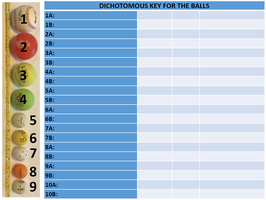
Dichotomous keys are tools used to identify organisms or objects based on a series of choices that lead to the correct identification. They are commonly used in taxonomy and classification exercises.
Structure: Each step presents two alternatives (A or B), guiding the user to the next step or the final identification.
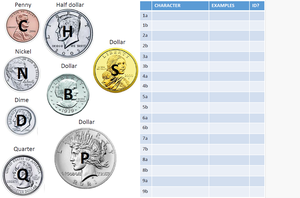
Example: In-class exercises with coins and balls demonstrate the use of dichotomous keys for classification.
 Additional info: This study guide covers the main concepts and figures from Chapters 22–25, including evolution, population genetics, speciation, and the history of life. It is structured to provide clear explanations, definitions, examples, and relevant diagrams for exam preparation.
