 Back
Study Guide: Lipids and Proteins – Structure, Function, and Biological Importance
Study Guide - Smart Notes
 Tailored notes based on your materials, expanded with key definitions, examples, and context.
Lipids
General Characteristics of Lipids
Lipids are a diverse group of hydrophobic molecules that play essential roles in biological systems. Unlike true polymers, lipids are mostly hydrocarbons and are not classified as macromolecules.
Hydrophobic nature: Lipids do not mix well with water due to their nonpolar hydrocarbon chains.
Major types: The most biologically important lipids are fats (triglycerides), phospholipids, and steroids.
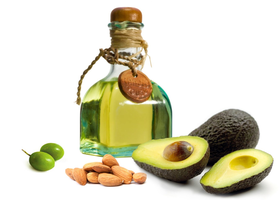
Fats: Saturated vs. Unsaturated
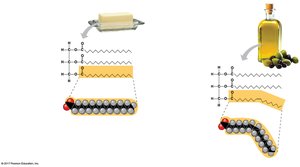
Fats are composed of glycerol and fatty acids. The structure of fatty acids determines whether a fat is saturated or unsaturated.
Saturated fats: Have no double bonds in their fatty acid chains, resulting in straight chains that pack tightly. Typically solid at room temperature.
Unsaturated fats: Contain one or more double bonds, causing bends (kinks) in the chain. These are usually liquid at room temperature.
Phospholipids
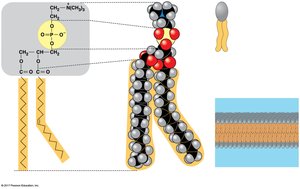
Phospholipids are key components of cell membranes. They consist of a glycerol backbone, two fatty acid tails (hydrophobic), and a phosphate group (hydrophilic).
Amphiphilic nature: Phospholipids have both hydrophobic and hydrophilic regions, making them amphipathic.
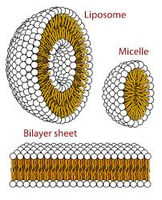
Self-assembly: When mixed with water, phospholipids spontaneously form bilayers, micelles, or liposomes, which are fundamental to biological membranes.
Steroids
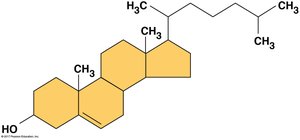
Steroids are lipids characterized by a carbon skeleton consisting of four fused rings.
Cholesterol: A major component of animal cell membranes, regulating membrane fluidity and serving as a precursor for other steroids.
Other steroids: Include hormones such as estrogen and testosterone.
Proteins
Functions of Proteins
Proteins are versatile macromolecules that perform a wide range of functions in living organisms.
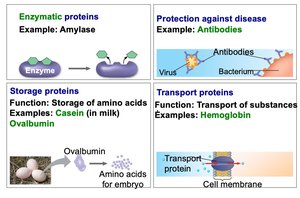
Enzymatic proteins: Catalyze biochemical reactions (e.g., amylase).
Defensive proteins: Protect against disease (e.g., antibodies).
Storage proteins: Store amino acids (e.g., casein, ovalbumin).
Transport proteins: Move substances across membranes (e.g., hemoglobin).
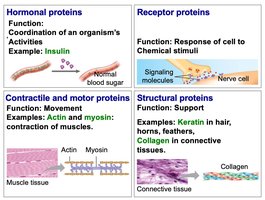
Hormonal proteins: Coordinate activities (e.g., insulin).
Receptor proteins: Respond to chemical stimuli.
Contractile and motor proteins: Enable movement (e.g., actin, myosin).
Structural proteins: Provide support (e.g., keratin, collagen).
Structure of Proteins
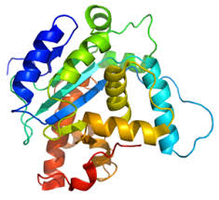
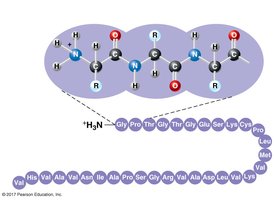
Proteins are polymers built from a set of 20 amino acids, forming unbranched polypeptide chains.
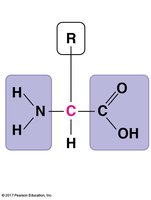
Amino acids: Each amino acid has a central (α) carbon, an amino group, a carboxyl group, and a unique side chain (R group).
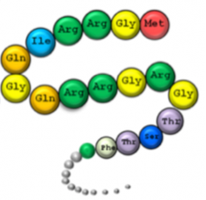
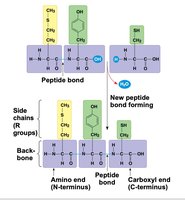
Polypeptides: Amino acids are linked by peptide bonds, forming a unique sequence from N-terminus to C-terminus.
Amino Acid Classification
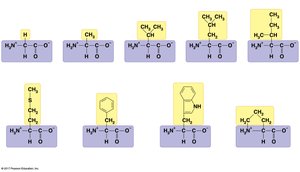
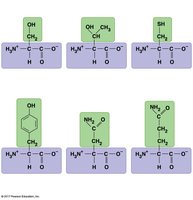
Amino acids are classified based on the properties of their side chains (R groups):
Nonpolar (hydrophobic): Glycine, Alanine, Valine, Leucine, Isoleucine, Methionine, Phenylalanine, Tryptophan, Proline
Polar (hydrophilic, not charged): Serine, Threonine, Cysteine, Tyrosine, Asparagine, Glutamine
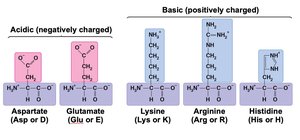
Electrically charged (hydrophilic): Acidic (Aspartate, Glutamate), Basic (Lysine, Arginine, Histidine)
Peptide Bond Formation
Peptide bonds are formed by dehydration reactions between the amino group of one amino acid and the carboxyl group of another.
Directionality: Polypeptides have an N-terminus (amino end) and a C-terminus (carboxyl end).
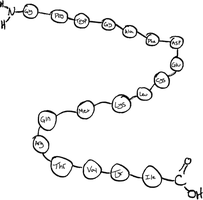
Unique sequence: The order of amino acids determines protein structure and function.
Levels of Protein Structure
Protein structure is organized into four hierarchical levels:
Primary structure: The unique sequence of amino acids in a polypeptide.
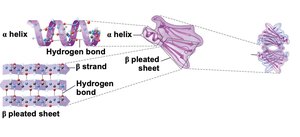
Secondary structure: Local folding into α-helices and β-pleated sheets, stabilized by hydrogen bonds.
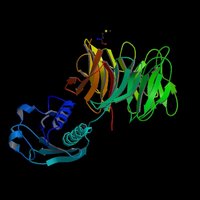
Tertiary structure: Overall three-dimensional shape formed by interactions among side chains.
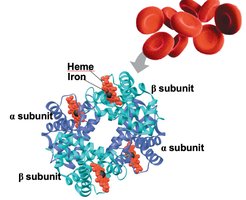
Quaternary structure: Association of multiple polypeptide chains (subunits) to form a functional protein.
Sickle-Cell Disease: A Case Study in Protein Structure
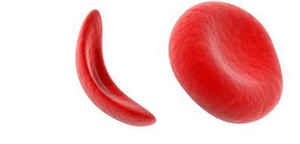
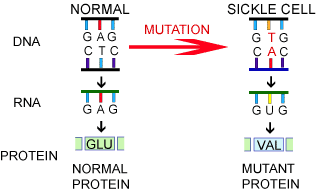
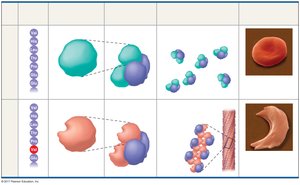
Sickle-cell disease is an inherited blood disorder caused by a single amino acid substitution in the hemoglobin protein.
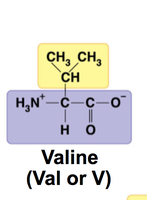
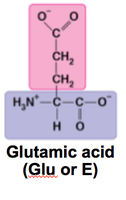
Mutation: Glutamate (hydrophilic) is replaced by valine (hydrophobic) in the β subunit of hemoglobin.
Effect: Abnormal hemoglobin aggregates, deforming red blood cells into a sickle shape and reducing oxygen-carrying capacity.
Protein Folding and Disease
Proper protein folding is essential for function. Misfolded proteins are associated with diseases such as Alzheimer’s, Parkinson’s, and Mad Cow Disease.
Chaperones: Cellular proteins that assist in proper folding.
Consequences: Misfolded proteins can aggregate and disrupt cellular function.
Additional info: Protein folding is a highly regulated process, and errors can have severe physiological consequences.
