 Back
Study Guide: Macromolecules – Structure and Function in Biology
Study Guide - Smart Notes
 Tailored notes based on your materials, expanded with key definitions, examples, and context.
Macromolecules: Life’s First Steps
Overview of Biomolecules
Biomolecules are essential for all living cells and are classified into four main types: proteins, carbohydrates, nucleic acids, and lipids. These molecules are built on a framework of covalently bonded carbon atoms, which allows for diverse structures and functions.
Proteins, carbohydrates, and nucleic acids are polymers, meaning they are composed of long chains of repeating units called monomers.
Lipids are not polymers because their structure is not composed of a chain of monomers.
Polymer Formation and Breakdown
The formation and breakdown of macromolecules involve two key chemical reactions:
Dehydration synthesis: Removes a water molecule to form a new bond, creating longer polymers.
Hydrolysis: Adds a water molecule, breaking a bond and resulting in shorter polymers.
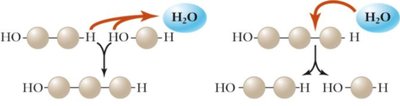
Diversity of Polymers
Cells contain thousands of different macromolecules, and small variations in polymers, especially in DNA and proteins, explain differences among individuals. There are 40-50 common monomers, with some rare ones.
Monomers are the building blocks of polymers.
Polymers are formed by chemical bonds through chemical reactions.
Carbohydrates
Structure and Function
Carbohydrates are versatile biomolecules that vary in size, shape, and function. They serve as short-term energy storage and are the cell’s direct fuel to make ATP. Their general formula is carbon, hydrogen, and oxygen in a 1:2:1 ratio.
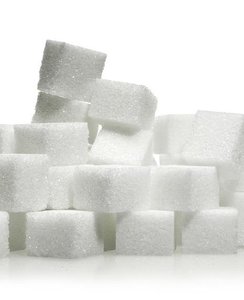
Monosaccharides: Simple sugars, sweet-tasting, soluble in water.
Disaccharides: Made up of two monosaccharides joined together.
Polysaccharides: Polymers formed by combining many monosaccharide molecules; do not taste sweet and are not soluble in water.

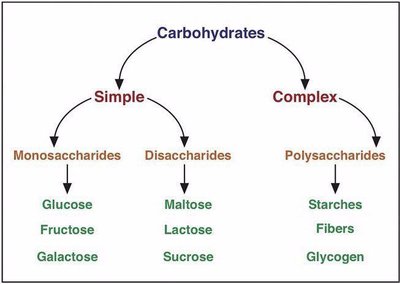
Monosaccharides
Monosaccharides are the simplest form of carbohydrates, typically following the formula CH2O.
Glucose (C6H12O6) is the most common monosaccharide.
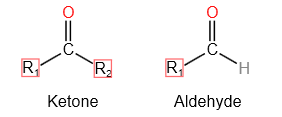
They contain a signature carbonyl group (either ketone or aldehyde) and multiple hydroxyl groups (-OH).
Names for sugars generally end in -ose.
Major energy source for cells; the carbon skeleton serves as a building block for other molecules.
Disaccharides
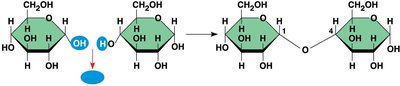
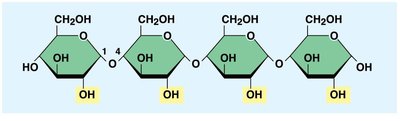
Disaccharides are formed when a dehydration reaction joins two monosaccharides, creating a covalent bond called a glycosidic linkage.
Example: Formation of maltose from two glucose molecules.
Polysaccharides
Polysaccharides are polymers of sugars with storage and structural roles.
Storage polysaccharides: Allow for stockpiling of surplus glucose, which is later hydrolyzed for use as glucose. Animals store glycogen for about 24 hours.
Structural polysaccharides: Cellulose in plant cells (1-4 glycosidic linkages, different ring structure), chitin in exoskeletons and fungal cell walls.
Lipids
Structure and Properties
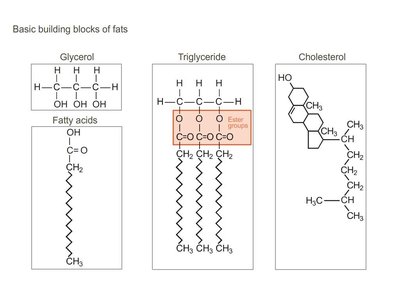
Lipids are a diverse group of biomolecules, including fats, oils, and steroids. They are hydrophobic and insoluble in water due to their nonpolar C—H bonds.
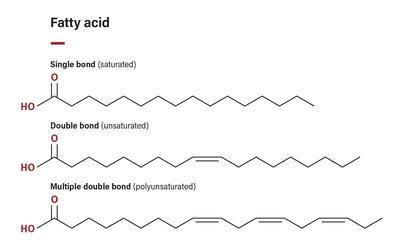
Fatty acids are usually 16-18 carbon atoms in length, with a hydrocarbon chain.
Triglycerides (fats and oils) are composed of three fatty acid molecules linked to a glycerol molecule.
Provide long-term energy storage and insulation.
Saturated vs Unsaturated Fats
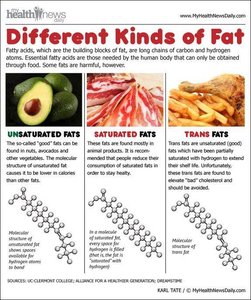
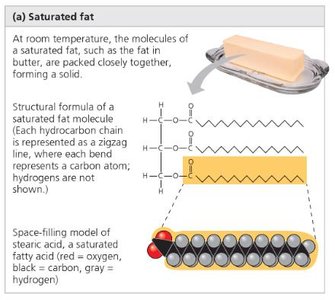
Saturated fats: No double bonds in hydrocarbon chains; molecules are packed closely together, forming solids at room temperature (e.g., butter).
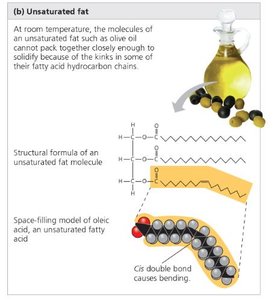
Unsaturated fats: One or more double bonds; molecules cannot pack closely, remain liquid at room temperature (e.g., olive oil).
Trans fats: Produced by hydrogenating unsaturated fats, which can lead to health risks.
Hydrogenated Fats
Hydrogenation is the process of adding hydrogen to unsaturated fats, converting them to saturated fats or trans fats.
Used in food processing to make fats solid at room temperature.
Trans fats are associated with increased risk of cardiovascular disease.
Phospholipids
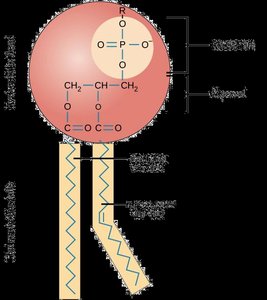
Phospholipids are composed of a phosphate group, glycerol, and two fatty acids.
Have a hydrophilic (polar) head and a hydrophobic (nonpolar) tail.
Main component of all cellular membranes.

Steroids and Waxes
Steroids: Composed of four hydrocarbon rings and fatty acids; include hormones and cholesterol.
Waxes: Hydrocarbon chain with an –OH group and a fatty acid; found in beeswax, lanolin, and plant leaf coatings.
Summary Table: Macromolecules of Life
Macromolecule | Monomer | Polymer | Bond Type | Main Function |
|---|---|---|---|---|
Carbohydrates | Monosaccharide | Polysaccharide | Glycosidic linkage | Energy storage, structure |
Proteins | Amino acid | Polypeptide | Peptide bond | Enzymes, structure, transport |
Nucleic Acids | Nucleotide | DNA/RNA | Phosphodiester bond | Genetic information |
Lipids | Fatty acid, glycerol | Triglyceride, phospholipid, steroid | Ester bond | Energy storage, membranes, hormones |
Key Equations
Dehydration Synthesis:
Hydrolysis:
Additional info:
Macromolecules are covered in detail in General Biology chapters on biomolecules, cell components, membranes, energy, and metabolism.
Understanding the structure and function of macromolecules is foundational for topics such as cell biology, genetics, and physiology.
