 Back
BackStudy Guide: Plant Diversity, Dichotomous Keys, and Stomatal Regulation
Study Guide - Smart Notes
 Tailored notes based on your materials, expanded with key definitions, examples, and context.
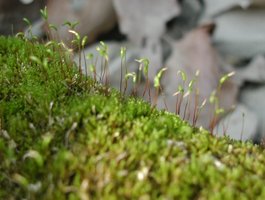
Q1. Why must nonvascular plants remain small? What environments do you suggest they live in and why?
Background
Topic: Plant Diversity – Nonvascular Plants
This question explores the adaptations and limitations of nonvascular plants (such as mosses, liverworts, and hornworts) and their ecological niches.
Key Terms and Concepts:
Nonvascular plants: Plants lacking specialized vascular tissue (xylem and phloem) for transporting water and nutrients.
Vascular tissue: Specialized cells that transport water, minerals, and food throughout the plant.
Habitat: The natural environment where an organism lives.
Step-by-Step Guidance
Recall that nonvascular plants lack xylem and phloem, so they cannot efficiently transport water and nutrients over long distances.
Think about how this limitation affects their size and structure. Consider why these plants are usually small and grow close to the ground.
Consider the types of environments where water is readily available at the surface, and why these would be suitable for nonvascular plants.
Reflect on how the absence of vascular tissue influences their ability to colonize different habitats, especially those with varying moisture levels.
Try solving on your own before revealing the answer!
Q2. Place the following specimens into one of the three broad categories of land plants: Nonvascular, Seedless Vascular, or Seed Plants. Draw representative organisms of each.
Background
Topic: Classification of Plant Groups
This question tests your ability to classify plants based on their morphological traits and evolutionary relationships.
Key Terms and Concepts:
Nonvascular plants: Liverworts, hornworts, mosses
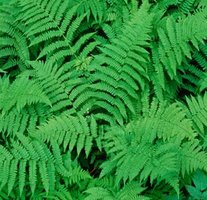
Seedless vascular plants: Ferns, horsetails, whisk ferns, lycophytes
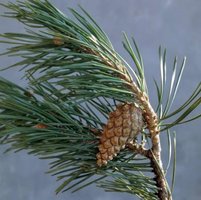
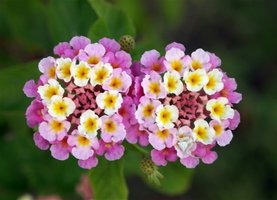
Seed plants: Gymnosperms (cycads, ginkgoes, conifers, gnetophytes) and angiosperms (flowering plants)
Step-by-Step Guidance
Review the list of specimens: Liverwort, Moss, Psilotum/Whisk fern, Fern, Lycopoda/Club Moss, Spruce, Pine, Ginkgo, Flowering Plants.
Recall the defining features of each plant group (presence/absence of vascular tissue, seeds, flowers).
Assign each specimen to the correct category based on these features.
For each category, sketch or describe a representative organism, noting key features (e.g., leaf shape, reproductive structures).
Try solving on your own before revealing the answer!
Q3. Use the Insect Dichotomous Key to identify the order of three insects and list the features you used in the key.
Background
Topic: Dichotomous Keys and Insect Identification
This question tests your ability to use a dichotomous key for classifying insects based on observable anatomical features.
Key Terms and Concepts:
Dichotomous key: A tool that allows the identification of organisms by making a series of choices between two alternatives.
Order: A taxonomic rank used in the classification of organisms.
Step-by-Step Guidance
Examine each insect specimen and note key features such as wing type, presence or absence of wings, and other distinguishing characteristics.
Start at the first couplet of the dichotomous key and make a choice based on the observed features.
Continue following the key, making choices at each couplet, until you reach an order name.
Record the order for each insect and the features that led you to your conclusion.
Try solving on your own before revealing the answer!
Q4. Create a dichotomous key for the major groups of plants: Mosses, Ferns, Gymnosperms, and Angiosperms.
Background
Topic: Dichotomous Keys for Plant Groups
This question asks you to synthesize your understanding of plant characteristics to construct a simple dichotomous key for major plant groups.
Key Terms and Concepts:
Dichotomous key: A tool for identifying organisms by making a series of choices between two alternatives.
Mosses: Nonvascular, small, no seeds or flowers.
Ferns: Vascular, seedless, reproduce via spores.
Gymnosperms: Vascular, seeds not enclosed in fruit, no flowers.
Angiosperms: Vascular, seeds enclosed in fruit, have flowers.
Step-by-Step Guidance
List the major distinguishing features for each group (vascular tissue, seeds, flowers).
Start your key with a broad distinction (e.g., vascular vs. nonvascular).
Continue splitting groups based on the presence of seeds, then flowers.
Write out your dichotomous key as a series of couplets, each with two choices.
Try solving on your own before revealing the answer!
Q5. Develop a hypothesis to predict differences in stomatal densities between leaves of tropical, desert, and temperate zone plants. Why are stomata typically found on the underside of leaves?
Background
Topic: Stomatal Regulation of Water Loss
This question explores plant adaptations to different environments, focusing on stomatal density and placement as mechanisms for regulating water loss and gas exchange.
Key Terms and Concepts:
Stomata: Pores on the leaf surface that regulate gas exchange and water loss.
Stomatal density: The number of stomata per unit area of leaf.
Null hypothesis: A statement that there is no difference in stomatal densities between groups.
Alternative hypothesis: A statement that there is a difference in stomatal densities between groups.
Step-by-Step Guidance
Consider how environmental factors (humidity, temperature, water availability) might influence the need for stomata in different plant types.
Formulate a null hypothesis (no difference in stomatal density) and an alternative hypothesis (predicting a difference based on environment).
Think about why stomata are usually found on the underside of leaves (e.g., to reduce water loss due to lower exposure to sunlight and wind).
Relate your predictions to the environments in which the plants evolved (tropical, desert, temperate).
Try solving on your own before revealing the answer!
