 Back
BackStudy Guide: Respiratory and Circulatory Systems
Study Guide - Smart Notes
 Tailored notes based on your materials, expanded with key definitions, examples, and context.
Respiratory System
Functions of the Respiratory System
The respiratory system is essential for gas exchange, protection, and vocalization in humans. It enables the intake of oxygen and the removal of carbon dioxide, while also defending against pathogens and facilitating speech.
Gas Exchange: Oxygen (O2) is absorbed from the atmosphere into the blood, and carbon dioxide (CO2) is expelled.
Protection: The respiratory tract filters out pathogens and irritating substances.
Vocalization: Air movement through the larynx enables sound production.
Mechanics of Breathing
Breathing consists of two main phases: inspiration and expiration. These processes involve the diaphragm and intercostal muscles, which alter the volume of the thoracic cavity to facilitate airflow.
Inspiration: The diaphragm contracts and moves downward, increasing the chest cavity's space and allowing the lungs to expand.
Expiration: The diaphragm relaxes and moves upward, decreasing the chest cavity's space and causing the lungs to relax.
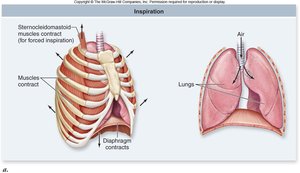
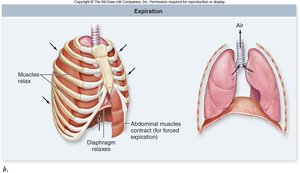
Respiratory System Anatomy and Airflow
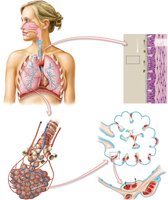
The pathway of air through the respiratory system involves several structures, each with a specific function in filtering, humidifying, and conducting air to the lungs.
Nostrils: Entry point for air.
Trachea: Also known as the "windpipe," carries air to the lungs.
Alveoli: Tiny air sacs where gas exchange occurs; O2 is absorbed, CO2 is released.
Epiglottis: Prevents food from entering the larynx during swallowing.
Hard Palate: Separates nasal and oral cavities.
Bronchioles: Narrowest airways in the lungs.
Diaphragm: Muscle responsible for breathing movements.
Pleura Fluid: Lubricates pleural surfaces, reducing friction.
Ribs: Protect thoracic organs.
Blood
Composition and Functions of Blood
Blood is a specialized connective tissue with a fluid matrix called plasma and formed elements. It serves critical roles in transportation, regulation, and protection throughout the body.
Plasma: Makes up the largest percentage of blood volume; 92% water, contains nutrients, wastes, hormones, ions, and proteins.
Formed Elements: Includes red blood cells (erythrocytes), white blood cells (leukocytes), and platelets (thrombocytes).
Functions:
Transportation: Moves gases, nutrients, hormones, and wastes.
Regulation: Maintains pH, temperature, and fluid balance.
Protection: Immune defense and clotting.
Formed Elements of Blood
Red Blood Cells (Erythrocytes):
About 5 million per microliter of blood.
Mature mammalian erythrocytes lack nuclei.
Contain hemoglobin, a pigment that binds and transports oxygen.
White Blood Cells (Leukocytes):
Less than 1% of blood cells.
Larger than erythrocytes and have nuclei.
Play a role in the immune system.
Platelets (Thrombocytes):
Cell fragments from precursor cells in bone marrow.
Function in blood clot formation.
Blood Clotting Process
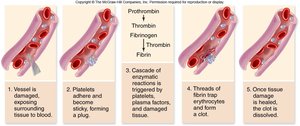
Blood clotting is a complex process involving platelets and clotting factors to prevent excessive bleeding after injury.
Vessel is damaged, exposing tissue to blood.
Platelets adhere and become sticky, forming a plug.
Cascade of enzymatic reactions is triggered by platelets, plasma factors, and damaged tissue.
Threads of fibrin trap platelets and form a clot.
Once tissue damage is healed, the clot is dissolved.
Circulatory System
How the Heart Works
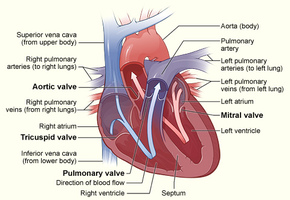
The heart is a muscular organ that pumps blood throughout the body via the circulatory system. It consists of four chambers and several valves that ensure unidirectional blood flow.
Chambers: Right atrium, right ventricle, left atrium, left ventricle.
Valves: Tricuspid, pulmonary, mitral, and aortic valves prevent backflow.
Major Vessels: Superior and inferior vena cava, pulmonary arteries and veins, aorta.
Blood Flow: Blood flows from the body into the right atrium, through the right ventricle to the lungs, returns to the left atrium, and is pumped out by the left ventricle to the body.
Summary Table: Blood Components
This table summarizes the main components of blood and their functions.
Component | Description | Function |
|---|---|---|
Plasma | Fluid matrix, 92% water | Transport of nutrients, wastes, hormones |
Red Blood Cells | 5 million/μL, lack nuclei | Oxygen transport via hemoglobin |
White Blood Cells | <1% of cells, have nuclei | Immune defense |
Platelets | Cell fragments | Blood clotting |
Key Equations
Hemoglobin binding equation:
Cardiac output equation:
*Additional info:* Academic context was added to expand brief points and clarify physiological processes for exam preparation.
