 Back
BackStudy Guide: The Evolution and Diversity of Life
Study Guide - Smart Notes
 Tailored notes based on your materials, expanded with key definitions, examples, and context.
The Diversity of Life
Naming and Classifying the Diversity of Life
The Linnaean system provides a structured method for naming and classifying organisms, which is essential for understanding biological diversity. Each species is given a two-part scientific name, known as binomial nomenclature.
Genus: The first part of the name, grouping closely related species.
Species: The second part, unique to each species within the genus.
Taxonomic Hierarchy: The classification levels are: domain > kingdom > phylum > class > order > family > genus > species.
Explaining the Diversity of Life
Biologists explain the diversity of life primarily through Darwin’s theory of evolution by natural selection. This theory revolutionized biology by providing a scientific explanation for the origin and adaptation of species.
Evolution: The process by which species change over time, leading to the diversity observed today.
Natural Selection: The mechanism proposed by Darwin for evolutionary change.
Charles Darwin and The Origin of Species
Darwin’s Journey
Darwin’s observations during his voyage on the Beagle, especially in the Galápagos Islands, were crucial in developing his theory. He noted adaptations in organisms that allowed them to thrive in diverse environments.
Adaptations: Traits that enhance survival and reproduction in specific environments.
Galápagos Islands: Provided unique examples of evolutionary change.
Darwin’s Theory
In On the Origin of Species, Darwin proposed:
Existing species descended from ancestral species.
Natural selection is the mechanism of evolution.
Evidence of Evolution
Evidence from Fossils
The fossil record documents the historical sequence of life and provides links between ancestral and modern species.
Transitional Fossils: Show evolutionary connections.
Evidence from Homologies
Homologies, both structural and molecular, reveal evolutionary relationships among species.
Structural Homology: Similar anatomical features due to shared ancestry.
Molecular Homology: Similarities in DNA and proteins.
Universal Genetic Code: Indicates common ancestry.
Evolutionary Trees
Evolutionary trees illustrate the relationships among species, showing how they diverged from common ancestors.
Branch Points: Represent common ancestors.
Tips: Represent current species.
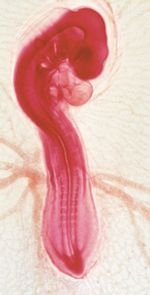
Natural Selection as the Mechanism for Evolution
Natural Selection in Action
Natural selection drives adaptive changes in populations. It has been observed in phenomena such as the evolution of pesticide-resistant insects.
Adaptive Evolution: Traits that increase fitness become more common.
Pesticide Resistance: Example of natural selection in action.
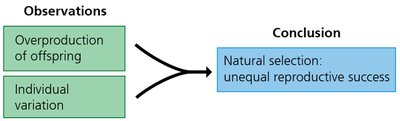
Key Points about Natural Selection
Understanding natural selection is crucial for grasping evolutionary biology.
Individuals do not evolve: Populations evolve over generations.
Heritable Traits: Only traits passed genetically can be affected by natural selection.
Existing Variation: Natural selection acts on variation already present in the population.
Imperfect Adaptation: Natural selection does not produce perfect organisms.
The Evolution of Populations
Sources of Genetic Variation
Genetic variation is essential for evolution. It arises from mutation and sexual reproduction.
Mutation: The ultimate source of new genetic variation.
Sexual Reproduction: Shuffles alleles to create new combinations.
Populations as the Units of Evolution
Evolution occurs at the population level, not the individual level. A population is a group of individuals of the same species living in the same area.
Gene Pool: All alleles present in a population.
Analyzing Gene Pools
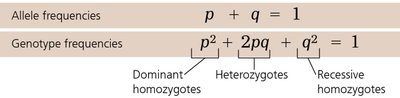
The Hardy-Weinberg formula is used to analyze allele and genotype frequencies in populations, providing a mathematical framework for studying population genetics.
Allele Frequency Equation:
Genotype Frequency Equation:
Dominant Homozygotes:
Heterozygotes:
Recessive Homozygotes:
Population Genetics and Health Science
The Hardy-Weinberg formula is used in public health to estimate the frequency of harmful alleles, aiding in the management of genetic diseases.
Application: Estimating carrier frequency for genetic disorders.
Microevolution as Change in a Gene Pool
Microevolution refers to small-scale changes in allele frequencies within a population from one generation to the next.
Microevolution: Generation-to-generation change in gene pool.
Mechanisms of Evolution
Natural Selection
Natural selection is the primary mechanism of adaptive evolutionary change.
Promotes Adaptation: Increases frequency of beneficial traits.
Genetic Drift
Genetic drift is a random change in allele frequencies, especially in small populations.
Bottleneck Effect: Drastic reduction in population size leads to loss of genetic diversity.
Founder Effect: New population started by a few individuals may have different allele frequencies.
Gene Flow
Gene flow is the movement of alleles between populations, which can increase genetic diversity.
Genetic Exchange: Migration and interbreeding between populations.
Natural Selection: A Closer Look
Relative Fitness and Types of Selection
Relative fitness measures an individual’s contribution to the next generation. Natural selection can be directional, disruptive, or stabilizing, and may include sexual selection based on inherited traits.
Directional Selection: Favors one extreme phenotype.
Disruptive Selection: Favors both extreme phenotypes.
Stabilizing Selection: Favors intermediate phenotypes.
Sexual Selection: Traits that enhance mating success.
Additional info: Sexual selection often leads to the evolution of secondary sexual characteristics, such as elaborate plumage or courtship behaviors.
