 Back
Back1.2 Study Guide: The Physical Environment and Climate in Ecology
Study Guide - Smart Notes
 Tailored notes based on your materials, expanded with key definitions, examples, and context.
The Physical Environment in Ecology
Abiotic vs. Biotic Factors
The physical environment is a major determinant of where organisms can live and how fast their populations can grow. It is composed of both abiotic and biotic factors:
Abiotic factors: Refer to the physical or nonliving components of the environment, such as climate, soil, water, and chemical conditions.
Biotic factors: Refer to the living components, including plants, animals, fungi, and microorganisms.
Example: In a pond ecosystem, abiotic factors include sunlight, water, and soil, while biotic factors include algae, insects, and fish.
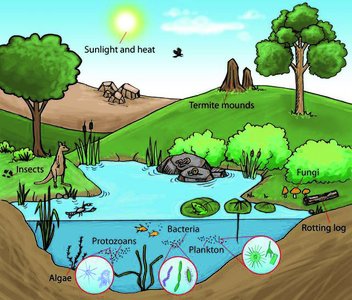
The Physical Environment: Climate and Chemical Environment
The physical environment encompasses:
Climate: Long-term trends in temperature and precipitation that shape ecosystems.
Chemical environment: Includes salinity, acidity, gases, and soil composition, which determine the availability of water and nutrients.

Climate: Definition and Importance
Climate vs. Weather
Climate is not the same as weather. Weather refers to the current atmospheric conditions (temperature, humidity, precipitation, wind), while climate is the long-term description of weather patterns in a region, measured over years and decades.
Climate includes variation: Both averages and extremes are important for ecological processes.
Regular patterns: Climate is influenced by phenomena such as ENSO (El Niño-Southern Oscillation) and PDO (Pacific Decadal Oscillation).
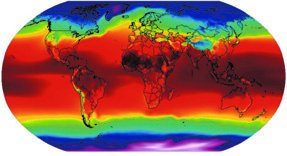
Climate Patterns: ENSO and PDO
ENSO and PDO are large-scale climate patterns that affect temperature and precipitation globally.
ENSO: Alternates between warm and cool phases, impacting weather and climate across continents.
PDO: Similar to ENSO, but operates on longer timescales and affects the Pacific Ocean region.
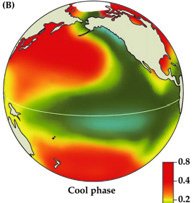
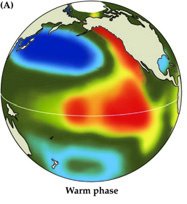
Major Climate Drivers
Latitude and Sunlight
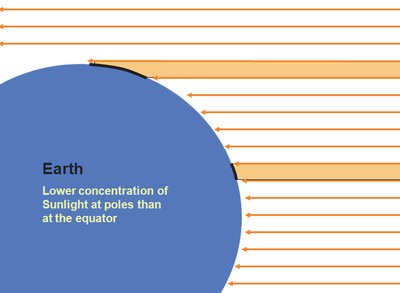
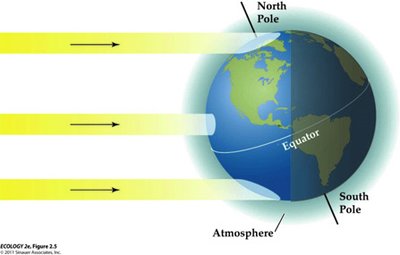
Latitude is a primary driver of climate, as it determines the angle and concentration of sunlight received at different parts of the Earth.
Equator: Receives direct sunlight, resulting in warmer temperatures.
Poles: Receive less concentrated sunlight, leading to cooler temperatures.
Atmospheric Circulation and Hadley Cells
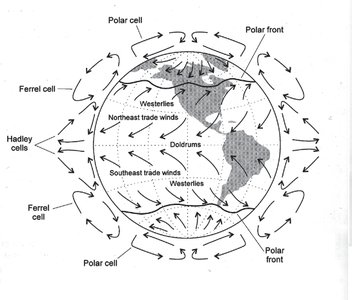
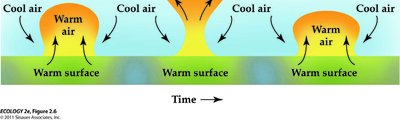
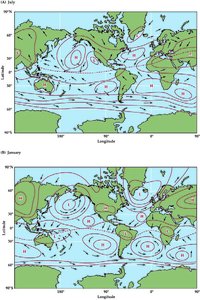
Atmospheric circulation redistributes heat and moisture around the globe. Hadley cells are large-scale patterns of air movement that create distinct climate zones.
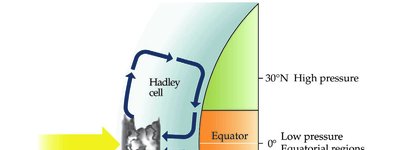
Hadley cell: Warm air rises at the equator, moves poleward, cools and sinks at around 30° latitude, creating high-pressure zones.
Other cells: Ferrel and Polar cells further redistribute air and moisture.
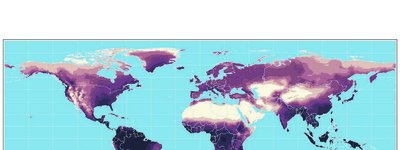
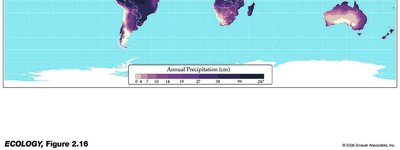
Large-Scale Climate Drivers
Other large-scale drivers include:
Proximity to ocean: Water holds heat better than land, moderating coastal climates.
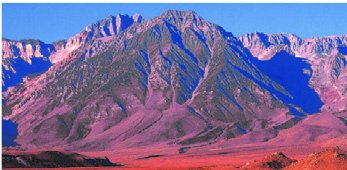
Elevation: Higher elevations are cooler due to decreased atmospheric pressure.
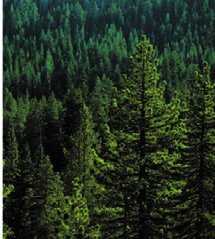
Vegetation: Deforestation and urbanization alter local climate patterns.


Regional Climate Drivers
Proximity to Water, Altitude, and Rain Shadows
Regional climate is influenced by:
Proximity to large bodies of water: Coastal areas have milder climates due to the heat capacity of water.
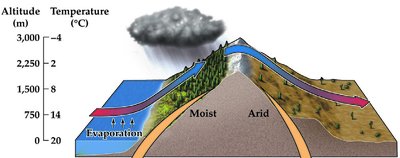
Altitude: Temperature decreases with elevation.
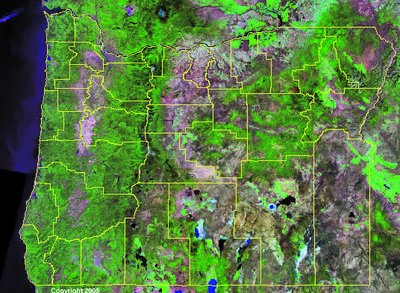
Rain shadows: Mountains block moist air, creating dry areas on the leeward side.
Microclimate: Local Environmental Variation
Thermal Stability, Aspect, and Elevation
Microclimate refers to local variations in environmental conditions, which can affect organism survival and distribution.
Thermal stability: Some areas maintain more stable temperatures due to local features.
Aspect: The direction a slope faces affects sunlight exposure and plant survival.
Elevation: Number of plant species changes with elevation due to temperature and moisture gradients.
Oceans and Their Role in Climate
Ocean Currents and Heat Exchange
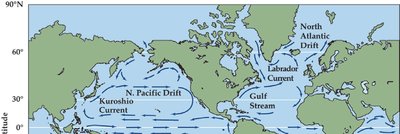
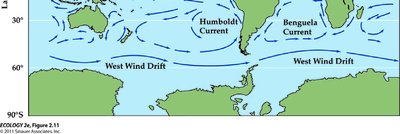
Oceans are responsible for approximately 40% of the heat exchange between the poles and tropics, with the remaining 60% from winds. Ocean currents redistribute heat and nutrients, affecting global climate and marine ecosystems.
Warm, surface regions: Typically have fewer nutrients.
Cool, deep regions: Rich in nutrients, brought to the surface by upwelling.
Microscopic algae: Dominant photosynthetic organisms in oceans.
Depth: Used to categorize oceanic regions.
Summary Table: Abiotic vs. Biotic Factors
Factor Type | Examples | Role in Ecosystem |
|---|---|---|
Abiotic | Climate, soil, water, sunlight | Determines where organisms can live |
Biotic | Plants, animals, fungi, bacteria | Interact with abiotic factors to shape ecosystem |
Summary Table: Climate Drivers
Driver | Effect |
|---|---|
Latitude | Sunlight concentration, temperature |
Atmospheric Circulation | Redistributes heat and moisture |
Ocean Currents | Heat exchange, nutrient distribution |
Elevation | Temperature decreases with altitude |
Vegetation | Alters local climate patterns |
Key Equations
Temperature Lapse Rate
The rate at which air temperature decreases with elevation:
Where is temperature, is elevation, and is the lapse rate (typically about 6.5°C per 1000 meters).
Solar Radiation at Latitude
Solar radiation received at a given latitude:
Where is the solar radiation, is the solar constant, and is the angle of incidence.
Conclusion
The physical environment, including climate and chemical factors, is fundamental to understanding ecological patterns and processes. Abiotic and biotic factors interact to shape ecosystems, and climate drivers operate at global, regional, and local scales to influence the distribution and abundance of organisms.
