 Back
Study Notes: Bacteria and Archaea (Campbell Biology, Chapter 27)
Study Guide - Smart Notes
 Tailored notes based on your materials, expanded with key definitions, examples, and context.
Bacteria and Archaea
Introduction
Bacteria and Archaea are the two domains of prokaryotes, representing the most abundant and diverse organisms on Earth. Their structural and functional adaptations allow them to thrive in a wide range of environments, including extreme conditions.
Structural and Functional Adaptations of Prokaryotes
Prokaryotic Cell Structure
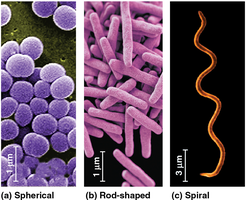
Prokaryotes are unicellular organisms, though some species form colonies. They are typically much smaller than eukaryotic cells, with sizes ranging from 0.5–5 μm. Prokaryotes exhibit three main shapes:
Cocci: Spherical-shaped cells
Bacilli: Rod-shaped cells
Spirals: Spiral-shaped cells
Cell-Surface Structures
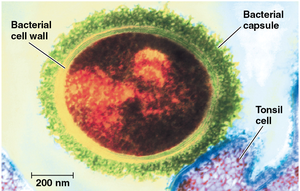
The cell wall is a critical structure that maintains cell shape, protects the cell, and prevents lysis in hypotonic environments. Prokaryotic cell walls differ from those of eukaryotes:
Bacterial cell walls: Contain peptidoglycan, a network of sugar polymers cross-linked by polypeptides.
Archaeal cell walls: Composed of various polysaccharides and proteins, lacking peptidoglycan.
Capsule and slime layer: Many prokaryotes have a sticky layer outside the cell wall, called a capsule (dense) or slime layer (loose), which aids in adherence, prevents dehydration, and protects against the host immune system.
Endospores
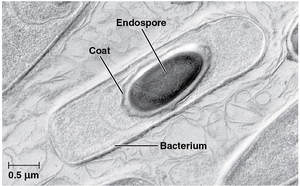
Some bacteria form metabolically inactive endospores when conditions are unfavorable. Endospores are highly resistant structures that can survive extreme environments for centuries.
Fimbriae and Pili
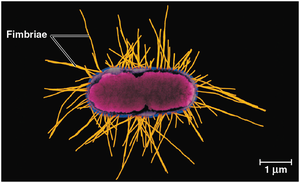
Fimbriae are hairlike appendages that allow prokaryotes to adhere to surfaces or other cells. Pili (or sex pili) are longer and facilitate the exchange of DNA between cells during conjugation.
Motility
About half of prokaryotes exhibit taxis, moving toward or away from stimuli. Flagella are the most common structures for movement, differing in structure and function from eukaryotic flagella.
Internal Organization and DNA
Prokaryotes lack complex compartmentalization but may have specialized membranes for metabolic functions, such as respiratory or thylakoid membranes.
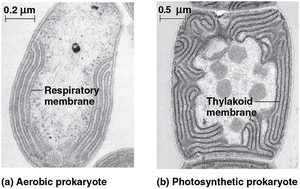
DNA: Prokaryotes have a single circular chromosome located in the nucleoid region and may possess plasmids, small rings of independently replicating DNA.
Reproduction and Genetic Diversity
Binary Fission
Prokaryotes reproduce rapidly by binary fission, leading to large populations and short generation times.
Key features: Small size, rapid reproduction, short generation times.
Genetic Diversity
Three factors contribute to prokaryotic genetic diversity:
Rapid reproduction
Mutation
Genetic recombination (transformation, transduction, conjugation)
Transformation: Uptake of foreign DNA from the environment. Transduction: Transfer of DNA via bacteriophages. Conjugation: Direct transfer of DNA between cells via pili.
Nutritional and Metabolic Adaptations
Major Nutritional Modes
Prokaryotes are classified by their energy and carbon sources:
Photoautotrophs: Use light for energy and CO2 for carbon.
Chemoautotrophs: Use chemicals for energy and CO2 for carbon.
Photoheterotrophs: Use light for energy and organic compounds for carbon.
Chemoheterotrophs: Use chemicals for energy and organic compounds for carbon.
Oxygen and Nitrogen Metabolism
Obligate aerobes: Require oxygen for cellular respiration.
Obligate anaerobes: Poisoned by oxygen; use fermentation or anaerobic respiration.
Facultative anaerobes: Can use oxygen if present or switch to fermentation/anaerobic respiration.
Nitrogen fixation: Conversion of atmospheric nitrogen (N2) to ammonia (NH3), essential for amino acid and nucleic acid synthesis.
Metabolic Cooperation
Prokaryotes may cooperate metabolically, forming biofilms or specialized cells (e.g., heterocysts in cyanobacteria for nitrogen fixation).
Diversity and Evolution of Prokaryotes
Phylogeny and Genomics
Prokaryotes are divided into Bacteria and Archaea. Advances in genomics and metagenomics have revealed extensive diversity and the importance of horizontal gene transfer in prokaryotic evolution.
Bacteria
Bacteria represent the majority of known prokaryotic species, with diverse nutritional and metabolic modes.
Archaea
Archaea share traits with both bacteria and eukaryotes and include extremophiles:
Extreme halophiles: Thrive in highly saline environments.
Extreme thermophiles: Survive at high temperatures.
Methanogens: Produce methane in anaerobic conditions.
Prokaryotes in the Biosphere
Chemical Recycling
Prokaryotes play a crucial role in recycling elements between living and nonliving components. They decompose organic matter, fix nitrogen, and influence nutrient availability in ecosystems.
Ecological Interactions
Prokaryotes engage in symbiotic relationships:
Mutualism: Both partners benefit.
Commensalism: One benefits, the other is unaffected.
Parasitism: One harms the other; pathogens cause disease.
Prokaryotes and Humans
Mutualistic Bacteria
Human intestines host hundreds of bacterial species, many of which synthesize essential nutrients and aid in digestion.
Pathogenic Bacteria
Pathogenic bacteria cause diseases by releasing exotoxins (proteins) or endotoxins (lipopolysaccharides). Horizontal gene transfer can spread virulence genes.
Antibiotic Resistance
Bacterial resistance to antibiotics has increased rapidly due to horizontal gene transfer and rapid reproduction. This poses significant challenges for treatment.
Prokaryotes in Research and Technology
Prokaryotes are used in food production, biotechnology (e.g., gene cloning, PCR, CRISPR-Cas9), and bioremediation (removal of pollutants).
Additional info: Academic context was added to clarify definitions, examples, and applications for each topic. Images included are directly relevant to the structural adaptations and cell features of prokaryotes.
