 Back
Study Notes: Water and Carbon – The Chemical Basis of Life
Study Guide - Smart Notes
 Tailored notes based on your materials, expanded with key definitions, examples, and context.
Water and Carbon: The Chemical Basis of Life
Overview
This module explores the fundamental chemical principles that underpin biological systems, focusing on atomic structure, chemical bonding, the properties of water, and the role of carbon in organic molecules. Understanding these concepts is essential for grasping how life is organized at the molecular level.
Atoms, Elements, and Subatomic Particles
Atomic Structure
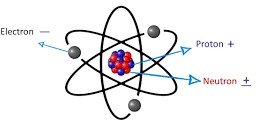
Atoms are the basic units of matter, composed of three types of subatomic particles: protons, neutrons, and electrons. The arrangement and number of these particles determine the properties of each element.
Proton: Positively charged particle found in the nucleus.
Neutron: Neutral particle found in the nucleus.
Electron: Negatively charged particle orbiting the nucleus.
Atomic Number: Number of protons in the nucleus; unique to each element.
Mass Number: Sum of protons and neutrons in the nucleus.
Atomic Mass: Average mass of an element, considering isotopes.
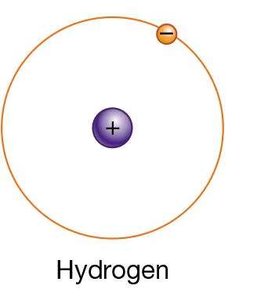
Hydrogen Atom Example
Hydrogen is the simplest atom, consisting of one proton and one electron.
Elements and Compounds
Elements of Life
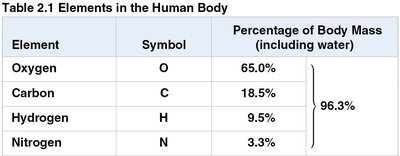
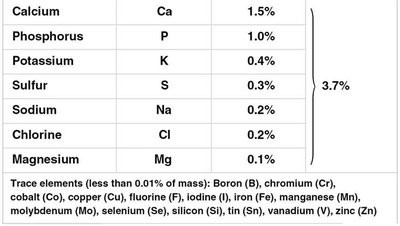
Life is composed primarily of a few key elements. About 96% of living matter is made up of oxygen, carbon, hydrogen, and nitrogen. The remaining 4% consists of elements like calcium, phosphorus, potassium, and sulfur, with trace elements required in minute quantities.
Essential Elements: Required for life; include O, C, H, N.
Trace Elements: Needed in very small amounts (e.g., iodine, iron).
Element | Symbol | Percentage of Body Mass |
|---|---|---|
Oxygen | O | 65.0% |
Carbon | C | 18.5% |
Hydrogen | H | 9.5% |
Nitrogen | N | 3.3% |
Compounds
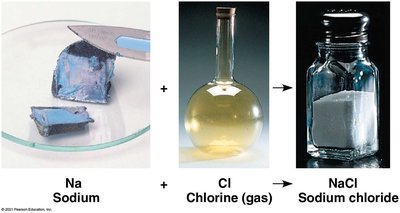
Compounds are substances consisting of two or more elements in a fixed ratio. They often have properties distinct from their constituent elements.
Example: Sodium (Na) and chlorine (Cl) combine to form sodium chloride (NaCl), common table salt.
Importance of Trace Elements
Iodine and Iron Deficiency
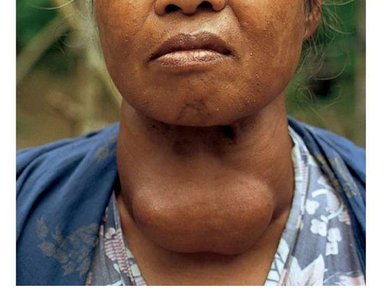
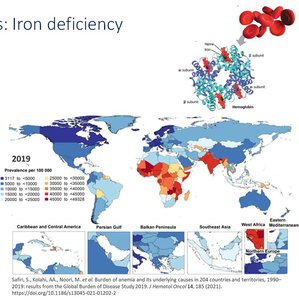
Trace elements like iodine and iron are vital for human health. Iodine is necessary for thyroid hormone production, and iron is essential for hemoglobin function in red blood cells.
Iodine Deficiency: Can lead to goiter and thyroid dysfunction.
Iron Deficiency: Causes anemia, leading to fatigue and low oxygen levels.
Atomic Properties and Electron Arrangement
Subatomic Particles and Electron Shells
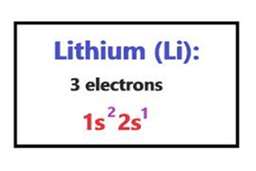
The behavior of atoms is determined by the arrangement of electrons in shells around the nucleus. Electrons fill the innermost shells first, and the outermost shell (valence shell) determines chemical reactivity.
Valence Electrons: Electrons in the outermost shell; involved in bonding.
Octet Rule: Atoms tend to bond in ways that fill their valence shell with eight electrons.
Chemical Bonds and Interactions
Types of Chemical Bonds
Chemical bonds are formed when atoms share or transfer electrons to achieve stability. The main types are:
Covalent Bonds: Sharing of electrons; can be nonpolar (equal sharing) or polar (unequal sharing).
Ionic Bonds: Complete transfer of electrons, resulting in charged ions (cations and anions).
Hydrogen Bonds: Weak attractions between partially charged regions of molecules, especially important in water and biological macromolecules.
Van der Waals Interactions: Weak, transient attractions between molecules.
Bonding in Water and Other Molecules
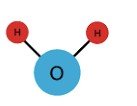
Water molecules are held together by polar covalent bonds within the molecule and hydrogen bonds between molecules.
Water (H2O): Oxygen is more electronegative than hydrogen, resulting in a polar molecule.
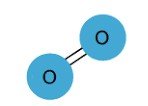
Oxygen (O2): Nonpolar covalent bond between two oxygen atoms.
Properties of Water
Emergent Properties of Water
Water's unique structure gives rise to four emergent properties that are crucial for life:
Cohesion/Adhesion/Surface Tension: Water molecules stick to each other and to other surfaces, enabling transport in plants and high surface tension.
High Specific Heat: Water can absorb or release large amounts of heat with minimal temperature change, stabilizing climates and organisms.
Expansion Upon Freezing: Ice is less dense than liquid water, allowing it to float and insulate aquatic environments.
Versatility as a Solvent: Water dissolves many substances due to its polarity, facilitating biochemical reactions.
Acids, Bases, and pH
Acids and Bases
Acids increase the concentration of hydrogen ions (H+) in solution, while bases decrease it. The pH scale measures the acidity or basicity of a solution.
Acidic: pH < 7
Neutral: pH = 7
Basic: pH > 7
Buffer: Substance that minimizes changes in pH by accepting or donating H+ ions.
Equation:
Carbon: The Backbone of Life
Chemical Properties of Carbon
Carbon's tetravalency allows it to form four covalent bonds, resulting in a vast diversity of organic molecules. Carbon skeletons can vary in length, branching, double bond position, and ring structure.
Isomers: Molecules with the same formula but different structures (structural, cis-trans, and enantiomers).
Enantiomers: Mirror-image isomers, often with different biological activity.
Functional Groups in Organic Molecules
Functional Groups
Functional groups are specific groups of atoms within molecules that determine their chemical properties and reactivity. The seven most important functional groups in biology are:
Amino: Acts as a base.
Carboxyl: Acts as an acid.
Carbonyl: Links molecules into more complex compounds.
Hydroxyl: Acts as a weak acid.
Phosphate: Has two negative charges.
Sulfhydryl: Forms disulfide bonds.
Methyl: Common structural unit, involved in methylation.
Polymers and Monomers
Building and Breaking Down Polymers
Polymers are large molecules made from repeating units called monomers. They are formed by condensation (dehydration) reactions and broken down by hydrolysis.
Condensation (Dehydration) Reaction: Joins monomers by removing a water molecule.
Hydrolysis Reaction: Breaks polymers into monomers by adding water.
Equation for Dehydration:
Equation for Hydrolysis:
Summary Table: Types of Chemical Bonds
Bond Type | Mechanism | Strength | Example |
|---|---|---|---|
Covalent (Nonpolar) | Equal sharing of electrons | Strong | O2 molecule |
Covalent (Polar) | Unequal sharing of electrons | Strong | H2O molecule |
Ionic | Transfer of electrons | Moderate | NaCl (table salt) |
Hydrogen | Attraction between partial charges | Weak | Between water molecules |
Van der Waals | Transient attractions | Very weak | Between nonpolar molecules |
Additional info: Academic context was added to clarify the role of trace elements, functional groups, and the importance of water's properties for life.
