 Back
BackSustainable Agriculture: Feeding the World and Protecting the Environment
Study Guide - Smart Notes
 Tailored notes based on your materials, expanded with key definitions, examples, and context.
Sustainable Agriculture
Introduction to Sustainable Agriculture
Sustainable agriculture refers to farming and grazing practices that maintain healthy soil, water, pollinators, and other resources over the long term. The goal is to produce food efficiently while minimizing environmental damage and conserving resources for future generations.
Key Principle: Use less fossil fuel and water, and decrease pollution.
Challenge: Feeding a growing human population without depleting or damaging natural resources.
Current Issue: Over 800 million people worldwide are undernourished.
The Green Revolution
Overview and Consequences
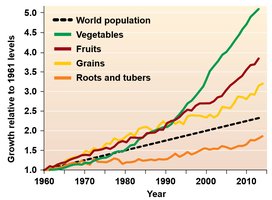
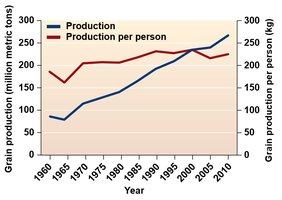
The Green Revolution in the late 20th century dramatically increased food production through new technologies, crop varieties, and farming practices. However, this came with increased energy inputs and environmental costs.
Food Production: Significant increases in crop yields, especially grains.
Resource Use: 80% increase in energy inputs for only a 30% increase in cultivated land.
Environmental Impact: Increased use of pesticides, inorganic fertilizers, fossil fuels, and water.
Consumption of Animal Products
Trends and Environmental Implications
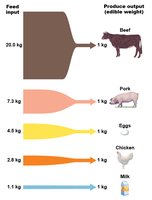
Since 1950, per capita meat consumption has doubled, and global meat production has increased fivefold. However, producing animal protein is less efficient than plant-based foods due to energy loss at each trophic level (Laws of Thermodynamics).
Feed Conversion: Producing 1 kg of beef requires about 20 kg of feed, while chicken and milk require much less.
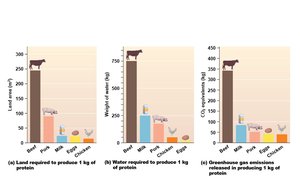
Environmental Impact: Raising livestock requires significant land, water, and energy, and contributes to pollution and greenhouse gas emissions.
Recommendation: Eating lower on the food chain (more plants, less meat) supports more people with fewer resources.
Feedlots and Aquaculture
Modern Animal Production Systems
Feedlots: Large-scale operations where animals are densely housed and fed grain. Economically efficient but increase pollution, antibiotic and hormone use, and require large amounts of grain (about 45% of global grain production feeds animals).
Aquaculture: Cultivating aquatic organisms in controlled environments. Reduces pressure on wild fish stocks and provides reliable protein, but can cause pollution, habitat destruction, and risk of escape of non-native species.
Crop Diversity and Monocultures
Genetic Diversity in Agriculture
Industrial agriculture often relies on monocultures—large areas planted with a single crop variety. This reduces genetic diversity and increases vulnerability to pests and diseases.
Current Status: 90% of human food comes from just 15 crops and 8 livestock species.
Importance of Diversity: Maintaining ancestral species and landraces is crucial for genetic resources and future crop improvement.
Seed Banks: Established globally to preserve genetic diversity.
Pesticides and Pest Management
Pesticide Use and Resistance
Pesticides (herbicides, fungicides, insecticides) are widely used to increase crop yields but can harm humans and non-target organisms. Over time, pests can evolve resistance, making control more difficult.
Usage: 80% of pesticide use in the US is in agriculture.
Problems: Harmful to humans, non-target species, and leads to resistance.
Alternatives to Pesticides
Biological Control: Using natural predators or parasites to control pests (e.g., Bacillus thuringiensis or Bt bacteria for caterpillars). However, introducing new species can have unintended ecological consequences.
Integrated Pest Management (IPM): Combines monitoring, crop rotation, biological control, mechanical removal, and other methods to minimize pesticide use.
Genetically Modified Organisms (GMOs)
Genetic Engineering in Agriculture
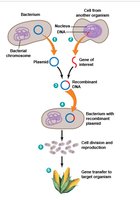
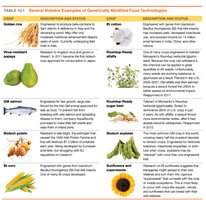
GMOs are organisms whose DNA has been modified by humans, often by inserting genes from other species (transgenic). GMOs are widely used in agriculture for traits like herbicide tolerance and pest resistance.
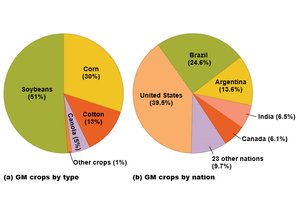
Prevalence: In the US, 80% of soybeans, 75% of cotton, and 33% of corn are GMOs; 90% of these crops are transgenic.
Main Traits: Herbicide tolerance, pest resistance, drought tolerance, improved nutrition.
Benefits of GMOs
Increased Efficiency: Higher yields on existing farmland, lower food costs.
Environmental Benefits: Reduced water use, less need for tillage (reducing fossil fuel use and greenhouse gas emissions), and decreased insecticide use.
Economic Impact: 2014 data showed GM crops increased yield by 22%, decreased pesticide use by 37%, and increased profit by nearly 70%.
Drawbacks of GMOs
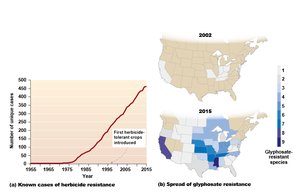
Herbicide Resistance: Increased herbicide use can lead to resistant weeds.
Ecological Concerns: Potential for transgenes to spread to wild relatives or contaminate landraces.
Socioeconomic Issues: Most GM crops are not developed for poor farmers; patented seeds prevent farmers from saving seed.
Public Perception: Concerns about health and environmental safety.
Organic Agriculture
Principles and Practices
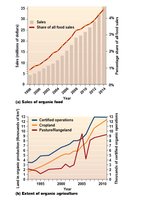
Organic agriculture avoids synthetic fertilizers, pesticides, hormones, and antibiotics. The US and other countries have criteria for what can be marketed as organic.
Market Trends: Organic products are more expensive but their use is growing.
Land Use: Organic agriculture accounts for about 1% of global agricultural land and 0.6% in the US.
Profitability: Once established, organic farming can be more profitable, but yields are generally lower than conventional agriculture.
Limitations: Unlikely to feed the entire world population at current yield levels.
Future of Sustainable Agriculture
Requirements and Strategies
For agriculture to be sustainable, it must provide food security, be profitable for growers, and conserve resources for future generations. Local agriculture, farmers markets, and community-supported agriculture are gaining popularity as ways to reduce environmental impacts. Reducing meat consumption has a greater effect on sustainability than reducing food transportation distances.
Key Strategies: Diversify crops, reduce chemical inputs, conserve water and soil, support local food systems, and encourage dietary shifts toward plant-based foods.
